Introduction
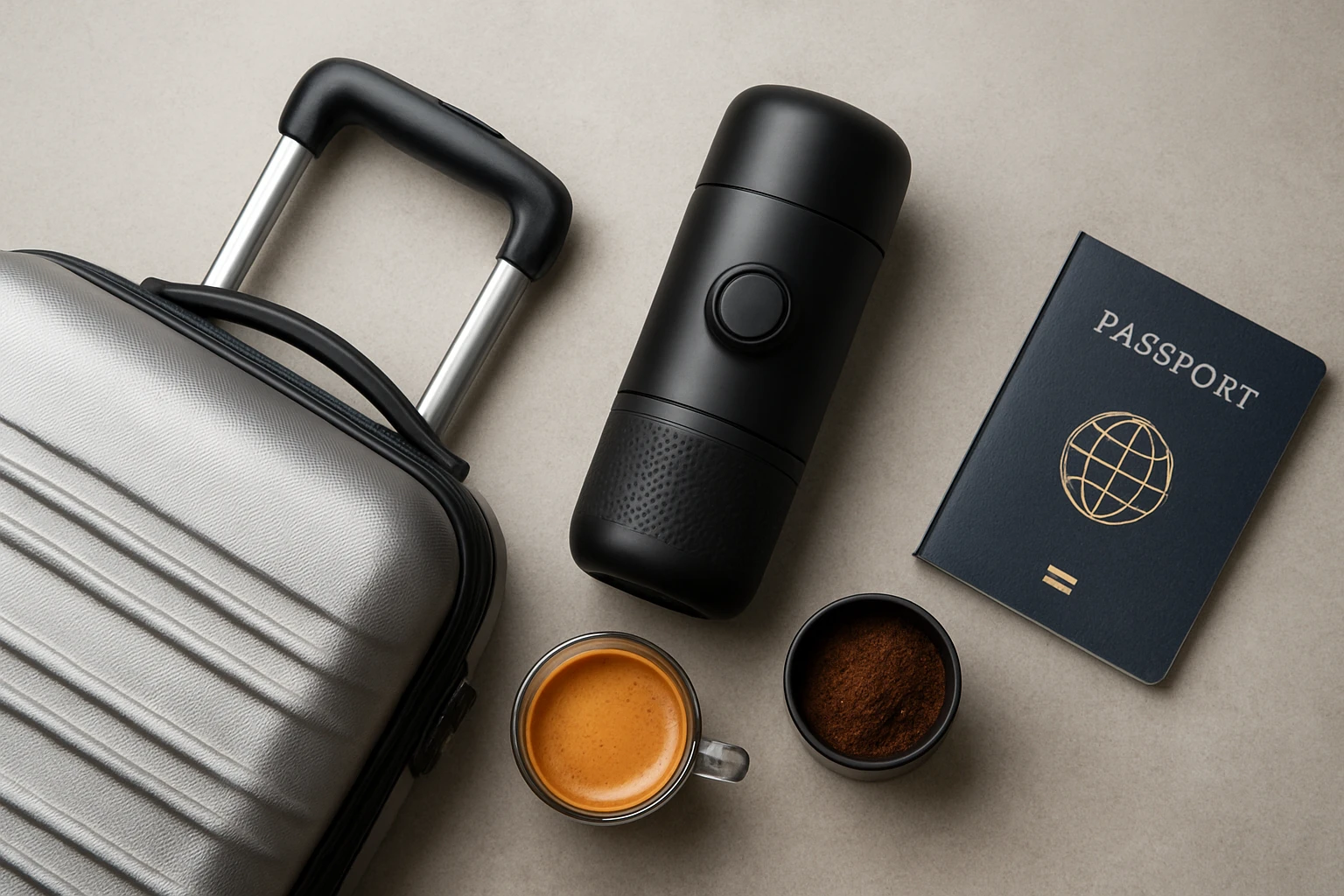
This guide explains how travelers can enjoy high‑quality espresso while complying with airline carry‑on regulations. Readers will learn the essential criteria for selecting a portable espresso machine, understand the technology behind each type, and receive actionable advice for safe air travel. The article also presents curated product recommendations that meet the most demanding travel standards.
Background and Context
Airline policies prohibit devices that contain batteries exceeding certain watt‑hour limits, and they restrict liquids above 100 ml in carry‑on luggage. Portable espresso makers must therefore be either battery‑free, use low‑capacity removable batteries, or be capable of operating with external power sources such as USB‑C chargers. Understanding pressure generation, water heating mechanisms, and size constraints is essential for making an informed purchase.
Pressure is measured in bars; a minimum of 8 bars is required for an espresso‑like extraction, while premium models reach 18‑20 bars for crema‑rich results. Heating systems may be manual (requiring boiled water), self‑heating (electric), or hybrid. Each approach influences weight, power consumption, and compliance with airline rules.
Types of Airline‑Friendly Portable Espresso Machines
Manual Pump Machines
Manual pump machines rely on human power to generate pressure, eliminating the need for batteries. They are typically compact, lightweight, and fully compliant with airline regulations because they contain no electronic heating elements.
The WACACO Nanopresso exemplifies this category. It measures 2.44" × 2.8" × 6.65" and reaches up to 18 bars (261 psi) through a patented pumping system. The device includes an NS adapter that permits use of original Nespresso capsules as well as ground coffee. At a price of $67.92, it holds a 4.5‑star rating from 1,764 reviews and is currently in stock.
Another manual option is the WACACO Minipresso NS. Although it generates only 8 bars, its lightweight design (0.8 lb) and compact length (6.89 in) make it ideal for backpackers. It accepts Nespresso OriginalLine capsules, and its semi‑automatic piston press provides consistent pressure without electricity. The Minipresso NS is priced at $42.21 and carries a 4.3‑star rating from 7,312 reviews.
Battery‑Powered Self‑Heating Machines
Battery‑powered models incorporate a heating element and a pressure pump, offering a complete “plug‑and‑brew” experience. To remain airline‑compatible, the battery capacity must not exceed the 100‑Wh limit for most carriers, and the device should feature a removable battery for easy inspection.
The Safashy Electric Portable Espresso Maker provides a 20‑bar pump and a rapid self‑heating system that brings 100 ml of water to 93 °C in three to four minutes. It is powered by a 7800 mAh rechargeable battery and supports USB‑C charging. Priced at $118.99, it holds a 4.2‑star rating (no reviews yet) and is marketed as an all‑in‑one solution for travelers who desire hot espresso without external heat sources.
The Lmozim 3‑in‑1 Portable Espresso Maker combines a removable dual‑battery system (2 × 7500 mAh) with a 20‑bar extraction pressure. It can heat water to 90 °C and brew directly from Nespresso‑compatible capsules or ground coffee. At $49.99, it offers a 4‑star rating from 64 reviews and includes a LED smart display for battery monitoring.
Hybrid Manual/Electric Machines
Hybrid devices provide manual pressure generation while relying on external hot water. They are fully compliant with airline regulations because they contain no internal heating element or battery.
The AeroPress Original falls into this hybrid category. Though not a true espresso machine, it can produce espresso‑style coffee using air pressure and micro‑filtration. It weighs less than 0.5 lb, measures 7.5 in in height, and costs $34.96. With a 4.7‑star rating from 25,846 reviews, it is praised for its versatility and durability, making it a popular choice for airline travel.
Comparison and Selection Guide
Choosing the optimal portable espresso machine depends on three primary factors: power source, pressure capability, and travel convenience. The table below summarizes the key specifications of the featured products.
| Product | Power Source | Maximum Pressure | Water Capacity | Weight | Price | Rating |
|---|---|---|---|---|---|---|
| WACACO Nanopresso | Manual (no battery) | 18 bars | 60 ml | 0.5 lb | $67.92 | 4.5/5 (1,764) |
| WACACO Minipresso NS | Manual (no battery) | 8 bars | 50 ml | 0.8 lb | $42.21 | 4.3/5 (7,312) |
| Safashy Electric | Rechargeable 7800 mAh | 20 bars | 100 ml | 1.66 lb | $118.99 | 4.2/5 (0) |
| Lmozim 3‑in‑1 | Removable 2 × 7500 mAh | 20 bars | 80 ml | 1.2 lb | $49.99 | 4/5 (64) |
| AeroPress Original | Manual (external hot water) | ~0.35 bars (air pressure) | 250 ml | 0.4 lb | $34.96 | 4.7/5 (25,846) |
Travelers who prioritize battery‑free operation should consider the Nanopresso or Minipresso NS. Those who desire hot water on demand without a kettle may prefer the Safashy Electric or Lmozim 3‑in‑1, provided the battery capacity complies with airline limits. For maximum versatility and minimal weight, the AeroPress offers a reliable manual solution that can brew a wide range of coffee styles.
Best Practices & Tips
- Check airline regulations for battery watt‑hour limits before packing a rechargeable device. Most carriers allow batteries up to 100 Wh without special approval.
- Pre‑measure coffee grounds and pack them in sealed, TSA‑approved containers to avoid delays at security checkpoints.
- Use a travel‑size water bottle that can be filled with hot water after passing through security. This eliminates the need for a built‑in heater on battery‑free models.
- When using capsule adapters, ensure the capsule is fully seated before pumping to prevent leakage and possible burns.
- Clean the portafilter and seals after each use to maintain pressure integrity and extend the lifespan of the device.
- Consider a protective case or padded sleeve for fragile components, especially for models with glass or stainless‑steel pressure chambers.
Frequently Asked Questions
- Can I bring a portable espresso maker in my carry‑on? Yes, provided the device does not contain a battery exceeding the airline’s watt‑hour limit and the water capacity complies with the 100 ml liquid rule. Manual pump models are always permitted.
- Do I need to declare the espresso maker at security? It is advisable to place the machine in a separate bin for X‑ray screening. If the device contains a battery, declare it according to the airline’s policy.
- What is the minimum pressure required for a true espresso? Professional espresso extraction typically requires at least 8 bars of pressure. Devices that reach 18‑20 bars produce a richer crema and fuller flavor.
- Can I use regular coffee grounds in these machines? All featured models accept finely ground coffee, though capsule‑only adapters may require specific pod formats. The Nanopresso and Minipresso NS explicitly support ground coffee.
- How long does the battery last on electric models? The Safashy Electric can brew 4‑5 shots per charge, while the Lmozim 3‑in‑1 claims up to eight heated extractions or 200 cold brews using its dual‑battery system.
- Is it safe to operate a manual pump at high altitude? Yes, manual pressure generation is not affected by altitude, making pump‑based machines ideal for mountain travel.
- Do I need a separate kettle for hot water? For manual models, a portable kettle or hot water from a hotel room is required. Battery‑powered models heat water internally, eliminating the need for an external source.
Conclusion
The optimal airline‑friendly portable espresso machine balances pressure performance, power source, and size. Manual pump devices such as the WACACO Nanopresso provide reliable espresso extraction without battery concerns, while battery‑powered options like the Safashy Electric add convenience at the cost of careful compliance with airline battery limits. By following the selection guide and travel tips, readers can enjoy café‑quality coffee on any flight without compromising safety or comfort.
Products Featured in This Guide
WACACO Nanopresso
Price: $67.92 | Rating: 4.5/5 (1,764 reviews)
Featured for its 18‑bar manual pump, compact dimensions, and compatibility with both Nespresso capsules and ground coffee, making it ideal for airline travel.
WACACO Minipresso NS
Price: $42.21 | Rating: 4.3/5 (7,312 reviews)
Featured for its ultra‑lightweight design, 8‑bar pressure, and straightforward manual operation, suitable for backpackers and frequent flyers.
Safashy Electric Portable Espresso Maker
Price: $118.99 | Rating: 4.2/5 (0 reviews)
Featured for its 20‑bar pump, rapid self‑heating system, and USB‑C rechargeable battery, offering a complete hot‑brew solution for travelers with battery allowance.
AeroPress Original
Price: $34.96 | Rating: 4.7/5 (25,846 reviews)
Featured for its versatile 3‑in‑1 brewing method, minimal weight, and manual operation that requires only external hot water, making it universally airline‑compliant.
Lmozim 3‑in‑1 Portable Espresso Maker
Price: $49.99 | Rating: 4/5 (64 reviews)
Featured for its dual removable batteries, 20‑bar extraction, and compatibility with both capsules and ground coffee, offering flexibility for long trips.