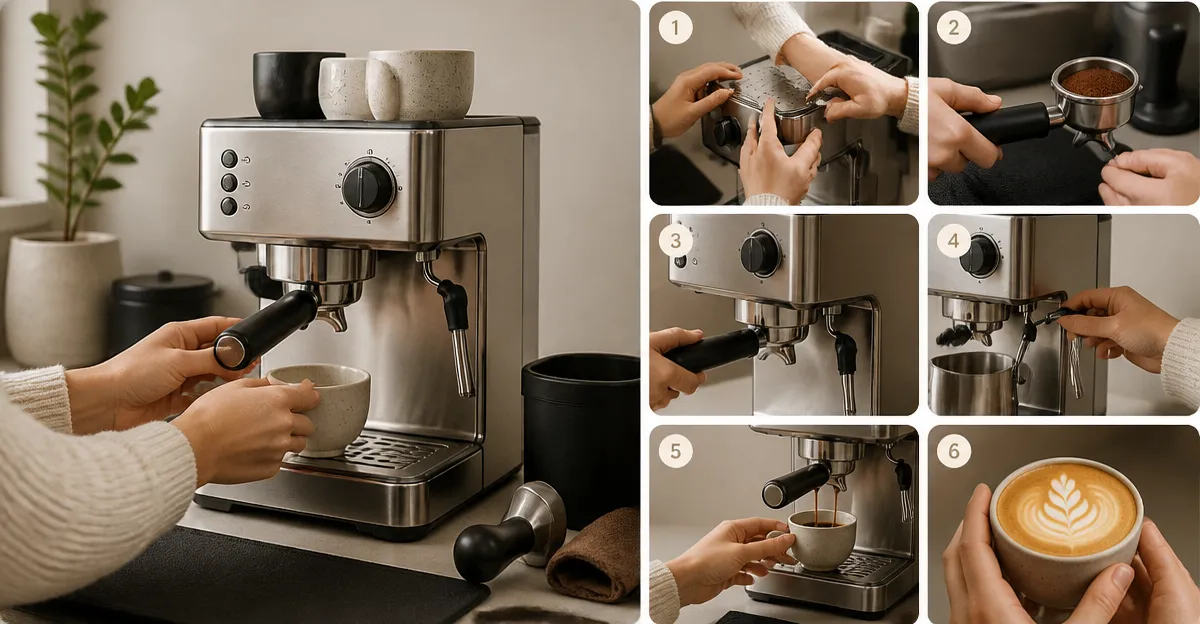
Introduction
This guide explains how to arrange a compact espresso machine so that individuals with small hands can operate it comfortably, safely, and efficiently. Readers will learn how to select an appropriate model, position the unit, adjust controls, and organize accessories to minimise strain. The information is valuable because ergonomic set‑ups reduce fatigue, improve shot consistency, and protect the machine from misuse. By following the steps, one can enjoy café‑quality beverages without compromising hand health.
What You Will Need
- A compact espresso machine suitable for limited countertop space.
- Adjustable height riser or sturdy countertop mat.
- Ergonomic tamping tool with a smaller diameter handle.
- Measuring cup or graduated pitcher for milk frothing.
- Cleaning brushes and descaling solution.
- Optional: Small‑footprint storage container for accessories.
Step 1: Choose a Machine That Accommodates Small Hands
When selecting a machine, prioritize models with low‑profile controls, a compact footprint, and a lightweight portafilter. The CASABREWS 3700 offers a stainless‑steel body, a 20‑bar pump, and a single‑cup button that sits at a comfortable height for short reach. Priced at $99.99 and rated 4.3/5 from 3,627 reviews, it combines affordability with a user‑friendly interface. Its removable 43.9 oz water tank can be lifted easily, reducing the need for awkward bending.
The machine’s steam wand is positioned on the right side, allowing a right‑handed user to grip the wand without overextending the wrist. For left‑handed users, the CASABREWS CM5418 provides a built‑in pressure gauge and a symmetrical control panel, which can be operated with either hand. At $139.99 and a 4.3/5 rating from 8,052 reviews, it adds a visual pressure indicator that helps users fine‑tune extraction without excessive finger pressure.
Step 2: Position the Machine at an Ergonomic Height
Place the espresso machine on a stable, level surface that allows the elbows to remain close to the body while reaching the controls. If the countertop is higher than 38 cm, use an adjustable height riser or a thick silicone mat to raise the machine slightly. This adjustment keeps the wrist in a neutral position, which is essential for users with smaller hands who may otherwise experience ulnar deviation.
Both the AERCANA 20‑Bar Espresso Machine and the Breville Bambino have compact dimensions that fit comfortably on most kitchen counters. The AERCANA model measures only 5.3 × 12.2 × 11.5 inches, making it easy to place on a low‑profile riser. It is priced at $99.99 with a 4.4/5 rating from 128 reviews. The Breville Bambino, priced at $299.95 and rated 4/5 from 2,567 reviews, includes a ThermoJet heating system that reaches brewing temperature in three seconds, reducing the time the user must keep the machine engaged.
Step 3: Optimize the Portafilter and Group Head Reach
Choose a portafilter with a smaller diameter handle to suit reduced grip strength. The CASABREWS models ship with a standard 58 mm portafilter, but users can purchase a lightweight aluminum handle that reduces weight by up to 30 percent. A lighter handle decreases the force required to lock and unlock the portafilter, preventing strain on the fingers.
When inserting the portafilter, align it with the group head at a 45‑degree angle before turning clockwise. This motion uses the natural rotation of the wrist rather than a forced push. The atatix Espresso Machine includes a detachable water tank and a portafilter that is easy to grip due to its ergonomic design. Priced at $129.99 with a 4.3/5 rating from 1,459 reviews, it also features a silicone‑suction base that prevents the unit from shifting during tamping.
Step 4: Adjust the Steam Wand for Comfortable Milk Frothing
The steam wand should be positioned within easy reach of the dominant hand. For users with small hands, a wand that extends no more than 4 inches from the body is ideal. The CASABREWS 3700’s wand offers a powerful steam flow while maintaining a compact length, allowing the user to hold the frothing pitcher with a relaxed grip.
If additional control is required, the CASABREWS CM5418 includes a built‑in pressure gauge that displays steam pressure in real time. This feature enables the user to stop the steam at the precise moment when micro‑foam is achieved, eliminating the need for prolonged wrist flexion.
Step 5: Organize Accessories for Minimal Reach
Place frequently used items—tamper, coffee scoop, and cleaning brush—within arm’s length of the machine. A small drawer or wall‑mounted rack can hold these tools without cluttering the countertop. The CASABREWS 3700 arrives with a tamper that includes a spoon, but many users prefer a weighted steel tamper for better control. Replacing the plastic tamper with a steel version reduces the effort required to achieve 30 lb of pressure, which is beneficial for smaller hands.
For milk frothing, use a graduated pitcher that has a narrow spout and a comfortable grip. The Breville Bambino includes a milk jug that fits the steam wand perfectly, allowing the user to maintain a neutral wrist angle while steaming.
Tips & Pro Tips
- Pre‑heat the machine for at least 20 seconds before pulling the first shot; this reduces the need for repeated handle adjustments.
- Use a fine‑grind coffee that extracts quickly; this shortens the duration of the extraction button press, limiting hand fatigue.
- When frothing milk, keep the pitcher tilted at a 45‑degree angle; this position uses gravity to assist the steam flow and reduces wrist strain.
- Regularly descale the machine using a citric‑acid solution; mineral buildup can increase the force required to operate the pump.
- Consider a silicone mat with a slight cushion to soften the impact on the wrists when the machine vibrates during brewing.
Troubleshooting
Problem: The machine does not heat up quickly.
Solution: Verify that the power outlet supplies the correct voltage (110‑120 V for most models). Clean the heating element with a soft cloth and ensure the water tank is filled to the recommended level.
Problem: The steam wand produces weak froth.
Solution: Purge the wand by releasing steam for a few seconds before inserting the pitcher. Check that the water tank is not low, as insufficient water pressure reduces steam output.
Problem: The portafilter is difficult to lock.
Solution: Lubricate the group head’s gasket with a food‑grade silicone spray and ensure the portafilter is aligned correctly before turning.
Conclusion
By selecting a compact espresso machine, positioning it at an ergonomic height, adjusting the portafilter and steam wand, and organising accessories within easy reach, users with small hands can enjoy high‑quality espresso without discomfort. The recommended products—CASABREWS 3700, CASABREWS CM5418, AERCANA 20‑Bar Espresso Machine, Breville Bambino, and atatix Espresso Machine—provide reliable performance and thoughtful design features that support ergonomic operation. Implement the tips and troubleshooting steps to maintain a smooth workflow, and the daily ritual of coffee preparation will become both enjoyable and health‑conscious.
Products Mentioned in This Guide
Frequently Asked Questions
What features should I look for in a compact espresso machine for small hands?
Choose a model with low‑profile controls, a lightweight portafilter, and a small footprint to reduce reach and grip strain.
How does an adjustable height riser improve ergonomics?
It raises the machine to a comfortable working height, keeping elbows close to the body and minimizing wrist flexion.
Why is a smaller‑diameter tamping tool recommended?
A reduced handle diameter fits smaller hands better, allowing consistent pressure without excessive force.
Can a countertop mat help with ergonomics?
Yes, a sturdy mat provides a stable, non‑slipping surface that cushions the wrists during repeated brewing motions.
What simple maintenance steps keep the machine ergonomic over time?
Regular cleaning and descaling prevent button stiffness and ensure smooth operation, reducing the effort needed to use the controls.