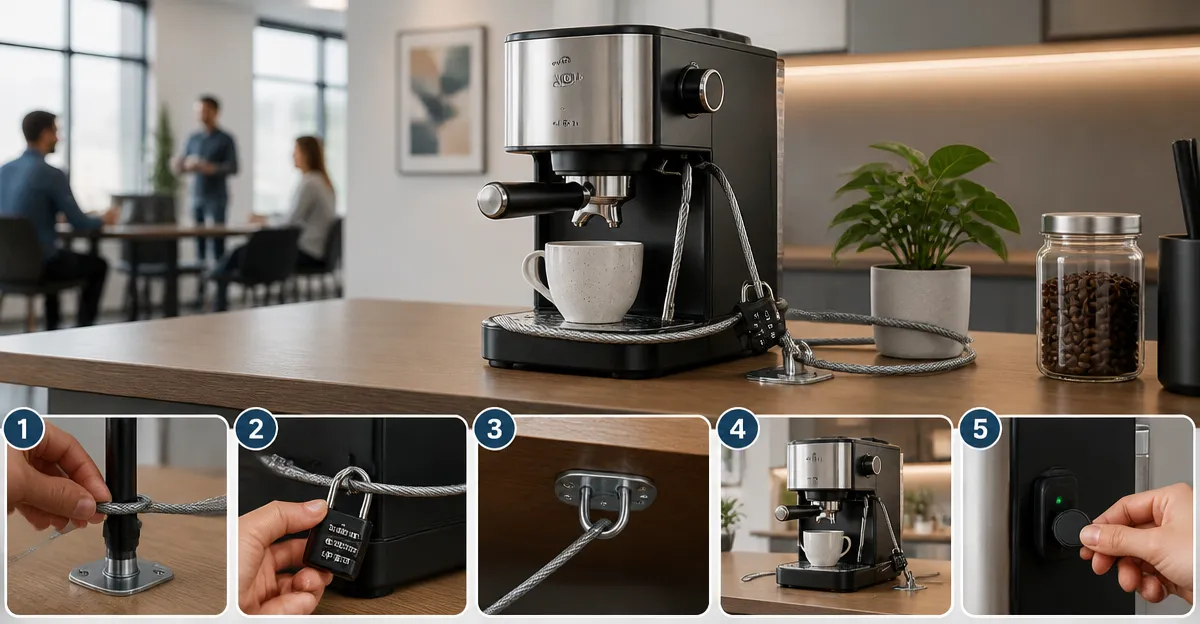
How to Theft‑Proof Your Compact Espresso Machine in Shared Spaces: Simple Locks, Anchors & Smart Security Tips
Introduction
One of the most valuable assets in a communal kitchen is a compact espresso machine. When multiple users share a space, the risk of accidental removal or intentional theft increases. This guide explains how to protect the machine using inexpensive hardware, adhesive locks, and practical security habits. Readers will learn which tools are most effective, how to install them correctly, and how to maintain a safe environment without compromising daily convenience.
The approach combines physical barriers—such as cabinet strap locks and combination locks—with strategic placement of anchors that deter removal. By the end of the article, one will have a complete, step‑by‑step plan that can be implemented in a single afternoon.
What You’ll Need
- Skyla Homes Cabinet Strap Locks (8‑pack, $9.99, 4.6/5 stars)
- WILNIRY Refrigerator Locks (2‑pack, $7.98, 4.5/5 stars)
- Coipdfty Fridge Combination Lock (2‑pack, $19.99, 4.2/5 stars)
- Heavy‑duty double‑sided adhesive tape (optional for extra reinforcement)
- Silicone mat or non‑slip pad (to protect surfaces during installation)
Step 1: Assess the Placement and Identify Anchor Points
Before any hardware is applied, one should evaluate where the espresso machine sits. Most compact models, such as the Casabrews CM5418, have a removable water tank and a detachable portafilter. Identify sturdy surfaces—such as the underside of a countertop, the back of a cabinet, or the refrigerator door—where a lock can be attached without damaging finishes.
Measure the distance between the machine base and the nearest edge. This measurement determines the strap length needed for the Skyla Homes Cabinet Strap Locks. The locks are adjustable from 3 to 7 inches, allowing them to wrap around irregular corners and provide flexible coverage.
When the espresso machine is located near a fridge, consider using a lock that can attach directly to the refrigerator door. The WILNIRY Refrigerator Locks feature a strong adhesive backing that holds on metal surfaces without drilling, making them ideal for this scenario.
Document the chosen anchor points with a quick photograph. This visual record helps verify that the locks remain aligned after the adhesive cures.
Step 2: Prepare Surfaces for Adhesive Installation
All recommended locks rely on a no‑drill adhesive installation. Clean each surface with a lint‑free cloth and isopropyl alcohol. The Skyla Homes Cabinet Strap Locks include alcohol pads for this purpose, ensuring that dust and oils are removed before the adhesive bonds.
Allow the cleaned area to dry completely; any residual moisture can weaken the bond and lead to premature failure. For metal surfaces such as refrigerator doors, a light wipe with a degreaser followed by a water rinse is advisable.
Place a silicone mat beneath the machine during the installation process. The mat prevents accidental scratches and provides a stable platform while the adhesive sets.
After cleaning, set the strap length on the Skyla Homes Cabinet Strap Locks to its final position. The product instructions advise against frequent readjustment after mounting because the adhesive will form a permanent bond.
Step 3: Install Cabinet Strap Locks on the Espresso Machine Base
Take one of the eight Skyla Homes Cabinet Strap Locks and position the strap around the base of the espresso machine, ensuring that the plastic latch faces outward for easy adult access. Press the adhesive side firmly onto the underside of the countertop or cabinet shelf.
Repeat the process on the opposite side of the machine to create a “sandwich” effect. This dual‑strap configuration distributes load evenly and makes it difficult for a determined individual to lift the machine without first releasing both locks.
The product’s rating of 4.6/5 stars from over 40,000 reviewers confirms its reliability in real‑world households. Users frequently note the strong hold and the ease of adult release via a press‑and‑slide mechanism.
Allow the adhesive to cure for at least 24 hours before the machine is moved. During this period, avoid applying any tension to the straps.
Step 4: Secure the Refrigerator Door (If Applicable) Using Refrigerator Locks
If the espresso machine is placed on top of a refrigerator, the WILNIRY Refrigerator Locks provide an additional layer of protection. Peel the backing sticker from each lock and affix it to the refrigerator door at a height that aligns with the machine’s rear panel.
Each lock comes with two keys (four keys total). Insert a key, slide the lock into the locked position, and press the adhesive firmly for 30 seconds. The lock’s strong, non‑drilling adhesive will not damage the refrigerator finish when removed correctly.
These locks are rated 4.5/5 stars by more than 2,600 reviewers, who praise the ease of installation and the ability to protect multiple surfaces, including cabinets, drawers, and even windows.
Once installed, the lock prevents the refrigerator door from being opened without the key, thereby restricting access to the espresso machine when it rests on the appliance.
Step 5: Add a Combination Lock for Redundant Security
For environments where keys might be misplaced, the Coipdfty Fridge Combination Lock offers a keyless alternative. Attach the lock plate to the side of a cabinet or a dedicated anchor bar using the supplied adhesive. Set a unique three‑digit combination that only authorized users know.
The lock’s high‑strength steel wires and heavy‑duty housing ensure that even a determined individual cannot bypass it without tools. Reviewers give it a 4.2/5 rating, noting its smooth combination mechanism and durability over months of daily use.
After the combination is set, thread the cable through a reinforced hole in the espresso machine’s base or through the handle of the water tank. Secure the cable with the built‑in latch, creating a physical tether that prevents removal without unlocking the combination.
Because the lock does not require keys, it eliminates the risk of lost keys while still providing a robust deterrent.
Step 6: Reinforce the Installation with Heavy‑Duty Tape (Optional)
While the adhesive on the recommended locks is sufficient for most surfaces, high‑traffic shared kitchens may benefit from an extra layer of security. Apply a strip of heavy‑duty double‑sided tape over the lock’s adhesive area before pressing it onto the surface.
This tape distributes shear forces and reduces the chance of the lock peeling away under repeated stress. It also protects delicate finishes by providing a buffer between the lock and the surface.
Ensure the tape is compatible with both the lock’s backing material and the target surface. Test a small hidden area first to avoid discoloration.
After the tape is applied, repeat the 24‑hour curing period before using the machine.
Tips & Pro Tips
- Warm the adhesive with a hair dryer for 30 seconds before removal. This softens the bond and prevents paint damage, as noted by many Skyla Homes Cabinet Strap Locks users.
- Label each lock with a discreet identifier (e.g., "Espresso Base" or "Fridge Anchor") to avoid confusion during daily use.
- Store spare keys for the WILNIRY Refrigerator Locks in a locked drawer. This prevents unauthorized duplication while ensuring authorized personnel can access the machine quickly.
- Rotate the combination on the Coipdfty Fridge Combination Lock every three months to maintain security hygiene.
- Periodically inspect the adhesive edges for wear. Replace any lock that shows signs of lifting or reduced grip.
Troubleshooting
Problem: Lock adhesive fails to bond on glossy surfaces.
Solution: Lightly sand the area with fine‑grit sandpaper (220 grit) to create a micro‑rough texture, then clean with alcohol before re‑applying the lock.
Problem: Combination lock dial feels loose.
Solution: Reset the lock by pressing the reset button (usually located on the back of the lock) and re‑enter the desired combination. Ensure the dial clicks firmly into each number.
Problem: Refrigerator lock detaches after a month.
Solution: Verify that the surface was completely dry before installation. If moisture was present, clean the area again, allow it to dry, and re‑apply using fresh adhesive pads.
Conclusion
Securing a compact espresso machine in a shared environment does not require expensive alarm systems. By employing Skyla Homes Cabinet Strap Locks, WILNIRY Refrigerator Locks, and the Coipdfty Fridge Combination Lock, one can create a layered defense that deters both accidental removal and intentional theft. The steps outlined above provide a practical, low‑cost solution that preserves the aesthetic of the kitchen while delivering peace of mind.
Implement the guide, monitor the locks for wear, and adjust the security routine as needed. With these measures in place, the espresso machine will remain a reliable source of caffeine for all authorized users.
Products Mentioned in This Guide
Frequently Asked Questions
What are the most affordable lock options for securing a compact espresso machine in a shared kitchen?
Cabinet strap locks and inexpensive combination padlocks cost under $10 and can be installed without tools.
How do I install a cabinet strap lock on an espresso machine?
Thread the strap through the machine’s base, tighten the screw, and set a unique combination or key to prevent removal.
Can adhesive anchors hold a heavy espresso machine without damaging the countertop?
Heavy‑duty adhesive anchors bond to most surfaces and support the machine’s weight while leaving a clean removal path.
What daily habits help deter theft of shared kitchen equipment?
Encourage users to lock the machine after each use, log usage, and report any missing parts immediately.
Are smart security accessories like Bluetooth locks worth the investment?
Bluetooth locks provide real‑time alerts and remote locking, ideal for high‑traffic areas despite a higher upfront cost.