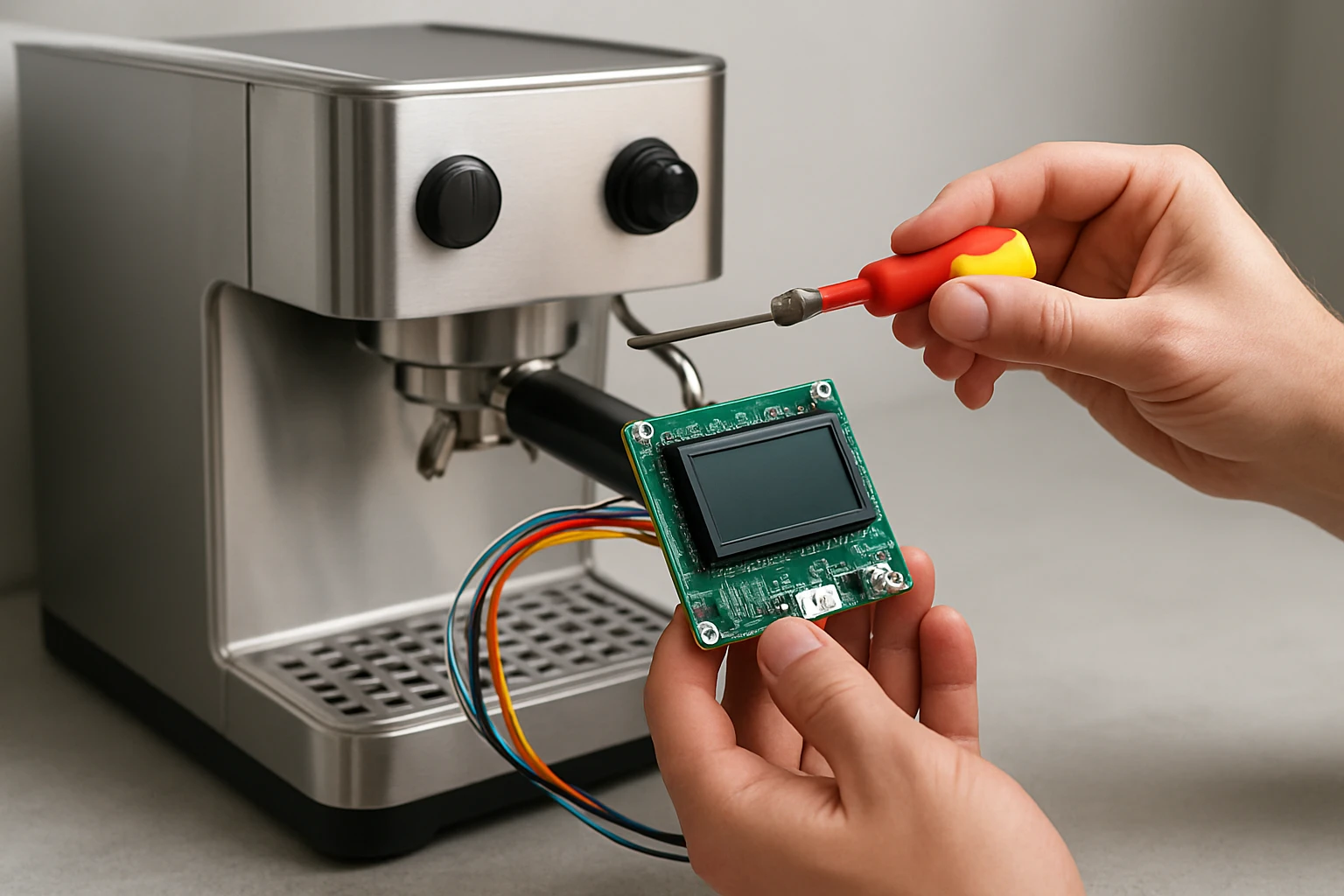

How to Safely Install a DIY PID Mod Kit on Compact Espresso Machines — Step-by-Step Guide for Beginners
Introduction
Installing a PID (Proportional‑Integral‑Derivative) temperature controller on a compact espresso machine can dramatically improve temperature stability and extraction consistency. This guide will teach the reader how to perform the modification safely, from preparing the workspace to calibrating the new system. The instructions are written for beginners, yet they contain enough technical depth to satisfy an intermediate audience. By the end of the article, one will be able to enjoy café‑quality espresso without the guesswork of uncontrolled temperature fluctuations.
What You’ll Need
- DIY PID kit compatible with the machine’s heating element (typically a 40‑50 W solid‑state PID controller).
- Thermocouple (type K) with appropriate sheath for high‑temperature exposure.
- Screwdriver set (Phillips and flat‑head) with insulated handles.
- Heat‑shrink tubing and electrical tape for secure wiring.
- Soldering iron with fine tip and lead‑free solder.
- Multimeter for continuity and voltage checks.
- Safety glasses and heat‑resistant gloves.
- Optional: Ninja Luxe Café Pro Espresso Machine – a versatile 4‑in‑1 espresso system that includes an integrated grinder and dual froth system, priced at $599.00 with a rating of 4.3 out of 5 stars from 559 reviews.
Step 1 – Prepare the Workspace and Ensure Safety
Begin by disconnecting the espresso machine from the electrical outlet and allowing it to cool completely; residual heat can cause burns or damage components. Place the machine on a stable, non‑conductive surface and cover the surrounding area with a fire‑retardant mat to protect against accidental sparks. Wear safety glasses and heat‑resistant gloves to shield the eyes and hands from solder splatter and hot surfaces. Verify that the multimeter reads zero voltage at the power terminals before proceeding, confirming that the machine is truly de‑energized.
Step 2 – Disassemble the Boiler Housing
Using the insulated screwdriver set, remove the outer panel that encloses the boiler and heating element; most compact machines secure this panel with four to six screws. Carefully detach any wiring harnesses that connect the panel to the control board, noting the orientation of each connector for reassembly. If the machine includes an integrated grinder, such as the one found on the Ninja Luxe Café Pro Espresso Machine, set the grinder aside without disconnecting its power cable, as it will not be affected by the PID installation. Keep all removed screws in a labeled container to avoid loss.
Step 3 – Install the Thermocouple
Locate the existing temperature sensor, which is typically a simple resistance‑type probe mounted on the boiler wall. Remove the stock sensor by loosening its retaining nut and gently pulling it out of the thermally conductive paste. Insert the type K thermocouple into the same bore, ensuring that the junction sits flush against the boiler surface for accurate readings. Secure the thermocouple with the original retaining nut, applying a thin layer of high‑temperature silicone paste to improve thermal transfer.
The thermocouple’s leads should be routed away from moving parts and protected with heat‑shrink tubing to prevent abrasion. This step is crucial because the PID controller relies on precise temperature feedback to modulate power delivery; an improperly positioned sensor will produce erratic temperature swings.
Step 4 – Wire the PID Controller
Connect the thermocouple leads to the designated input terminals on the PID controller, observing the polarity markings (typically red for positive and yellow for negative). Next, splice the PID’s output leads into the heating element circuit, replacing the original on/off relay connection. Use a soldering iron to create clean, solid joints, then cover each joint with heat‑shrink tubing followed by electrical tape for added insulation.
Before finalizing the wiring, employ the multimeter to verify continuity between the PID output and the heating element, and to ensure that no short circuits exist between the thermocouple and power lines. Proper insulation is essential to prevent electrical fires, especially in the high‑humidity environment of an espresso machine.
Step 5 – Mount the PID Controller and Perform Calibration
Secure the PID controller in a location that is both accessible for future adjustments and protected from moisture; many users mount the unit on the machine’s rear panel using the supplied brackets. Connect the controller to a power source using the original power cord, ensuring that the cord’s rating matches the machine’s voltage requirements (typically 120 V or 230 V depending on region). Power the machine back on and access the PID’s user interface to initiate the calibration routine.
Follow the manufacturer’s instructions to set the target brew temperature (commonly 93 °C for espresso) and allow the PID to run for several brew cycles, observing the temperature curve on the display. Adjust the PID’s tuning parameters if the temperature overshoots or undershoots the setpoint; most kits include a default configuration that works for standard boilers. Once stable temperature control is confirmed, reattach the outer panel, replace all screws, and perform a final safety check before brewing.
Tips & Pro Tips
- Label each wire with heat‑shrink markers before disconnecting; this reduces the chance of mis‑wiring during reassembly.
- Use a digital temperature probe to double‑check the thermocouple’s accuracy before installing the PID.
- If the machine’s boiler is made of aluminum, consider adding a thin layer of thermal paste to improve heat transfer from the thermocouple.
- Document each step with photographs; this visual record simplifies troubleshooting and future maintenance.
- When selecting a PID kit, choose one with a built‑in LCD display and programmable profiles; such features streamline the calibration process.
Troubleshooting
Problem: The machine powers on but does not heat.
Solution: Verify that the PID’s output is delivering voltage to the heating element using a multimeter. Check for loose connections or damaged heat‑shrink tubing that may be causing an open circuit.
Problem: Temperature fluctuates wildly during brewing.
Solution: Re‑examine the thermocouple placement; the sensor must be in direct contact with the boiler wall. Additionally, adjust the PID’s proportional and integral settings to dampen oscillations.
Problem: Electrical arcing is observed near the wiring harness.
Solution: Ensure all solder joints are fully insulated and that the wiring gauge matches the current draw of the heating element. Replace any compromised wires immediately.
Conclusion
By following this step‑by‑step guide, the reader can install a DIY PID mod kit on a compact espresso machine with confidence and safety. The modification provides precise temperature control, which translates into more consistent espresso extraction and a heightened appreciation for coffee craftsmanship. Although the process requires careful attention to detail, the tools and techniques described are accessible to anyone with basic mechanical and electrical skills. One is now equipped to enjoy café‑quality drinks at home while maintaining the reliability and longevity of the espresso machine.
Products Mentioned in This Guide
Ninja Luxe Café Pro Espresso Machine
Price: $599.00
Rating: 4.3 out of 5 stars (559 reviews)
Key features include 4‑in‑1 brewing versatility, integrated tamper, dual froth system, and Barista Assist Technology for guided espresso preparation.
Frequently Asked Questions
What is a PID controller and why install it on a compact espresso machine?
A PID controller regulates water temperature by continuously adjusting heating power, delivering more stable brew temperatures and better espresso extraction.
Which type of thermocouple is recommended for a DIY PID mod?
Use a Type K thermocouple with a high‑temperature sheath to accurately sense the boiler temperature.
Do I need special tools to install a PID kit?
A basic screwdriver set with insulated handles, a fine‑tip soldering iron, heat‑shrink tubing, electrical tape, and a multimeter are sufficient.
How can I ensure the wiring is safe after installation?
Secure all connections with heat‑shrink tubing, double‑check continuity with a multimeter, and insulate exposed wires with electrical tape.
What is the first step in calibrating the new PID controller?
Set the PID to the desired brew temperature, allow the machine to reach steady state, then fine‑tune the PID parameters (P, I, D) using the controller’s built‑in tuning mode.