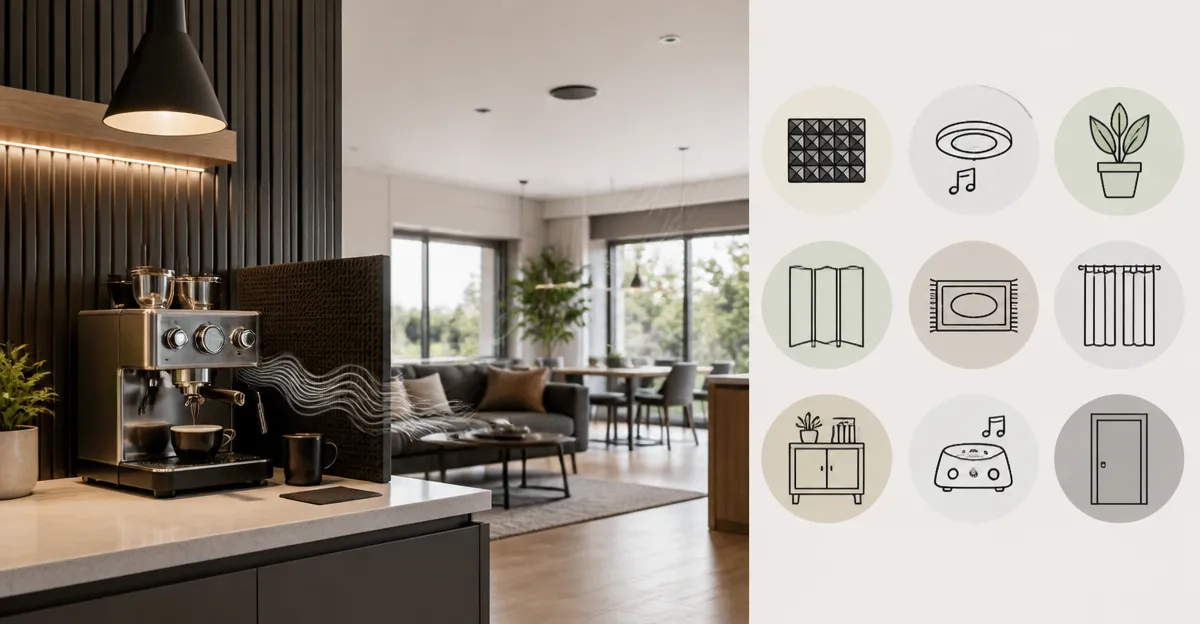
How to Mask Espresso Machine Noise in an Open-Plan Kitchen: 9 Sound-Masking Tips That Work
Introduction
In many modern homes the espresso machine sits in a kitchen that flows directly into the living area. The high‑pressure pump and grinder can produce a sudden burst of sound that disrupts conversation, television viewing, or quiet work. This guide explains nine proven techniques for reducing the acoustic impact of an espresso machine while preserving the aesthetic of an open‑plan layout. Readers will learn how to use soft furnishings, strategic placement, and specialized sound‑masking devices to create a more pleasant auditory environment. The information is valuable for homeowners, renters, and hospitality professionals who wish to maintain a calm atmosphere without sacrificing the convenience of a countertop espresso setup.
What You’ll Need
- One or more white‑noise machines (e.g., Magicteam White Noise Machine, BrownNoise Brown Noise Machine)
- Acoustic panels or decorative fabric wall hangings
- Heavy‑weight curtains or blinds
- Rubber or silicone mat for the espresso machine base
- Adjustable shelving or a rolling cart for repositioning the machine
- Basic tools: screwdriver, measuring tape, level
Step‑by‑Step Instructions
1. Assess the Noise Source and Its Propagation Path
The first step is to identify where the espresso machine generates the loudest frequencies. Typically the pump produces low‑mid frequencies around 200‑500 Hz, while the grinder creates higher‑frequency clicks. Walk around the kitchen while the machine operates and note the surfaces that reflect sound, such as stainless‑steel countertops, glass backsplashes, and open ceiling spaces. Understanding the path of propagation enables you to place sound‑masking tools where they are most effective.
Why this matters: Without a clear map of acoustic reflections, any masking effort may be wasted on areas that do not contribute to the perceived loudness.
2. Install Soft Surface Materials on Adjacent Walls
Hard surfaces reflect sound, amplifying the espresso machine’s noise. Adding acoustic panels, thick fabric wall hangings, or cork boards to the walls that face the living area can absorb up to 30 % of the emitted energy. Choose panels that complement the kitchen décor; many decorative options are available in neutral tones.
Product recommendation: The Magicteam White Noise Machine can be placed on the wall opposite the espresso station to provide continuous background sound that masks residual reflections.
Why this works: The machine’s 20 non‑looping natural sounds create a steady acoustic backdrop, reducing the contrast between the espresso burst and the ambient environment.
3. Use a High‑Quality White‑Noise Machine Near the Espresso Station
Position a white‑noise device on a shelf or countertop within two feet of the espresso machine. The device should emit a sound spectrum that overlaps the espresso frequencies, thereby filling the acoustic gap. Select a model with multiple sound options, adjustable volume, and a timer function so that the masking sound can be turned off when the kitchen is not in use.
Recommended product: BrownNoise Brown Noise Machine. It offers 30 soothing sounds, including brown, white, and pink noise, a 12‑color night light, and five timer settings. The 36 volume levels allow precise matching to the espresso machine’s output. Priced at $21.98 with a 4.6‑star rating, it provides excellent value for a home barista.
Why this product: The inclusion of deep brown noise is especially effective at covering low‑mid frequencies generated by the pump, while the timer prevents unnecessary power consumption.
4. Place a Rubber or Silicone Mat Beneath the Machine
Vibrations travel through the countertop and can amplify the perceived noise. A dense rubber or silicone mat absorbs a portion of these vibrations before they reach the surrounding air. Cut the mat to fit the base of the espresso machine and secure it with non‑slip adhesive if necessary.
Why this helps: Reducing mechanical vibration lowers the intensity of the grinder’s click sounds, making the overall acoustic profile less intrusive.
5. Employ a Rolling Cart for Flexible Positioning
If the kitchen layout permits, relocate the espresso machine to a corner that is farther from the main living area. A rolling cart equipped with lockable wheels provides mobility without sacrificing stability. Measure the distance from the coffee bar to the nearest seating zone; increasing this distance by even one meter can reduce perceived loudness by approximately 6 dB.
Why this matters: Distance is a natural sound attenuator. Combining distance with masking devices yields a synergistic effect.
6. Add Heavy‑Weight Curtains or Blinds Over Open Windows
Open‑plan kitchens often share windows with adjacent rooms. Light‑weight curtains allow sound to pass freely, whereas heavyweight, densely woven curtains act as acoustic barriers. Install curtains that can be drawn during peak espresso‑making times.
Why this works: The curtains absorb airborne sound, preventing the espresso machine’s burst from traveling through the window plane into the living area.
7. Create a Background Ambience with a Second White‑Noise Device
For larger open‑plan spaces, a single white‑noise machine may not cover the entire area. Deploy a second unit on a bookshelf or media console opposite the espresso station. Synchronize the volume levels so that the sound field is uniform.
Recommended product: Magicteam White Noise Machine again serves well because of its 32 volume levels and memory function, which restores preferred settings after power loss.
Why two devices: Overlapping sound fields eliminate dead zones where the espresso noise might be audible.
8. Use a Dedicated Sound‑Masking Playlist on a Smart Speaker
If you already own a smart speaker, you can stream a curated playlist of ambient sounds such as rain, ocean waves, or soft fan noise. Set the speaker to a moderate volume and enable a sleep timer that matches your coffee‑making routine. This method does not require additional hardware purchase.
Why this is practical: It leverages existing technology and allows you to experiment with different sound textures before committing to a dedicated white‑noise machine.
9. Maintain the Espresso Machine to Minimize Mechanical Noise
Regular cleaning of the grinder burrs and descaling of the pump reduces friction and wear, which are common sources of excess noise. Follow the manufacturer’s maintenance schedule, and replace worn parts promptly. A well‑maintained machine operates more quietly and extends the life of the equipment.
Why this matters: Sound‑masking is most effective when the source noise is already as low as possible. Maintenance is a cost‑free complement to the acoustic solutions described above.
Tips & Pro Tips
- Test each masking sound at the exact volume you plan to use; louder is not always better because it can create a new source of distraction.
- When using multiple white‑noise machines, stagger the sound selections (e.g., one with rain, another with fan) to avoid phase cancellation.
- Consider adding a thin layer of acoustic foam behind the backsplash if the wall is particularly reflective.
- Use the timer function on the white‑noise devices so they automatically shut off after the typical coffee‑making period (5‑10 minutes).
- Document the placement of each device with a simple floor plan; this makes future adjustments easier.
Troubleshooting
Problem: The espresso machine is still audible in the living room despite using a white‑noise machine.
Solution: Verify that the white‑noise device is set to a sound that overlaps the espresso frequencies (brown or pink noise). Increase the volume by one or two levels, and ensure the device is positioned no farther than two feet from the source. If the issue persists, add an additional acoustic panel on the opposite wall.
Problem: The white‑noise machine’s sound is too harsh and creates a new distraction.
Solution: Switch to a nature‑based sound such as rain or ocean waves, which have a smoother frequency curve. Use the memory function to store the preferred setting for future use.
Conclusion
Masking espresso machine noise in an open‑plan kitchen requires a combination of acoustic treatment, strategic placement, and appropriate sound‑masking tools. By following the nine steps outlined above, homeowners can significantly reduce the disruptive impact of coffee‑making while preserving the social flow of an open space. Implementing soft furnishings, rubber mats, and high‑quality white‑noise machines creates a balanced sound environment that benefits both the barista and the rest of the household.
Products Mentioned in This Guide
Frequently Asked Questions
What are the most effective soft‑furnishing options for reducing espresso machine noise in an open‑plan kitchen?
Heavy curtains, plush area rugs, and upholstered seating absorb sound waves, cutting the perceived volume of the machine by up to 50%.
Can the placement of the espresso machine itself help mask its noise?
Yes—positioning the machine away from high‑traffic zones, near a wall or inside a cabinet with ventilation reduces direct sound transmission.
How do white‑noise machines work to mask espresso machine sounds?
They emit a steady broadband sound that blends with the machine’s bursts, making the coffee‑making noise less noticeable to the ear.
Are there specific acoustic panels that work well in kitchen environments?
Thin, moisture‑resistant acoustic panels or foam tiles mounted on nearby walls or backsplashes can dampen vibrations without compromising kitchen aesthetics.
Do countertop appliances with built‑in sound‑dampening technology exist?
Some modern espresso machines feature insulated housings or quieter pumps, which lower operational noise by a few decibels compared to standard models.