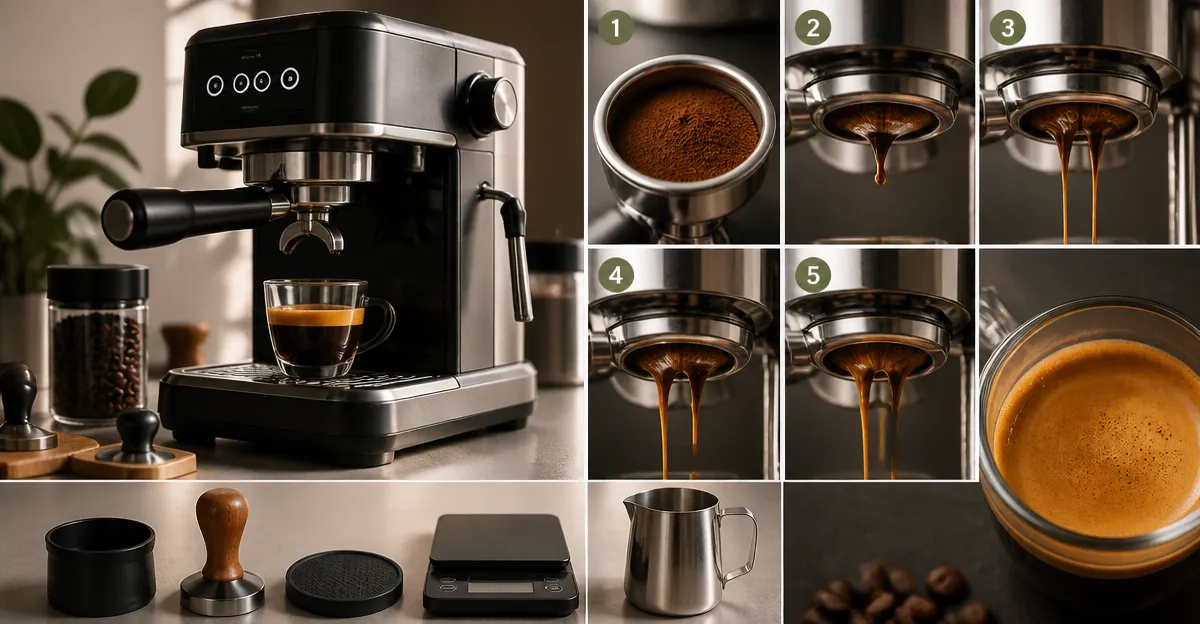
Introduction
This guide explains how to use pre‑infusion on compact espresso machines to achieve a fuller crema and more balanced flavor. Readers will learn why low‑pressure pre‑infusion improves extraction, how to control time and pressure, and which tools simplify the process. The information is valuable for home baristas who want café‑quality results without investing in commercial‑grade equipment.
Pre‑infusion gently saturates coffee grounds before full pressure is applied, reducing channeling and extracting subtle aromatic compounds. By mastering this technique, one can consistently produce espresso that highlights the origin characteristics of the beans. The guide combines practical steps with product recommendations drawn from real‑world reviews.
Each step is written for an intermediate audience familiar with basic espresso concepts but seeking deeper control. The tone remains professional, and the instructions are actionable, allowing readers to apply the method immediately.
Below, the required tools are listed, followed by a detailed, numbered workflow that integrates the recommended products.
What You'll Need
- A compact espresso machine with adjustable pressure (e.g., CASABREWS Compact Espresso Machine).
- A reliable burr grinder for consistent particle size.
- A digital kitchen scale for precise dosing.
- Fresh coffee beans, preferably roasted within the last two weeks.
- A tamper, dosing funnel, and a timer.
- Optional: AeroPress Coffee Press for pre‑infusion practice without the espresso machine.
Step‑by‑Step Instructions
1. Prepare Water and Warm the Machine
Begin by filling the water reservoir with filtered water; low mineral content prevents scale buildup and ensures stable temperature. Turn on the machine and allow the boiler to reach the optimal brewing temperature (around 195‑205°F). Most compact machines, such as the CASABREWS Compact Espresso Machine, feature a 34 oz removable tank and a 20‑bar pump that heats quickly, reducing wait time.
While the machine heats, pre‑heat the portafilter by running hot water through it for 10 seconds. This step stabilizes temperature during extraction, preventing sudden drops that could affect crema formation.
Why this matters: Consistent water temperature combined with a stable boiler reduces variability, allowing the pre‑infusion stage to focus solely on pressure control.
Product note: The CASABREWS unit is praised for its compact design (price $139.99, rating 4.3/5 from 8,028 reviews) and reliable 20‑bar pump, making it an ideal choice for beginners and space‑constrained kitchens.
2. Grind and Dose the Coffee
Measure 18‑20 g of beans for a double shot using a digital scale. Grind to a medium‑fine consistency—slightly coarser than espresso powder but finer than drip coffee. Consistency is crucial because pre‑infusion relies on uniform water flow through the puck.
Distribute the grounds evenly in the portafilter using a dosing funnel, then tamp with a calibrated tamper to achieve 30 lb of pressure. A level tamp creates a flat surface, preventing channeling during the low‑pressure phase.
Why this matters: Uniform particle size and even tamping ensure that the low‑pressure water can saturate the entire puck before the pump ramps up, resulting in balanced extraction.
Product note: The Breville Infuser Espresso Machine includes a tamper and a dosing funnel, and its 1650 W element delivers rapid heat. It is rated 4.3/5 from 3,095 reviews and costs $589.99, offering advanced pre‑infusion control for those who wish to upgrade later.
3. Set the Pre‑Infusion Time and Pressure
Locate the pre‑infusion setting on the machine. On the CASABREWS model, the pressure gauge allows manual adjustment; set the pump to deliver approximately 2‑3 bar for the first 5‑7 seconds. This low pressure gently wets the grounds without forcing water through too quickly.
If the machine lacks a dedicated pre‑infusion button, simulate the process by initiating a short “brew” cycle, then pausing after the first few seconds. Resume the cycle to reach full 20‑bar pressure for the remainder of the extraction.
Why this matters: Low‑pressure pre‑infusion expands the coffee bed uniformly, reducing the risk of uneven extraction and enhancing the development of aromatic oils that contribute to crema.
Product note: The De'Longhi Stilosa Espresso Machine provides a 15‑bar pump and a manual milk frother, offering a cost‑effective platform ($149.95, rating 4.2/5 from 13,828 reviews) for practicing pre‑infusion without complex electronics.
4. Execute the Extraction
Place the tamped portafilter into the group head and start the brew cycle. Observe the pressure gauge: the first few seconds should remain at the low pre‑infusion level before the gauge climbs to the machine’s maximum (typically 20 bar). Maintain a total extraction time of 25‑30 seconds for a double shot.
Collect the espresso in a pre‑warmed demitasse cup. The resulting shot should display a thick, golden crema that persists for at least 30 seconds, indicating proper extraction.
Why this matters: Accurate timing combined with controlled pressure transition ensures that both soluble and aromatic compounds are extracted, delivering a richer flavor profile.
Product note: The Amaste Espresso Machine includes a visual pressure gauge and a 15‑bar pump, making it easy to monitor the pressure shift. Priced at $269.99 with a 4/5 rating from 171 reviews, it also supplies a built‑in grinder for consistent dosing.
5. Froth Milk (Optional for Latte‑Based Drinks)
If a milk‑based beverage is desired, engage the steam wand after the espresso extraction. Purge the wand briefly to remove residual water, then submerge the tip just below the surface of cold milk. Introduce air for 2‑3 seconds, then fully submerge to create micro‑foam.
Heat the milk to 150‑155°F; excessive temperature destroys sweet sugars and produces a thin foam. Once the desired texture is achieved, tap the pitcher on the counter and swirl to integrate the foam.
Why this matters: Properly textured milk balances the intensity of the espresso and enhances mouthfeel, especially when the crema is already well‑developed from effective pre‑infusion.
Product note: Both the CASABREWS and De'Longhi machines feature steam wands, but the CASABREWS wand is highlighted in reviews for producing “very smooth foamy hot milk quickly.” This makes it a reliable choice for latte art enthusiasts.
Tips & Pro Tips
- Use freshly roasted beans and grind immediately before brewing to preserve volatile oils that contribute to crema.
- Experiment with pre‑infusion duration: 4 seconds for lighter roasts, 7 seconds for darker beans.
- Maintain a consistent tamp pressure; a calibrated tamper helps repeatable results.
- Periodically descale the machine (every 150‑200 cups) to keep pressure stable; the De'Longhi guide recommends a 1/4 bottle of descaler mixed with water.
- If the machine overheats after steaming, allow a brief cooldown before the next extraction to avoid the “over‑heating protection mode” noted in CASABREWS reviews.
Troubleshooting
- Weak crema or channeling: Reduce grind size slightly and increase tamp pressure. Verify that pre‑infusion pressure is set to 2‑3 bar.
- Excessive bitterness: Shorten the total extraction time by 2‑3 seconds or lower the brew temperature by 2‑3°F.
- Steam wand sputters: Purge the wand before and after frothing; clean the nozzle regularly to prevent milk residue buildup.
- Machine does not reach pressure: Check water tank level, ensure the pump is not in protection mode, and descale if necessary.
Conclusion
By following these steps, one can master pre‑infusion on compact espresso machines, resulting in richer crema, balanced acidity, and a more nuanced flavor profile. The guide emphasizes the importance of temperature stability, precise dosing, and controlled pressure transitions. With the recommended tools, even a modest countertop setup can deliver café‑quality espresso.
Readers are encouraged to experiment with grind size, pre‑infusion duration, and milk texture to personalize their drinks. Consistent practice will transform the ritual into a reliable, enjoyable part of the daily routine.
Enjoy the process, and remember that the best espresso is the one that reflects the unique character of the beans you love.
Products Mentioned in This Guide
Frequently Asked Questions
What is pre‑infusion and why is it important for compact espresso machines?
Pre‑infusion gently wets the coffee puck at low pressure, reducing channeling and improving crema and flavor balance.
How can I control pre‑infusion time and pressure on a small home espresso machine?
Use the machine’s built‑in pre‑infusion settings or a programmable pressure controller to set a 2‑5 second low‑pressure burst before full pressure.
Which tools or accessories help achieve consistent pre‑infusion?
A pressure‑gauge portafilter, a digital timer, and a flow‑control valve are the most useful accessories for repeatable results.
Can I use pre‑infusion with any coffee grind size?
Yes, but a slightly finer grind than your usual setting works best because it retains water longer during the low‑pressure phase.
Does pre‑infusion affect the longevity of my compact espresso machine?
When set correctly, pre‑infusion reduces stress on the pump and seals, potentially extending the machine’s lifespan.