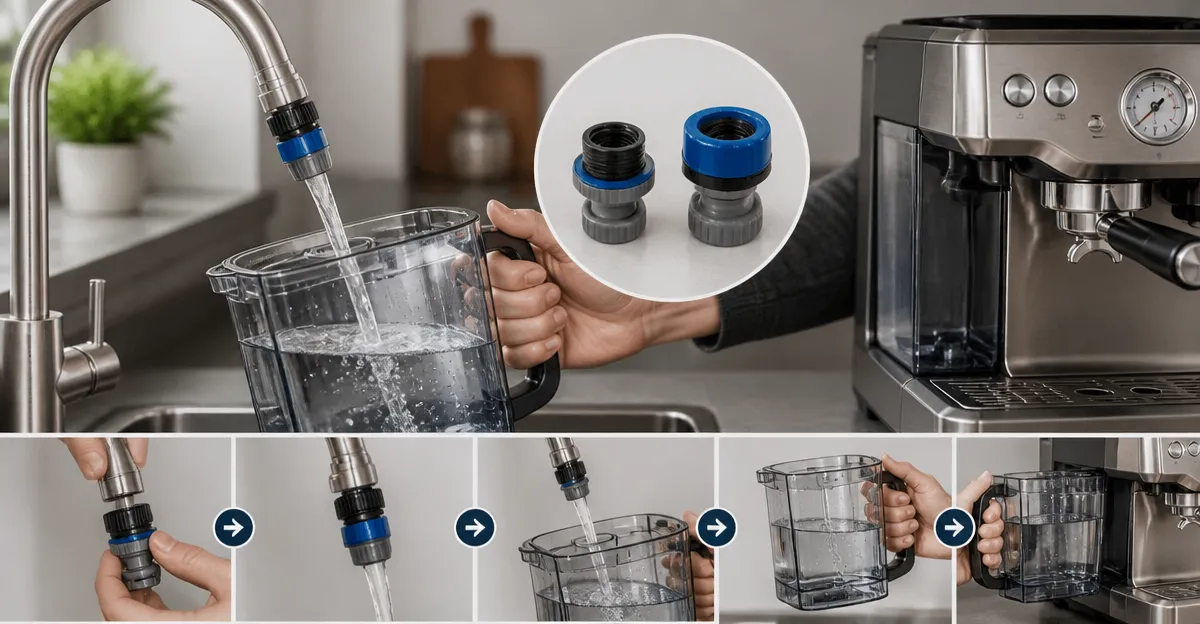
How to Quickly Fill Your Espresso Machine Reservoir with a Faucet Adapter: Step-by-Step No‑Spill Guide
Introduction
Every coffee enthusiast knows that a dry water tank halts the espresso‑making process and can damage delicate pump components. This guide teaches readers how to attach a simple faucet adapter to a kitchen tap and fill the reservoir of any espresso machine quickly, cleanly, and safely. By following the steps, one will avoid common spills, protect the machine’s internal seals, and maintain consistent water pressure for optimal extraction.
The instructions are applicable to a range of home machines, from premium models such as the Breville Barista Express to budget‑friendly options like the CASABREWS Compact Espresso Machine. Even if a reader does not own any of these devices, the technique remains valuable because it reduces water‑handling time and eliminates the need for a separate pitcher.
In addition to the step‑by‑step instructions, the article provides practical tips, troubleshooting advice, and a curated list of recommended tools. The tone remains professional and authoritative, ensuring that both novice and intermediate users can follow the process with confidence.
What You’ll Need
- A faucet‑to‑tube adapter (silicone‑coated, 1/4‑inch barb) that fits standard kitchen taps.
- A clean, food‑grade hose or tubing compatible with the adapter.
- A small, graduated measuring cup (optional, for precise volume).
- Paper towels or a microfiber cloth for immediate spill control.
- Optional: Breville Barista Express – a machine whose reservoir size (67 oz) demonstrates the benefit of a quick‑fill system.
Step 1 – Prepare the Work Area
Begin by clearing the countertop around the espresso machine and the sink. Place a dry towel on the surface to catch any accidental drips. Ensure the faucet is fully turned off before attaching any hardware; a partially open valve can cause pressure spikes that damage the adapter.
Why this matters: A clean workspace reduces the risk of foreign particles entering the water line, which could later clog the machine’s internal filter. The towel acts as a passive barrier, preventing water from reaching electrical components.
Step 2 – Install the Faucet Adapter
Unscrew the aerator from the faucet tip and replace it with the supplied 1/4‑inch barb adapter. Push the silicone‑coated hose onto the barb until it seats firmly; you should feel a slight resistance that indicates a watertight seal.
For machines with larger reservoirs, such as the Breville Barista Express (67 oz water tank), a 2‑meter hose provides enough length to reach the back of the unit without bending sharply. The silicone coating prevents static cling and ensures a smooth flow of water.
Check for leaks by briefly turning the tap on a low setting. If water seeps from the connection, tighten the barb or apply a small amount of food‑grade silicone sealant.
Step 3 – Position the Espresso Machine
Slide the espresso machine close enough to the sink so that the hose can reach the reservoir inlet without stretching. For countertop models, it is often easiest to tilt the machine slightly forward, allowing gravity to assist the water flow.
The CASABREWS Compact Espresso Machine features a 34‑oz removable water tank, which can be detached for direct filling. However, using the faucet adapter eliminates the need to remove the tank, saving time and reducing the chance of spills.
Secure the hose to the tank’s inlet using the built‑in clamp (if present) or a simple zip tie. Ensure the connection is snug; a loose fit can cause air bubbles that interfere with pump pressure.
Step 4 – Fill the Reservoir
Open the faucet fully and allow water to flow through the hose into the reservoir. Monitor the water level visually; most machines have a transparent window or a marked gauge. For the Chefman CraftBrew Espresso Machine, the 1.5‑liter tank fills in under 30 seconds when using a standard 2‑liter faucet flow.
When the desired level is reached, turn off the tap immediately to prevent over‑filling. If the machine includes an automatic shut‑off sensor (common on newer models), the sensor will stop the flow once the tank is full, providing an extra safety net.
Close the hose clamp to lock the water in place, then gently shake the machine to release any trapped air bubbles. This step ensures consistent pressure during the next brewing cycle.
Step 5 – Disconnect and Store the Adapter
Turn the faucet off completely, then unscrew the adapter. Rinse the hose with warm water and hang it on a hook to dry. Store the adapter in a dry drawer to prevent mildew.
Regularly inspect the silicone coating for cracks. A degraded hose can introduce micro‑particles into the water, which may affect the taste of the espresso and increase wear on the pump.
By following these steps, one can fill any espresso machine reservoir in under a minute, without the need for a separate pitcher or the risk of splashing water onto electrical components.
Tips & Pro Tips
- Use filtered water. Hard water leaves mineral deposits that can clog the internal heating element. The Breville Barista Express includes a replaceable water filter; replace it every 60 uses for optimal performance.
- Pre‑warm the hose. Run warm water through the hose for a few seconds before the final fill. Warm water reduces thermal shock to the reservoir, extending its lifespan.
- Check the pressure gauge. Machines with a pressure gauge (e.g., the Breville Barista Express) should read between 9 and 10 bars after filling. If the gauge is low, bleed air from the system by pulling a short shot without coffee.
- Maintain the adapter. Every month, disconnect and soak the hose in a mild vinegar solution to dissolve any buildup.
- Label the hose. Use a waterproof label to note the last cleaning date; this habit prevents accidental reuse of a dirty hose.
Troubleshooting
Problem: Water leaks from the hose connection.
Solution: Ensure the barb is fully seated and the hose is not twisted. Apply a thin layer of food‑grade silicone sealant and re‑test.
Problem: Reservoir does not fill completely.
Solution: Air may be trapped in the hose. Detach the hose, purge it by running water into a sink, then re‑attach and resume filling.
Problem: After filling, the machine displays an “over‑temperature” warning.
Solution: Verify that the water temperature is not above 80 °C (176 °F). Use room‑temperature or slightly warm water; extreme heat can trigger safety sensors.
Conclusion
This guide has demonstrated a reliable, no‑spill method for filling espresso machine reservoirs using a faucet adapter. By preparing the workspace, installing the adapter correctly, positioning the machine, and following a controlled fill process, users can save time, protect their equipment, and enjoy consistent espresso extraction. The additional tips and troubleshooting section further empower readers to maintain a clean water system and avoid common pitfalls.
Implementing these practices will extend the lifespan of premium machines such as the Breville Barista Express and budget‑friendly models like the CASABREWS Compact Espresso Machine. Readers are encouraged to experiment with the technique and adapt it to their own kitchen configurations.
Products Mentioned in This Guide
Frequently Asked Questions
How do I attach a faucet adapter to fill my espresso machine reservoir?
Screw the adapter onto a standard kitchen tap, secure the hose, and connect the other end to the machine’s water inlet, ensuring a tight seal before turning on the water.
Will a faucet adapter work with any espresso machine?
Most home espresso machines with a removable water tank are compatible, but check the inlet size; adapters typically fit standard ¼‑inch threads.
What are the main benefits of using a faucet adapter instead of a pitcher?
It eliminates spills, speeds up refilling, and maintains consistent water pressure, protecting the pump and seals.
How can I prevent leaks or spills when using the adapter?
Tighten all connections, use the built‑in shut‑off valve on the adapter, and monitor the flow until the tank is full.
Is it safe to use tap water directly with the adapter?
Yes, as long as the water is filtered or the machine’s built‑in filter is used, tap water won’t harm the pump and keeps the espresso tasting fresh.