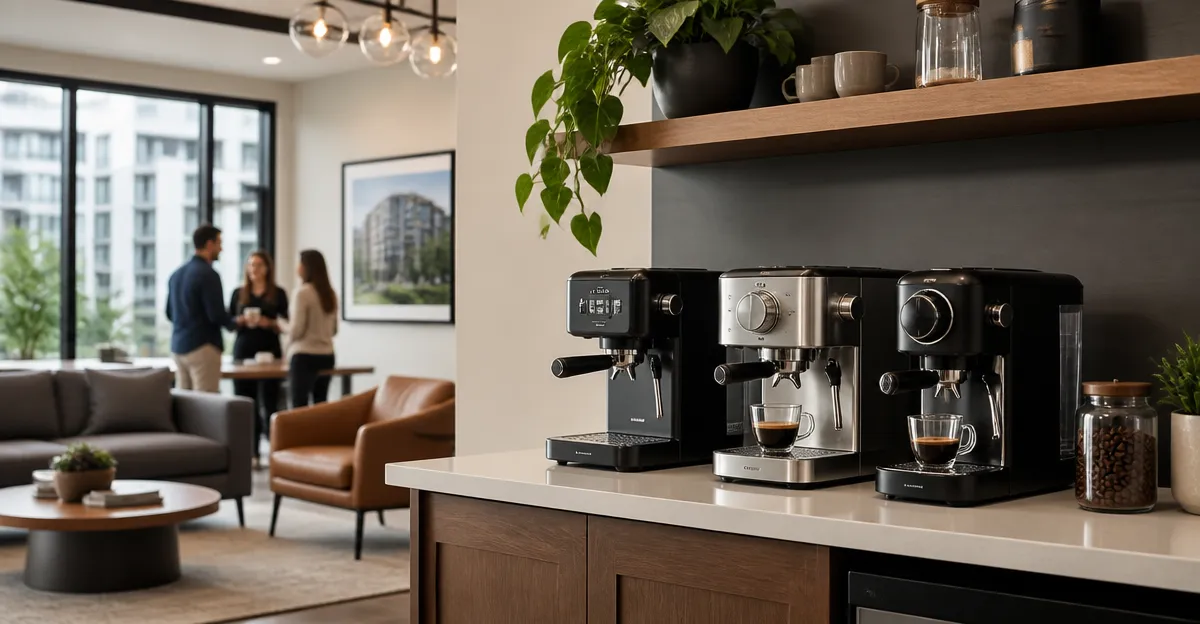
Landlord's Guide to Leasing Compact Espresso Machines as an Amenity: Boost Tenant Satisfaction & ROI
Introduction
Providing a high‑quality coffee experience has become a differentiator in competitive rental markets. This guide explains how landlords can incorporate compact espresso machines as a shared amenity, what financial and operational benefits to expect, and which products deliver the best value. Readers will learn the underlying economics, selection criteria, installation best practices, and how to maintain the equipment so that tenant satisfaction rises while operating costs remain predictable.
Background & Context
Modern renters, especially millennials and Generation Z, view coffee culture as a lifestyle element rather than a simple beverage choice. A survey by the National Apartment Association reported that 68% of renters consider on‑site coffee options a "must‑have" amenity. At the same time, landlords are seeking ways to increase net operating income (NOI) without major capital expenditures. Compact espresso machines meet both objectives because they require modest space, have relatively low power consumption, and can be monetized through subscription models, usage fees, or as a rent‑increase justification.
Key concepts that landlords should understand before implementation include:
- Capital vs. operating expense: The purchase price of the machine is a capital outlay, while cleaning supplies, water filters, and occasional repairs are operating expenses.
- Return on Investment (ROI): ROI can be measured through higher lease rates, reduced vacancy, and ancillary revenue from coffee sales.
- Maintenance schedule: Regular descaling and filter replacement extend machine life and prevent downtime that could frustrate tenants.
Understanding these fundamentals allows landlords to design a program that aligns with their property’s size, tenant demographic, and budget.
Choosing the Right Espresso Machine for Your Property
Compact espresso machines differ in pump pressure, heating technology, milk‑frothing capability, and ease of cleaning. The following sections present three distinct categories and recommend specific models that have proven performance in residential settings.
1. Entry‑Level Machines – Value‑Focused
For properties with limited budgets or a small number of units, a reliable yet affordable machine is essential. The CASABREWS 3700 Espresso Machine offers a 20‑bar Italian pump, a powerful steam wand, and a 43.9 oz removable water tank for under $100. Its stainless‑steel exterior provides durability, while the compact footprint fits comfortably on a shared countertop. With a rating of 4.3/5 from over 3,600 reviews, tenants consistently praise its quick heat‑up time and ease of use.
Key specifications:
- 20‑bar pressure system for optimal extraction
- 1350 W heating element
- Removable 43.9 oz water tank
- Included tamper, portafilter, and cleaning accessories
This model is ideal for studios or micro‑apartments where space is at a premium and the landlord wishes to keep acquisition costs low.
2. Mid‑Tier Machines – Feature‑Rich and Scalable
Properties that anticipate higher traffic, such as mixed‑use buildings or student housing, benefit from a machine that can handle multiple drinks per hour without sacrificing quality. The CASABREWS CM5418 Espresso Machine delivers a professional 20‑bar pump, a built‑in pressure gauge, and a 34 oz water tank. At $139.99 and a 4.3/5 rating from more than 8,000 reviewers, it balances cost with a robust milk‑frothing system that creates micro‑foam suitable for latte art.
Relevant features include:
- 20‑bar Italian pump with 1350 W boiler
- Powerful steam wand for creamy milk texture
- Built‑in pressure gauge for user adjustments
- Compact stainless‑steel housing
Because the CM5418 includes a dual‑cup brewing filter, it can serve two tenants simultaneously, reducing wait times during peak morning hours.
3. Premium Machines – All‑In‑One Experience
High‑end properties, such as luxury apartments or boutique hotels, often seek an all‑in‑one solution that combines espresso, drip coffee, and cold brew. The Ninja Luxe Café Premier fulfills this need with a built‑in conical burr grinder (25 settings), Barista Assist technology, and a dual froth system. Priced at $599 and holding a 4.3/5 rating from over 2,400 reviews, it offers a guided user experience that reduces the learning curve for novice coffee makers.
Salient specifications:
- 3‑in‑1 functionality: espresso, drip coffee, cold brew
- 70 oz removable water reservoir
- Weight‑based dosing and assisted tamper for consistent puck pressure
- Self‑cleaning steam wand and smart temperature/pressure adjustments
The machine’s extensive accessory set (knock box, shareable pitcher, cleaning kit) makes it a turnkey solution for properties that wish to market a "café‑style" common area.
Comparison & Selection Guide
To assist landlords in selecting the most appropriate model, the table below compares the three recommended machines across critical dimensions.
| Feature | CASABREWS 3700 | CASABREWS CM5418 | Ninja Luxe Café Premier |
|---|---|---|---|
| Price (USD) | 99.99 | 139.99 | 599.00 |
| Pressure (Bar) | 20 | 20 | 15‑16 (automatic pump) |
| Water Tank Capacity | 43.9 oz | 34 oz | 70 oz |
| Built‑in Grinder | No | No | Yes (25 settings) |
| Milk Frothing System | Powerful steam wand | Powerful steam wand with pressure gauge | Dual froth system (whisk + automatic steamer) |
| Average Rating | 4.3/5 (3,623 reviews) | 4.3/5 (8,045 reviews) | 4.3/5 (2,430 reviews) |
| Ideal Property Size | Studios, 1‑2 unit buildings | Mid‑size multifamily, boutique rentals | Luxury apartments, boutique hotels |
Landlords should match the machine to the expected volume of use, the desired level of automation, and the budget allocated for the amenity. For example, a property with 20 units may find the Ninja Luxe’s larger water reservoir and multi‑brew capability more efficient, while a 5‑unit building could operate comfortably with the CASABREWS 3700.
Best Practices & Operational Tips
- Location and Power: Install the machine near a dedicated 120 V outlet with a grounded circuit. Ensure the countertop can support the weight (most models weigh between 15‑30 lb).
- Water Quality: Use filtered water and replace the built‑in water filter according to the manufacturer’s schedule (often every 60 uses or two months). This prevents scale buildup that can reduce pressure and affect taste.
- Cleaning Routine: Implement a weekly cleaning protocol that includes descaling, wiping the steam wand after each use, and emptying the drip tray. The Breville Barista Express users, for instance, benefit from the "Clean Me" light that reminds staff to run the cleaning cycle.
- Tenant Training: Provide a short printed guide or QR code linking to a video tutorial. Simple instructions on how to prime the machine, operate the steam wand, and clean after use reduce misuse.
- Revenue Model: Consider a per‑cup charge (e.g., $0.50) collected via a mobile payment app, or include the cost in a premium amenity package. Tracking usage with a digital log helps assess ROI.
- Warranty Management: Register each machine with the manufacturer to secure the limited warranty (typically one year). Keep receipts and maintenance logs in case a claim is needed.
- Safety Checks: Verify that the machine’s over‑heat protection is functional before each tenant shift. The CASABREWS CM5418, for example, will flash the cup‑indicator lights if the internal temperature exceeds safe limits.
Adhering to these practices ensures that the espresso amenity remains reliable, safe, and financially beneficial.
Frequently Asked Questions
- 1. How much does it cost to install a shared espresso machine?
- Installation costs are typically limited to electrical work (if a dedicated circuit is required) and countertop modifications. For most compact models, the total expense ranges from $150 to $500, depending on local labor rates.
- 2. Can I charge tenants for coffee without violating local regulations?
- Many jurisdictions treat coffee sales as a service amenity rather than a retail transaction, allowing landlords to include a per‑cup fee or a flat amenity surcharge in the lease. It is advisable to review local housing codes and consult legal counsel.
- 3. How often should the water filter be replaced?
- Manufacturers generally recommend replacement every 60 uses or two months, whichever occurs first. This schedule balances water quality with operating cost.
- 4. What is the expected lifespan of a compact espresso machine?
- With proper maintenance, most machines last between five and eight years. Models with stainless‑steel boilers, such as the CASABREWS CM5418, often exceed the eight‑year mark.
- 5. Should I provide coffee beans or allow tenants to bring their own?
- Providing a bulk supply of medium‑roast beans simplifies operations and ensures consistent flavor. However, allowing tenants to use their own beans can increase satisfaction for coffee enthusiasts. A hybrid approach—offering house beans while permitting personal beans—works well in most settings.
- 6. Is a machine with a built‑in grinder necessary?
- A built‑in grinder, such as that found in the Ninja Luxe Café Premier, eliminates the need for a separate grinder and ensures fresh grounds for each shot. It is most valuable in high‑traffic properties where convenience outweighs the higher purchase price.
Conclusion
Integrating a compact espresso machine into a rental property can significantly enhance tenant experience, differentiate the building in a crowded market, and generate incremental revenue. By selecting a machine that aligns with the property size, budget, and expected usage—whether the budget‑friendly CASABREWS 3700, the feature‑rich CASABREWS CM5418, or the premium Ninja Luxe Café Premier—landlords can create a café‑style amenity that delivers measurable ROI. Implementing a disciplined maintenance schedule, providing clear tenant instructions, and monitoring usage will ensure long‑term success.
Products Featured in This Guide
CASABREWS 3700 Espresso Machine
Price: $99.99 | Rating: 4.3/5 (3,623 reviews)
Featured because it offers professional 20‑bar pressure and a large removable water tank at a price point suitable for budget‑conscious landlords.
CASABREWS CM5418 Espresso Machine
Price: $139.99 | Rating: 4.3/5 (8,045 reviews)
Featured for its built‑in pressure gauge, powerful steam wand, and dual‑cup capability, making it ideal for medium‑size multifamily properties.
Breville Barista Express
Price: $684.99 | Rating: 4.4/5 (27,784 reviews)
Featured for its integrated conical burr grinder, digital temperature control, and extensive accessory set, suitable for premium properties seeking an all‑in‑one solution.
Ninja Luxe Café Premier
Price: $599.00 | Rating: 4.3/5 (2,430 reviews)
Featured because it combines espresso, drip coffee, and cold brew with a built‑in grinder and guided Barista Assist technology, perfect for luxury amenities.
Breville Bambino Espresso Machine
Price: $299.95 | Rating: 4.0/5 (2,565 reviews)
Featured for its ultra‑compact footprint, ThermoJet heating system that reaches extraction temperature in three seconds, and user‑friendly interface, making it a strong candidate for small‑scale shared spaces.