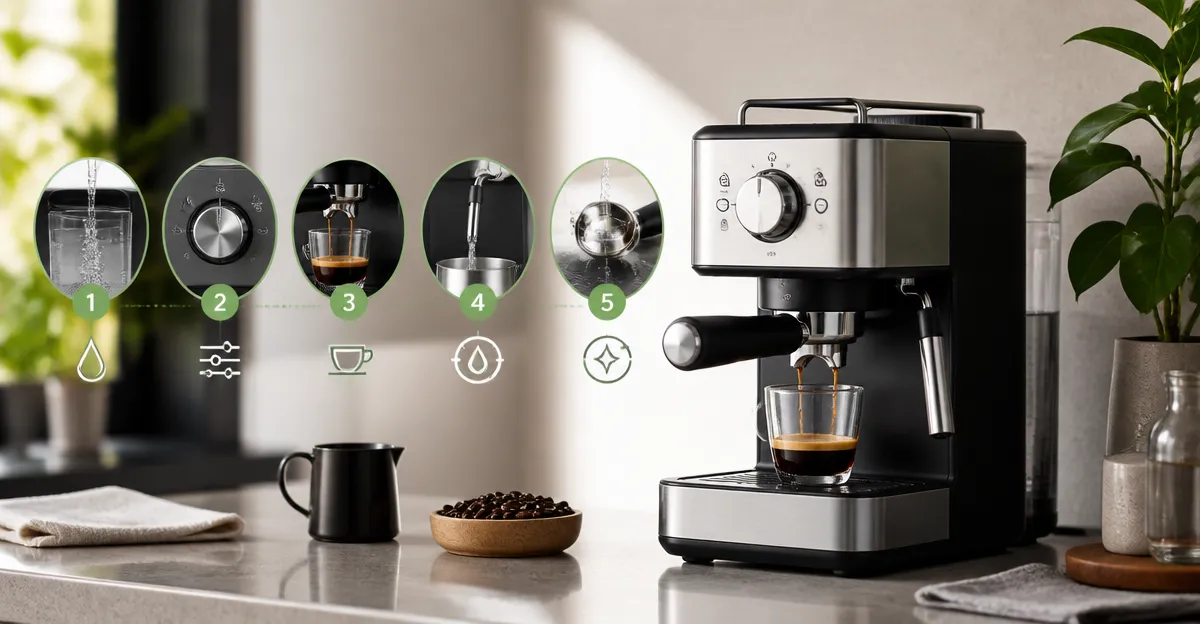
How to Reduce Water Use with a Compact Espresso Machine: Practical Water‑Saving Tips
Introduction
One will learn how to minimise water consumption while preparing high‑quality espresso at home. Reducing water use not only lowers utility bills but also supports environmental stewardship. This guide explains the underlying principles of espresso extraction, the role of machine design, and actionable habits that conserve water. By the end of the article, the reader will be equipped with a clear plan to brew responsibly without sacrificing flavour.
What You'll Need
- A compact espresso machine such as the Essenza Mini or the XIXUBX 20Bar Espresso Machine.
- Freshly roasted coffee beans and a quality grinder.
- Measuring cup or graduated beaker for precise water volumes.
- Reusable stainless‑steel milk frothing pitcher (often included with the XIXUBX model).
- Micro‑fibre cleaning cloths and a descaling solution compatible with the machine.
Step‑by‑Step Instructions
Step 1: Select a Water‑Efficient Compact Machine
One should begin by choosing a machine that incorporates rapid heating and automatic shut‑off features. The Essenza Mini heats water to brewing temperature in approximately 25 seconds and powers down after a short idle period, thereby preventing unnecessary water heating cycles. It holds a small water reservoir, which encourages the user to fill only the amount required for the intended drinks. With a rating of 4.6 out of 5 from over five thousand reviews, the machine demonstrates reliability and user satisfaction.
Alternatively, the XIXUBX 20Bar Espresso Machine offers a built‑in PID temperature controller that stabilises water temperature, reducing the need for repeated heating adjustments. Its compact vertical design occupies minimal counter space, making it suitable for small kitchens where water storage may be limited. Priced at $97.99 and rated 4.5 out of 5 by more than five hundred reviewers, it provides advanced temperature control at an affordable price point.
Step 2: Calibrate Pre‑Infusion and Pressure Settings
Pre‑infusion delivers a brief, low‑pressure soak that prepares the coffee puck for extraction while using only a fraction of the total water volume. By setting the machine to a gentle pre‑infusion of 2–3 seconds, one reduces the overall water demand without compromising flavour development. The XIXUBX model explicitly mentions a “Gentle Pre‑Infusion” function that optimises extraction for home use; this feature eliminates the need for a separate pre‑wetting step that would otherwise waste water.
When using the Essenza Mini, the user can simulate pre‑infusion by selecting the smaller cup size, which dispenses roughly 40 ml of water before the full shot. This technique ensures consistent extraction while keeping water use low. Both machines allow the user to select single‑serve or double‑serve modes; choosing the single‑serve option whenever possible halves the water consumption per drink.
Step 3: Employ Precise Water Measurements
Accurate measurement prevents over‑filling the reservoir and eliminates guesswork that often leads to excess water being heated and discarded. One should use a graduated beaker to fill the machine with the exact volume required for the intended number of shots. For a standard espresso, 30 ml of water per shot is sufficient; a double shot therefore requires 60 ml. By adhering to these volumes, the user avoids the common habit of filling the tank to its maximum capacity, which typically exceeds the immediate need.
Both machines feature clear water level indicators that aid in visual confirmation of the correct amount. The rapid heating capability of the Essenza Mini means that even a small volume reaches brewing temperature quickly, further reducing energy and water waste.
Step 4: Optimise Steam Wand Usage for Milk Frothing
When frothing milk, the steam wand consumes additional water that is often released as condensate. The XIXUBX’s powerful steam wand produces micro‑foam in 22–30 seconds, allowing the user to complete the frothing process with minimal steam activation. One should purge the wand for only two seconds before and after frothing to clear residual water, thereby avoiding unnecessary discharge.
Using the included stainless‑steel frothing pitcher enables precise control of milk volume, reducing the likelihood of over‑filling and spilling. The pitcher’s heat‑resistant design also retains temperature, meaning the user does not need to re‑steam the milk, which would otherwise waste extra water.
Step 5: Implement Smart Cleaning and Descaling Routines
Regular cleaning is essential for maintaining flavour quality, yet excessive rinsing can squander water. One should perform a quick rinse after each use by running a single‑shot of water through the group head; this uses only the amount required to clear coffee residues. For deeper cleaning, a weekly descaling cycle can be performed using a measured solution, followed by a single thorough rinse rather than multiple back‑to‑back rinses.
The compact size of both machines means that the water reservoir holds less than a litre, making it easy to empty and refill without waste. Using a micro‑fibre cloth to wipe the exterior eliminates the need for running water to clean surfaces, further conserving resources.
Tips & Pro Tips
- Store a reusable water bottle nearby to refill the reservoir, ensuring that one does not resort to opening the tap repeatedly.
- Grind beans just before brewing; finer grinds extract more efficiently, reducing the need for multiple brewing attempts that waste water.
- Schedule descaling during a low‑usage period, such as the weekend, to avoid heating water during peak demand times.
- Consider using a low‑flow faucet aerator in the kitchen to minimise water usage when cleaning accessories.
Troubleshooting
| Problem | Possible Cause | Solution |
|---|---|---|
| Weak crema | Insufficient pressure or low water temperature | Verify that the machine is fully heated (approximately 25 seconds for the Essenza Mini) and that the 20‑bar pressure setting on the XIXUBX is engaged. |
| Excessive water after brewing | Over‑filled reservoir | Measure water volume precisely and use the single‑serve option whenever possible. |
| Steam wand leaking water | Poor purge technique | Purge the wand for only two seconds before and after frothing; wipe the tip with a dry cloth. |
Conclusion
One can substantially reduce water consumption by selecting a compact espresso machine, calibrating pre‑infusion, measuring water precisely, using the steam wand efficiently, and adopting disciplined cleaning practices. The Essenza Mini and the XIXUBX 20Bar Espresso Machine both provide features that support these water‑saving strategies while delivering café‑quality espresso. By integrating the tips and steps outlined above, the reader will enjoy delicious coffee with a markedly smaller environmental footprint.
Products Mentioned in This Guide
Frequently Asked Questions
How does a compact espresso machine reduce water consumption compared to larger models?
Compact machines have smaller boilers and use only the precise amount of water needed for each shot, typically 30 ml, which cuts overall usage.
What is the recommended water volume for a single espresso shot on a compact machine?
Aim for about 30 ml (1 oz) of water per shot to achieve proper extraction without excess waste.
How frequently should I descale my compact espresso machine to keep it water‑efficient?
Descale every 1–2 months or after roughly 200 shots, whichever comes first, to maintain optimal flow and prevent buildup.
Will using a reusable stainless‑steel milk frothing pitcher save water?
Yes, it eliminates disposable containers and reduces the number of rinse cycles needed, conserving water with each use.
What quick cleaning habits help minimize water waste when maintaining the machine?
Wipe the group head with a microfiber cloth, use only the minimum rinse water, and collect runoff for plants or other non‑potable uses.