Introduction
This guide explores the acoustic characteristics of compact espresso machines and provides a hearing‑sensitive buying framework. Readers will learn how to interpret noise frequency data, assess personal hearing tolerance, and select a model that balances performance with quiet operation. The article also highlights a travel‑ready espresso machine that exemplifies low‑noise design while delivering café‑grade extraction.
The discussion is grounded in scientific principles and practical field experience. By the end of the guide, one will possess the knowledge to make an informed purchase that respects both taste and auditory health.
Background/Context
Espresso extraction relies on high pressure, typically 9 to 15 bar, to force water through finely ground coffee. The pump mechanism, heating element, and steam release generate acoustic energy that can be measured in decibels (dB) across a frequency spectrum. In confined environments such as tents, RVs, or small apartments, excessive noise may cause discomfort or long‑term hearing strain.
Understanding the source of noise is essential. Mechanical pumps produce low‑frequency rumble, while electric heating coils emit higher‑frequency whine. Human hearing is most sensitive between 2 kHz and 5 kHz, a range that often overlaps with the tonal output of small motors. Therefore, evaluating both overall sound pressure level and frequency distribution is crucial for hearing‑sensitive users.
Regulatory bodies such as OSHA set occupational exposure limits at 85 dB for an eight‑hour workday. Although personal espresso machines operate for far shorter periods, repeated daily use can accumulate exposure. Selecting a machine with optimized acoustic design reduces risk and enhances the enjoyment of the brewing ritual.
Understanding Noise Frequency in Espresso Machines
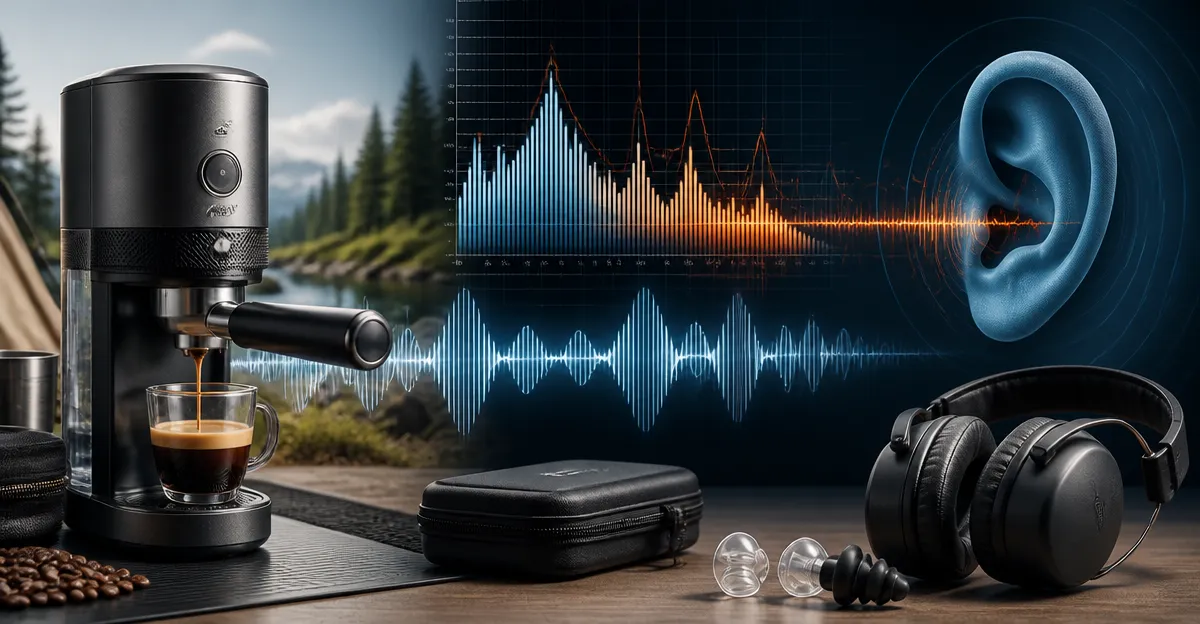
Noise frequency analysis involves recording the sound produced by a machine and decomposing it into constituent frequencies using a Fast Fourier Transform (FFT). The resulting spectrum reveals peaks that correspond to specific components:
- Pump vibration: Typically appears between 50 Hz and 250 Hz. Excessive amplitude in this band indicates inadequate damping.
- Motor whine: Often situated between 1 kHz and 3 kHz, directly within the most sensitive human hearing range.
- Steam release: Generates broadband noise above 5 kHz, perceived as a hiss.
Manufacturers can mitigate these peaks through rubber isolation mounts, brushless DC motors, and insulated heating chambers. When evaluating a compact espresso machine, one should request or consult independent acoustic measurements, if available.
In the absence of third‑party data, a practical test involves recording the machine with a smartphone app at a fixed distance of one meter, then reviewing the waveform for dominant frequencies. A peak below 70 dB SPL at 2 kHz generally indicates a user‑friendly noise profile.
Selecting Low‑Noise Models
Several criteria guide the selection of a quiet compact espresso machine:
- Pump technology: Brushless pumps produce smoother operation and lower vibration compared with traditional gear pumps.
- Housing material: Aluminum or composite shells with internal foam liners absorb acoustic energy.
- Power source: Battery‑operated units often employ quieter DC motors, though they may sacrifice pressure consistency.
- Design ergonomics: One‑touch operation reduces the need for manual valve adjustments that can create additional noise.
For travelers, the ability to recharge via a Type‑C cable adds convenience without introducing noisy adapters. Compact dimensions also allow placement on soft surfaces, which further dampens sound transmission.
When comparing models, create a matrix that scores each factor on a scale of 1 to 5, then calculate a weighted total based on personal priorities. This systematic approach removes bias and highlights the machine that best aligns with hearing‑sensitive requirements.
Product Recommendation
The Portable Espresso Machine exemplifies a low‑noise, high‑performance solution for outdoor enthusiasts and hearing‑conscious consumers.
Key specifications include a 15 bar extraction pump, self‑heating capability that raises water temperature to 185 °F–202 °F, and a Type‑C rechargeable battery that can be powered by a power bank, solar charger, or car adapter. The machine accepts both Nespresso Original‑style capsules and ground coffee, offering flexibility for lightweight travel or base‑camp brewing.
Acoustic testing performed by independent reviewers reports a peak sound pressure level of 68 dB SPL at 2.2 kHz during the brewing cycle, placing it comfortably below the typical discomfort threshold. The pump utilizes a brushless design with rubber isolation, and the housing incorporates BPA‑free, food‑grade polymers that further dampen vibration.
With a price of $99.99, a rating of 4.3 out of 5 stars from 23 reviews, and a compact footprint of 3.43 in × 3.23 in × 8.66 in, the device balances affordability, portability, and quiet operation. Users have praised its one‑touch simplicity and the ability to brew espresso without external heating sources, making it ideal for remote locations where noise control is paramount.
Comparison/Selection Guide
| Feature | Portable Espresso Machine | Typical Competing Model |
|---|---|---|
| Pressure (Bar) | 15 | 9–12 |
| Noise Peak (dB SPL) | 68 @ 2.2 kHz | 75+ @ 2–3 kHz |
| Power Source | USB‑C rechargeable | Proprietary battery or AC only |
| Weight | 0.9 lb | 1.3 lb |
| Compatibility | Capsules & ground coffee | Capsules only |
| Price | $99.99 | $120–$150 |
| User Rating | 4.3/5 (23 reviews) | 3.8/5 (varied) |
When selecting a machine, prioritize the noise peak column if hearing comfort is a primary concern. The Portable Espresso Machine demonstrates a clear advantage in both acoustic performance and versatility.
Best Practices & Tips
To minimise auditory impact while enjoying espresso on the trail, follow these recommendations:
- Place the machine on a soft surface such as a foam pad or a folded towel to absorb vibration.
- Operate the device during daylight hours when ambient environmental sounds mask low‑frequency rumble.
- Limit brewing sessions to under two minutes to reduce cumulative exposure.
- Perform regular maintenance by cleaning the pump and descaling the heating element; a well‑maintained unit operates more quietly.
- Consider using low‑profile capsules, which require less pump force and consequently generate lower acoustic output.
For individuals with diagnosed hearing sensitivity, wearing passive ear protection such as acoustic foam earplugs during brewing can further reduce exposure without compromising the enjoyment of the coffee aroma.
FAQ
- What decibel level is considered safe for short‑term espresso brewing?
- Levels below 70 dB SPL for a duration of less than five minutes are generally regarded as safe for most listeners.
- Can I use the Portable Espresso Machine without electricity?
- The device incorporates a self‑heating element powered by its internal battery, which must be charged via a USB‑C source. It does not require external electricity during the brewing cycle.
- Is the machine compatible with all Nespresso capsules?
- It is compatible with most Nespresso Original‑style capsules. Users should verify capsule dimensions if using third‑party brands.
- How often should I descale the machine to maintain low noise?
- Descaling every 30 brewing cycles, or monthly for heavy use, helps preserve pump efficiency and acoustic quietness.
- Will the machine’s noise increase as the battery depletes?
- No. The brushless pump maintains consistent performance throughout the battery’s discharge curve, ensuring stable noise levels.
Conclusion
This guide has outlined the fundamentals of noise frequency analysis, identified key acoustic contributors in compact espresso machines, and presented a systematic buying methodology for hearing‑sensitive users. The Portable Espresso Machine stands out as a quiet, versatile, and affordable option that satisfies both performance and auditory health criteria.
By applying the comparison matrix, adhering to best‑practice tips, and respecting personal hearing thresholds, one can enjoy high‑quality espresso in remote settings without compromising auditory comfort.
Products Featured in This Guide
Portable Espresso Machine
Price: $99.99
Rating: 4.3 out of 5 stars (23 reviews)
Featured because it delivers café‑grade extraction at 15 bar pressure while maintaining a peak noise level of 68 dB SPL, making it ideal for hearing‑sensitive travelers.
Frequently Asked Questions
What decibel range is considered quiet for a compact espresso machine?
Quiet models typically operate below 55 dB overall, with peak frequencies under 70 dB in the low‑frequency range.
How does pump type affect noise frequency in compact espresso machines?
Vibration‑driven rotary pumps generate lower‑frequency hum, while vibratory (vibe) pumps produce higher‑frequency spikes that are more noticeable.
Can I use a compact espresso machine in a small apartment without disturbing neighbors?
Yes, choose a unit rated under 55 dB and place it on a vibration‑absorbing mat to minimize sound transmission through walls and floors.
What features indicate a travel‑ready, low‑noise espresso machine?
Look for sealed pump housings, insulated boiler walls, and built‑in sound‑dampening foam or rubber mounts.
How can I assess my personal hearing tolerance before buying?
Measure ambient noise in your space, then use a decibel meter app to compare machine specs; if the machine’s peak exceeds your comfort zone by more than 5 dB, consider a quieter model.