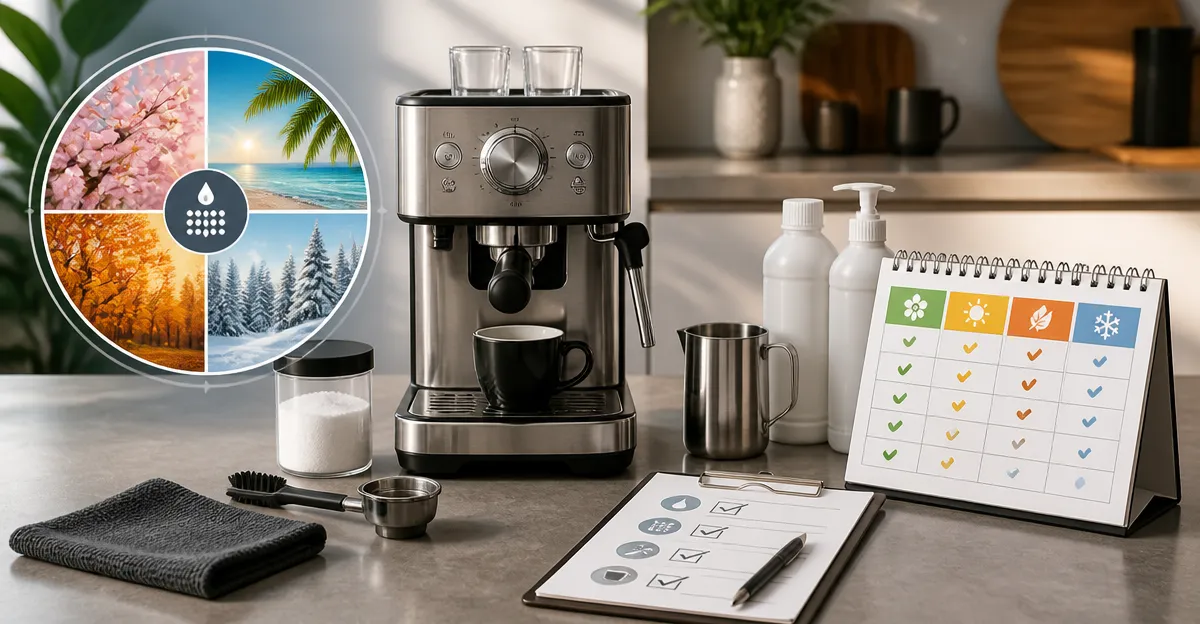
Seasonal Maintenance Calendar for Compact Espresso Machines: Year‑Round Care Guide
Introduction
This guide explains how to keep a compact espresso machine operating at peak performance throughout the year. Readers will learn a month‑by‑month maintenance schedule, the science behind key components, and which affordable machines simplify the process. The article also compares popular models, offers best‑practice tips, and answers common questions so owners can enjoy consistent crema and silky milk foam.
Background and Context
Compact espresso machines combine a high‑pressure pump, a thermoblock or boiler, and a steam wand in a footprint that fits on a kitchen countertop. The pump delivers 15‑20 bar of pressure, the boiler heats water to the optimal 90‑96 °C extraction range, and the steam wand creates micro‑foam for latte art. Over time, mineral deposits, worn seals, and residual coffee oils degrade performance, leading to weak shots, temperature drift, and noisy operation. Understanding how each subsystem ages enables owners to apply targeted care at the right time.
Seasonal Maintenance Schedule
January – February (Winter Warm‑Up)
Cold ambient temperatures can cause the boiler to take longer to reach extraction temperature. During these months, perform a thorough descaling using a citric‑acid solution. Run two cycles of water only, then two cycles of the descaling solution, and finish with three rinses. Check the water tank gasket for cracks, as cold water can make rubber brittle.
Product recommendation: The CASABREWS 20‑Bar Espresso Machine includes a built‑in pressure gauge that helps you verify proper pressure after descaling. Its 34 oz tank is easy to remove for thorough cleaning, and the stainless‑steel housing resists condensation.
March – May (Spring Refresh)
Spring is an ideal time to deep‑clean the steam wand and portafilter. Disassemble the wand, soak the tip in warm water with a pinch of baking soda, then purge steam for 10 seconds to clear any blockages. Inspect the portafilter basket for coffee grounds that may have hardened; a soft brush removes residue without damaging the metal.
The Breville Bambino Espresso Machine features an automatic micro‑foam milk texturing system that benefits from regular wand cleaning. Its ThermoJet heating element reaches temperature in three seconds, reducing the risk of mineral buildup during the warmer months.
June – August (Summer Performance)
Higher humidity accelerates scale formation inside the boiler. Perform a light descaling every six weeks if water hardness exceeds 150 ppm. Use filtered water for brewing to protect the pump and prolong seal life. Also, wipe the exterior daily to prevent dust from entering the ventilation slots.
The IMUSA 4‑Cup Espresso Maker offers a removable drip tray that simplifies daily cleaning during heavy summer use. Its 5‑bar pressure system is modest, so regular scale removal maintains consistent shot volume.
September – November (Autumn Tune‑Up)
As temperatures moderate, focus on checking the machine’s seals and gaskets. Replace any that appear flattened or discolored to avoid leaks. Lubricate the pump’s moving parts with a food‑grade silicone spray, following the manufacturer’s instructions. Re‑calibrate the built‑in pressure gauge if the machine shows a deviation of more than 0.5 bar.
The atatix 20‑Bar Espresso Machine includes an NTC temperature sensor that can be reset during this seasonal check. Its 44 oz removable tank makes it simple to inspect for wear.
December (Year‑End Review)
Conduct a full performance audit before the holiday season. Measure extraction time for a single shot (30 ml) and compare it to the manufacturer’s specifications. Record any variance and adjust the water‑volume settings if needed. Finally, store the machine in a dry area and cover it with a breathable cloth to protect against dust.
The Chefman CraftBrew Espresso Machine offers a programmable timer that can remind you when the annual audit is due. Its 1.5‑liter reservoir provides ample water for multiple test cycles.
Comparison and Selection Guide
When choosing a compact espresso machine for year‑round maintenance, consider four criteria: pressure stability, boiler technology, steam‑wand versatility, and ease of cleaning.
- Pressure stability: Machines with a built‑in gauge, such as the CASABREWS model, allow real‑time monitoring and quick adjustments.
- Boiler technology: ThermoJet (Breville Bambino) and rapid‑heat thermoblocks (Chefman CraftBrew) minimize heat‑up time and reduce scale buildup.
- Steam‑wand versatility: Automatic micro‑foam (Breville) versus manual wand (atatix) offers different learning curves.
- Ease of cleaning: Removable water tanks and drip trays (IMUSA, atatix) simplify routine descaling.
Based on these factors, a tiered recommendation emerges:
- Best overall value: CASABREWS 20‑Bar Espresso Machine – 4.3‑star rating, 20‑bar pump, stainless steel, and a pressure gauge for precise maintenance.
- Best for beginners: Breville Bambino Espresso Machine – 4‑star rating, rapid ThermoJet heating, and an automatic milk‑texturing wand.
- Best budget option: IMUSA 4‑Cup Espresso Maker – 4.4‑star rating, compact footprint, and simple 5‑bar system.
Best Practices & Tips
Beyond the seasonal checklist, adopt these habits to extend machine life:
- Use filtered or bottled water to reduce mineral deposits.
- Run a short “purge” cycle after each use to clear residual coffee oils from the group head.
- Dry the steam wand after frothing to prevent bacterial growth.
- Store coffee beans in an airtight container and grind just before brewing for optimal extraction.
- Record maintenance dates in a kitchen journal or on the machine’s side panel.
Frequently Asked Questions
- How often should I descale my compact espresso machine?
- For soft water, every three months; for hard water, every six weeks. Follow the manufacturer’s descaling instructions.
- Can I use pre‑ground coffee in a semi‑automatic compact machine?
- Yes, but a consistent grind size (around 18‑20 µm) yields the best crema. Adjust the dose to 13‑15 g per shot.
- Is it safe to leave water in the tank over winter?
- It is preferable to empty the tank, rinse, and dry it to prevent stagnant water and mold growth.
- What is the ideal temperature for milk frothing?
- Milk should reach 60‑65 °C (140‑149 °F) for silky micro‑foam; higher temperatures cause scalding.
- Why does my machine make a grinding noise during extraction?
- A grinding noise often indicates scale buildup around the pump or a worn pump seal. Descaling and seal inspection usually resolve the issue.
Conclusion
Regular, season‑specific care keeps a compact espresso machine delivering café‑quality shots and velvety milk foam for years. By following the calendar, selecting a machine that matches maintenance preferences, and applying best‑practice habits, coffee enthusiasts can enjoy reliable performance without costly repairs. Remember to track each service step, use quality water, and replace worn parts promptly.
Products Featured in This Guide
CASABREWS 20‑Bar Espresso Machine
Price: $139.99 | Rating: 4.3/5 (8,036 reviews)
Featured for its 20‑bar pump, built‑in pressure gauge, and removable 34 oz water tank that simplify seasonal descaling.
Breville Bambino Espresso Machine
Price: $299.95 | Rating: 4/5 (2,561 reviews)
Featured for its ThermoJet rapid‑heat system and automatic micro‑foam wand, ideal for beginners and spring cleaning routines.
IMUSA 4‑Cup Espresso Maker
Price: $46.96 | Rating: 4.4/5 (11,855 reviews)
Featured for its compact design, removable drip tray, and budget‑friendly 5‑bar pressure that suits summer quick‑clean cycles.
atatix 20‑Bar Espresso Machine
Price: $129.99 | Rating: 4.3/5 (1,456 reviews)
Featured for its NTC temperature control, large 44 oz tank, and manual extraction mode that benefits from autumn seal inspections.
Chefman CraftBrew Espresso Machine
Price: $79.99 | Rating: 4.4/5 (258 reviews)
Featured for its 15‑bar pump, 1.5‑liter reservoir, and programmable timer that reminds users of the year‑end performance audit.