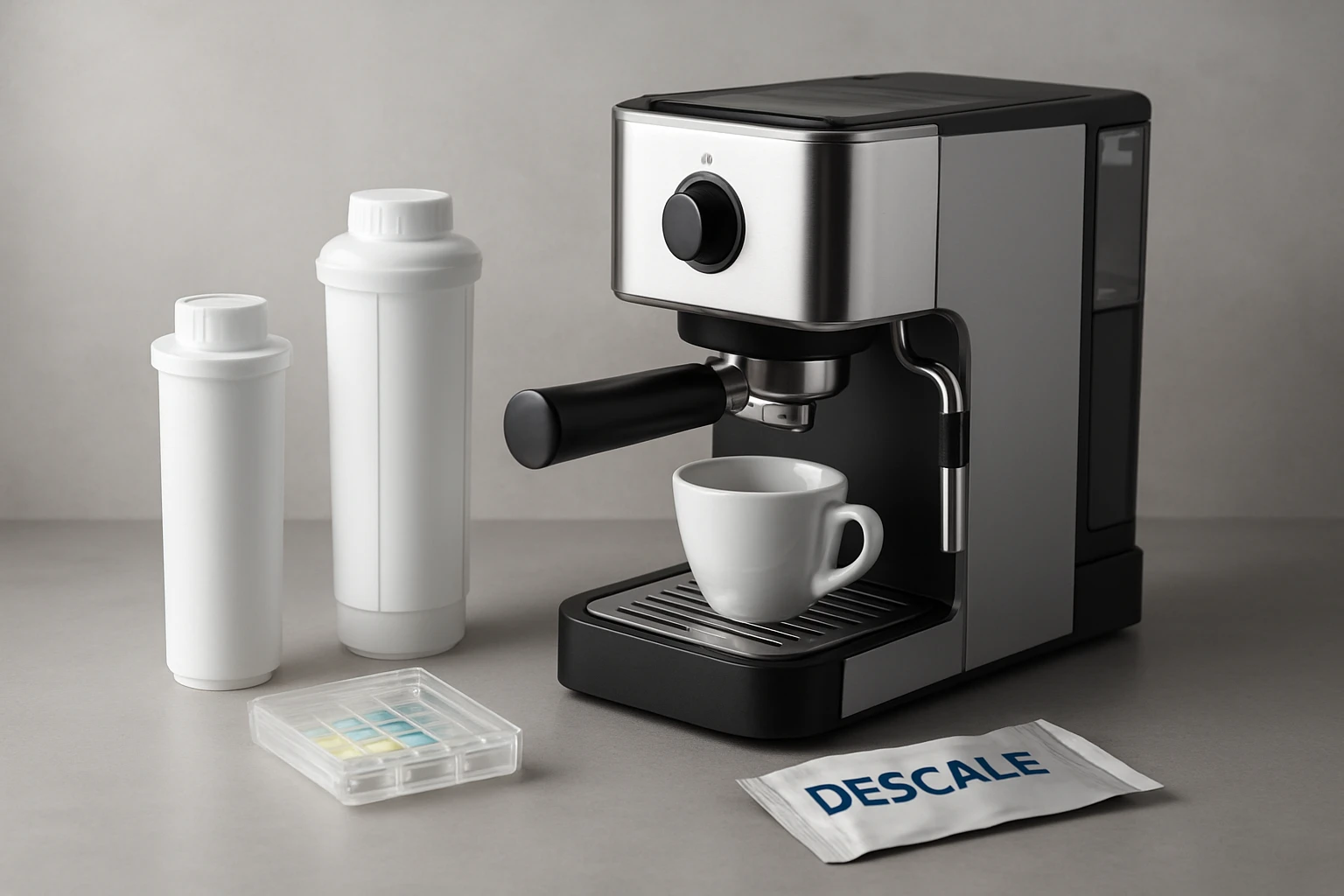
Water Filtration for Compact Espresso Machines: The Complete Guide to Prevent Scale & Improve Flavor
Introduction
Compact espresso machines deliver café‑quality drinks in a small footprint, but they are especially vulnerable to mineral buildup. This guide explains why scale forms, how water quality influences flavor, and which tools can keep a machine performing at its peak. Readers will learn foundational concepts, practical testing methods, product recommendations, and step‑by‑step maintenance routines. By the end, one will be equipped to protect an investment and consistently brew delicious espresso.
Background & Context
Water hardness is measured by the concentration of calcium and magnesium ions, typically expressed in parts per million (ppm) or grains per gallon. When hard water passes through the heating element of an espresso machine, the ions precipitate as calcium carbonate, creating limescale. Limescale reduces heat transfer efficiency, leads to inaccurate temperature control, and can clog the pump, ultimately degrading flavor and shortening machine life.
In addition to hardness, water may contain chlorine, heavy metals, and suspended particulates. Chlorine can impart a stale taste, while metals may react with coffee oils, producing off‑notes. A well‑designed filtration system removes these contaminants without stripping the beneficial minerals that contribute to extraction balance.
Compact machines often lack the large reservoirs found in commercial units, meaning the water circulates repeatedly through the same small circuit. Consequently, even modest mineral concentrations can accumulate quickly, making regular maintenance essential.
Understanding Scale Formation and Its Impact
Scale adheres to the boiler walls, group head, and internal tubing. As the layer thickens, the boiler must work harder to reach brewing temperature, increasing energy consumption. Temperature fluctuations affect the solubility of coffee solubles, leading to under‑extracted or bitter shots. Moreover, scale can cause pump strain, producing noisy operation or premature failure.
Preventing scale begins with controlling the water entering the machine. Two complementary approaches are most effective: filtration to reduce hardness before it reaches the boiler, and periodic descaling to dissolve any deposits that do form.
Both strategies rely on accurate water testing, which informs the frequency of filter replacement and descaling cycles. Without data, users may replace filters too often, wasting money, or too infrequently, risking damage.
Key Concepts and Strategies
1. Water Filtration Types
- Activated carbon removes chlorine, organic compounds, and unpleasant odors.
- Ion‑exchange resin exchanges calcium and magnesium ions for sodium or hydrogen, effectively softening water.
- Combination cartridges integrate both technologies, offering comprehensive protection.
For compact espresso machines, a cartridge that fits the machine’s water inlet is ideal. The isinlive Water Filter provides a 1‑year supply (four 4‑pack filters) and uses coconut‑activated carbon plus ion‑exchange resin. It is compatible with a wide range of Breville models, rated 4.4 stars by over 2,200 reviewers, and costs $22.99.
2. Testing Water Hardness
- Test strips give a quick visual readout of hardness levels (soft, medium, hard).
- Accurate testing guides filter replacement intervals and descaling frequency.
The JNW Direct Water Hardness Test Kit supplies 150 strips, includes an eBook for interpretation, and holds a 4.4‑star rating from more than 44,000 users. Priced at $9.99, it offers excellent value for ongoing monitoring.
3. Descaling Solutions
- Acid‑based descalers dissolve calcium carbonate without harming seals.
- Eco‑friendly formulas reduce environmental impact and odor.
Two reputable options are available. The Roobi Descaling Solution is formulated specifically for DeLonghi machines, provides five uses per bottle, and is non‑toxic. It is priced at $22.09 and emphasizes odor‑free performance.
For broader compatibility, the Philips Universal Coffee Machine Descaler comes in a value pack of two 250 ml bottles, costs $16.90, and carries a 4.8‑star rating from over 21,000 reviewers. It is safe for Philips, Saeco, and many other automatic machines.
Comparison / Selection Guide
| Feature | isinlive Water Filter | JNW Direct Test Kit | Roobi Descaling Solution | Philips Universal Descaler |
|---|---|---|---|---|
| Primary Function | Filtration (carbon + ion‑exchange) | Hardness testing | DeLonghi‑specific descaling | Universal descaling |
| Compatibility | Breville espresso models | All water sources | DeLonghi coffee makers | Philips, Saeco, other automatics |
| Quantity / Uses | 4 filters (1‑year supply) | 150 strips | 5 descaling cycles per bottle | 5 cycles per bottle (2 bottles) |
| Price (USD) | $22.99 | $9.99 | $22.09 | $16.90 |
| Average Rating | 4.4/5 (2,243 reviews) | 4.4/5 (44,077 reviews) | Not listed | 4.8/5 (21,023 reviews) |
| Key Benefits | Reduces limescale, chlorine, heavy metals; improves flavor | Quick, accurate hardness readings; eBook guidance | Odor‑free, eco‑friendly, fast‑acting | Gentle yet thorough; suitable for multiple machine types |
When selecting a product, consider the machine brand, water hardness level, and maintenance frequency. For Breville owners, the isinlive Water Filter offers a seamless fit and proven performance. Users who are uncertain about hardness should start with the JNW Direct Test Kit. For DeLonghi machines, the dedicated Roobi solution minimizes odor and environmental impact, while the Philips descaler is the most versatile for households with mixed brands.
Best Practices & Tips
- Test before you filter. Use a hardness test kit to determine baseline ppm. If hardness exceeds 150 ppm, a combined carbon‑ion filter is advisable.
- Activate filters correctly. Soak the isinlive Water Filter for 5–10 minutes and squeeze to generate air bubbles, as instructed, to ensure full activation of the resin.
- Replace on schedule. Most manufacturers recommend filter changes every three months. The monthly tracker dial on the isinlive filter simplifies this task.
- Descale regularly. Even with filtration, mineral deposits accumulate. Descale every 2–3 months for hard water regions, or after 100 brewing cycles for softer water.
- Rinse thoroughly. After descaling, run at least two full water cycles to flush residual solution and prevent taste alteration.
- Store supplies properly. Keep test strips in a cool, dry place and seal filter packs after each use to maintain efficacy.
- Monitor flavor changes. If coffee begins to taste flat or metallic, re‑test water hardness and inspect the filter for clogging.
Frequently Asked Questions
1. How often should I replace the water filter in a compact espresso machine?
For most filters, including the isinlive Water Filter, a three‑month interval or 1,000 ml of water processed (whichever occurs first) is recommended. The built‑in tracker dial provides a visual cue.
2. Can I use a universal descaler on a Breville machine?
Yes, the Philips Universal Coffee Machine Descaler is safe for most automatic espresso machines, including Breville, as long as the user follows the dilution instructions.
3. What is the difference between activated carbon and ion‑exchange resin?
Activated carbon adsorbs organic compounds, chlorine, and odors, improving taste and aroma. Ion‑exchange resin swaps calcium and magnesium ions for sodium or hydrogen, effectively softening water and reducing scale formation.
4. Do test strips require any special storage?
Store the JNW Direct Water Hardness Test Kit strips in a sealed container away from humidity and direct sunlight to preserve accuracy.
5. Is it safe to use a descaler more frequently than recommended?
Over‑descaling can wear seals and affect machine warranty. Follow the manufacturer’s guidance; typically, a descaling cycle every 60–90 days for hard water is sufficient.
6. Will a water filter affect the espresso extraction temperature?
A properly functioning filter should not alter temperature significantly. However, a clogged filter can restrict flow, causing the machine to overheat. Regular replacement prevents this issue.
7. Can I reuse the same filter after descaling?
No. Descaling removes mineral deposits but does not rejuvenate the carbon or resin media. Replace the filter according to the schedule indicated on the product.
Conclusion
Maintaining water quality is the cornerstone of consistent espresso flavor and machine longevity, especially for compact units that circulate water through tight circuits. By testing hardness, installing a reliable filter such as the isinlive Water Filter, and performing regular descaling with products like the Roobi Descaling Solution or Philips Universal Descaler, users can enjoy café‑grade coffee without the nuisance of scale. Combine these tools with the affordable JNW Direct Water Hardness Test Kit for ongoing monitoring, and the espresso experience will remain vibrant for years.
Products Featured in This Guide
isinlive Water Filter
Price: $22.99 | Rating: 4.4/5 (2,243 reviews)
Featured because it provides combined activated carbon and ion‑exchange filtration, fits a wide range of Breville machines, and includes a 1‑year supply with a handy replacement tracker.
JNW Direct Water Hardness Test Kit
Price: $9.99 | Rating: 4.4/5 (44,077 reviews)
Featured for its 150 test strips, clear color chart, and accompanying eBook that empowers users to monitor water hardness accurately.
Roobi Descaling Solution
Price: $22.09
Featured because it is a non‑toxic, odor‑free descaler formulated for DeLonghi machines, offering five uses per bottle and an eco‑friendly profile.
Philips Universal Coffee Machine Descaler
Price: $16.90 | Rating: 4.8/5 (21,023 reviews)
Featured for its universal compatibility, gentle yet effective formula, and value pack of two 250 ml bottles, making it suitable for households with multiple machine brands.