Ultimate Guide to Solar‑Powered Compact Espresso Machines: Best Portable & Off‑Grid Choices
Introduction
In recent years, coffee enthusiasts have sought ways to enjoy high‑quality espresso while travelling, camping, or living off the grid. This guide explains the fundamentals of solar‑powered compact espresso machines and demonstrates how they can be integrated into a sustainable lifestyle. Readers will learn about key technologies, compare leading products, and receive practical advice for optimal performance. By the end of the article, one will be equipped to select a device that matches personal needs and environmental goals.
Background and Context
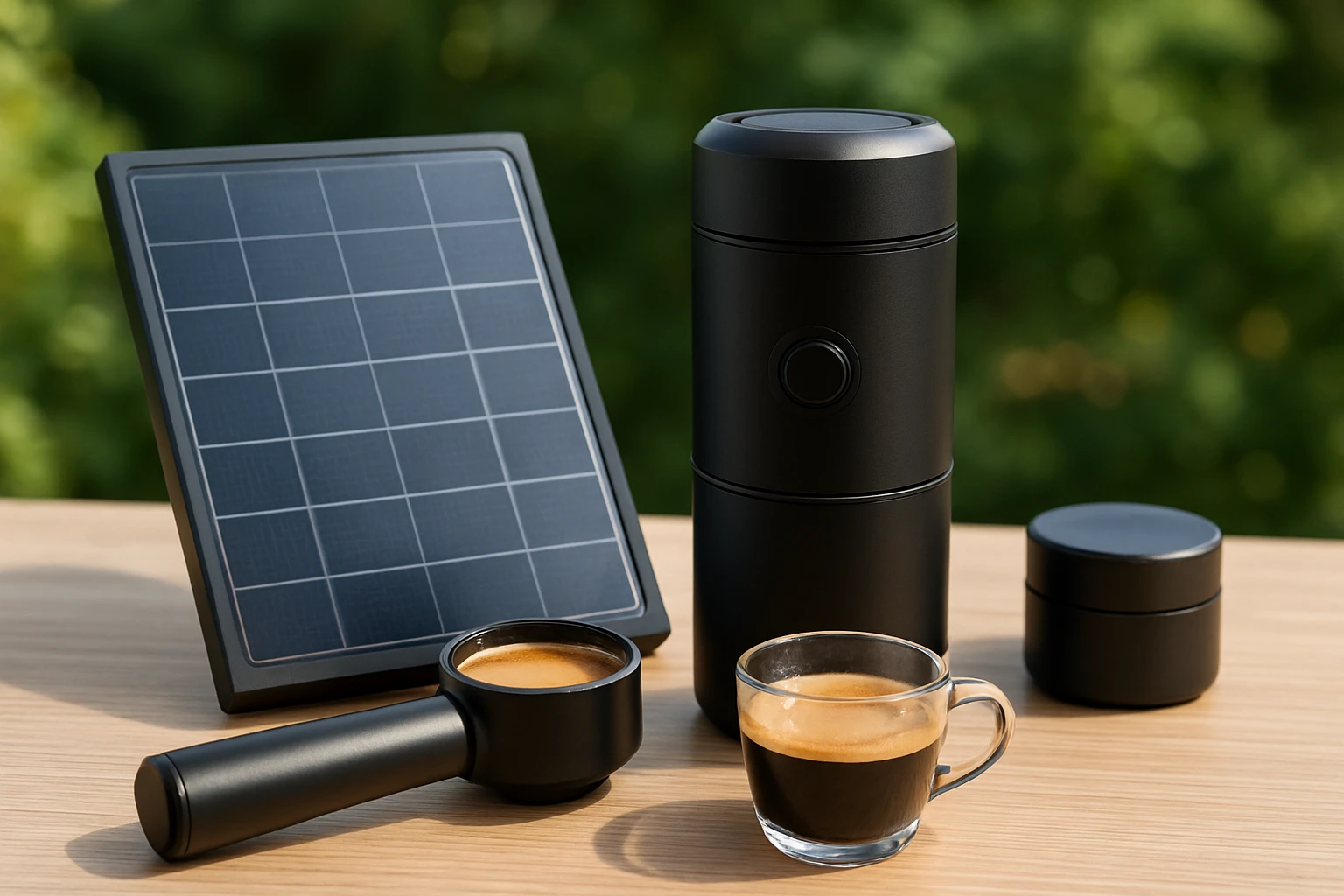
Traditional espresso machines rely on mains electricity, which limits their use to fixed locations such as homes or cafés. Portable espresso makers overcome this limitation by incorporating rechargeable batteries, USB‑C charging, and, in some cases, solar panels or solar‑compatible chargers. The term "solar‑powered" refers to devices that can be recharged using sunlight, either directly through an integrated panel or via an external solar charger.
Understanding pressure, temperature, and extraction time is essential for evaluating any espresso machine. A pressure of 20 bars replicates the force applied by commercial machines, while water temperature between 195 °F and 205 °F (90 °C‑96 °C) extracts the optimal flavor profile. Battery capacity, measured in milliamp‑hours (mAh), determines how many shots can be brewed before recharging.
Sustainable materials such as food‑grade ABS and stainless steel reduce environmental impact and increase durability. When combined with solar recharging, the carbon footprint of coffee preparation can be dramatically reduced, making these devices attractive to eco‑conscious adventurers.
Key Concepts and Categories
Portable espresso machines can be grouped into three primary categories: battery‑only, solar‑integrated, and hybrid systems that support both USB‑C and solar input. Battery‑only models rely on high‑capacity lithium cells and are suitable for short trips where access to a power outlet is limited. Solar‑integrated devices contain built‑in photovoltaic panels; they are ideal for extended stays in remote locations with abundant sunlight. Hybrid systems provide the greatest flexibility, allowing users to charge via solar panels, USB‑C adapters, or conventional wall outlets.
Another important distinction is the brewing method. Some units accept only ground coffee, while others support both ground coffee and proprietary capsules. Capsule compatibility offers convenience but may generate additional waste, whereas ground coffee allows for greater control over grind size and bean origin.
Finally, user interface design influences ease of use. One‑button operation simplifies the brewing process, whereas multi‑step controls may provide finer adjustment of pressure or temperature. For most travelers, a single button that initiates heating, pressure build‑up, and extraction is the most practical solution.
Recommended Products
The following devices exemplify the best current options for solar‑compatible portable espresso brewing. They have been selected based on performance, battery life, durability, and user feedback.
Kejector Portable Espresso Maker
Kejector Portable Espresso Maker offers a lightweight, 684‑gram design constructed from food‑grade ABS and stainless steel. The machine heats 1.7 oz of water to 201 °F (86 °C) in under 300 seconds, delivering 20‑bar pressure for a rich crema. Its 7500 mAh rechargeable battery supports up to four espresso shots with cold water or more than 50 brews with hot water on a single charge, and it charges via USB‑C, making it compatible with solar USB chargers.
Key specifications include:
- Weight: 1.51 lb (684 g)
- Battery: 7500 mAh
- Pressure: 20 bars
- Heating time: 3‑4 minutes (cold water) or 20 seconds (hot water)
- Compatibility: Ground coffee and NS‑type capsules (not Nespresso Vertuo)
- Rating: 4.0 / 5.0 from 115 reviews
Its 3‑in‑1 versatility and robust support period make it a strong candidate for hikers, RV owners, and office commuters who wish to incorporate solar charging.
OutIn Nano Electric Espresso Maker
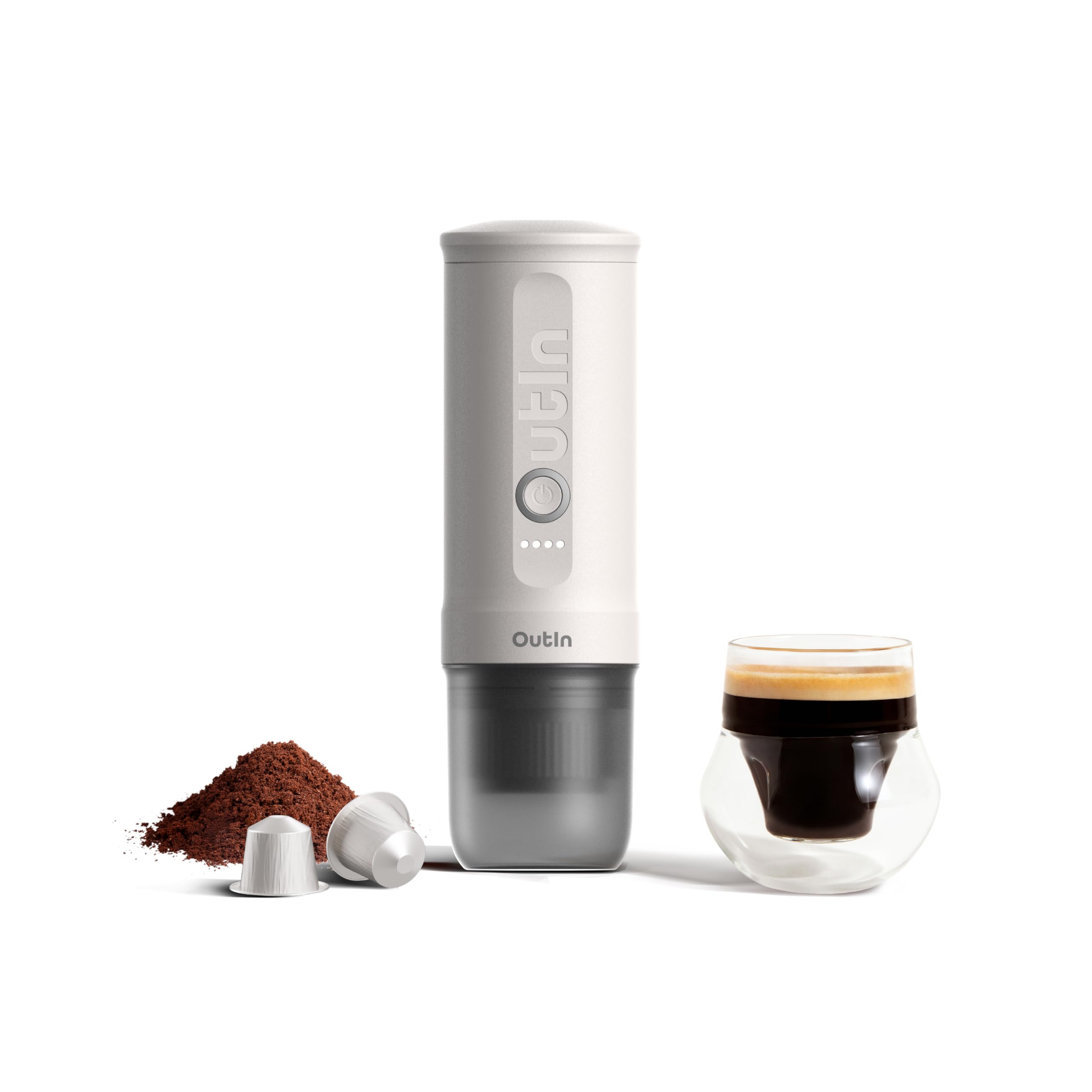
OutIn Nano Electric Espresso Maker is a premium option that weighs 670 grams and features a stainless‑steel body for enhanced durability. The device heats 1.7 oz of water from 77 °F to 198 °F in just 200 seconds, while maintaining 20‑bar pressure for a café‑quality crema. It includes three 2500 mAh lithium batteries, providing up to five hot shots with cold water or more than 200 shots with pre‑heated water, and it accepts USB‑C input up to 15 W, allowing efficient solar charging.
Key specifications include:
- Weight: 1.48 lb (670 g)
- Battery: 3 × 2500 mAh (total 7500 mAh)
- Pressure: 20 bars
- Heating time: 200 seconds (cold water)
- Compatibility: Ground coffee and NS‑type capsules
- Rating: 4.3 / 5.0 from 5,276 reviews
The OutIn Nano distinguishes itself with a faster heating cycle, a leak‑proof insulated design, and a 12‑month support period, making it suitable for demanding travelers who require rapid preparation.
Comparison and Selection Guide
Choosing the right solar‑compatible espresso machine depends on several factors: weight, battery capacity, heating speed, durability, and price. The table below summarizes the most relevant attributes of the two recommended models.
| Feature | Kejector Portable Espresso Maker | OutIn Nano Electric Espresso Maker |
|---|---|---|
| Price | $29.99 | $149.99 |
| Weight | 684 g (1.51 lb) | 670 g (1.48 lb) |
| Battery Capacity | 7500 mAh (single pack) | 3 × 2500 mAh (total 7500 mAh) |
| Shots per Charge (cold water) | 4 | 5 |
| Shots per Charge (hot water) | 50+ | 200+ |
| Heating Time (cold water) | 3‑4 minutes | 200 seconds (≈3.3 minutes) |
| Charging Method | USB‑C (compatible with solar USB chargers) | USB‑C up to 15 W (compatible with solar USB chargers) |
| Rating | 4.0 / 5.0 (115 reviews) | 4.3 / 5.0 (5,276 reviews) |
For budget‑conscious users, the Kejector offers solid performance at a fraction of the price. For those who prioritize speed, higher shot counts with hot water, and a longer warranty, the OutIn Nano justifies its premium cost. Both models support USB‑C charging, enabling integration with portable solar panels such as the Anker PowerPort Solar Lite or similar devices.
Best Practices & Tips for Off‑Grid Espresso Brewing
To maximise the lifespan of a portable espresso machine, one should store it in a dry environment and avoid exposing the battery to extreme temperatures. Regular cleaning of the brewing chamber and water reservoir prevents mineral buildup, which can affect pressure consistency.
When using solar charging, aim the solar panel toward direct sunlight and keep the panel surface free of dust. Charging efficiency is highest between 10 AM and 2 PM, when solar irradiance peaks. A 10‑W solar panel typically replenishes a 7500 mAh battery in approximately 3‑4 hours of strong sunlight.
For optimal extraction, use a medium‑fine grind size of 18‑20 µm. Adjust the grind slightly coarser if the machine struggles to reach full pressure, and finer if the espresso tastes weak or watery. Pre‑grinding beans and storing them in an airtight container preserves aroma during extended trips.
Consider pairing the espresso maker with a compact insulated mug to maintain temperature and reduce heat loss, especially when brewing in cold environments. A reusable metal cup also aligns with sustainable practices.
Frequently Asked Questions
- Can these espresso makers be powered solely by solar panels? Yes, both devices charge via USB‑C, allowing connection to any solar USB charger that provides sufficient wattage. The charging speed depends on panel output and sunlight intensity.
- How long does a full battery charge take? With a 10‑W solar panel, the Kejector typically reaches full charge in 4‑5 hours, while the OutIn Nano may require 5‑6 hours due to its three‑battery configuration.
- Are the capsules reusable? The NS‑type capsules are designed for single use, but users can repurpose them for ground coffee if they adjust the dosage. Reusing capsules reduces waste but may affect crema formation.
- What maintenance is required for the pressure pump? After each use, flush the pump with clean water and wipe the exterior with a damp cloth. Periodic inspection of the seal ensures consistent pressure.
- Is it safe to operate these machines on an airplane? Both models must be carried in hand luggage and cannot be used during flight. Battery compliance with airline regulations should be verified before travel.
- Can I use distilled water? Distilled water is recommended for extending battery life and preventing mineral deposits, especially in hard‑water regions.
- Do solar chargers affect the warranty? Using a certified USB‑C solar charger does not void the manufacturer warranty, provided the charger meets the device’s voltage and current specifications.
Conclusion
Solar‑powered compact espresso machines empower coffee lovers to enjoy café‑grade beverages in remote settings while reducing reliance on conventional electricity. By understanding pressure, temperature, battery capacity, and solar charging options, one can make an informed decision that aligns with both lifestyle and environmental values. Whether the priority is affordability, rapid heating, or extended shot counts, the Kejector Portable Espresso Maker and the OutIn Nano Electric Espresso Maker represent the leading choices in the current market.
Adopting best practices such as proper cleaning, optimal grind selection, and efficient solar charging will ensure consistent performance and longevity. With the knowledge presented in this guide, readers are prepared to select, use, and maintain a portable espresso solution that meets their off‑grid coffee aspirations.
Products Featured in This Guide
Kejector Portable Espresso Maker
Price: $29.99
Rating: 4.0/5.0 (115 reviews)
Featured for its budget‑friendly price, 20‑bar pressure, 7500 mAh battery, and USB‑C compatibility that enables solar charging.
OutIn Nano Electric Espresso Maker
Price: $149.99
Rating: 4.3/5.0 (5,276 reviews)
Featured for its rapid heating, high shot count with hot water, premium stainless‑steel construction, and robust 12‑month support.
