
How to Measure Extraction Yield on Compact Espresso Machines: Step‑by‑Step Refractometer Guide for Home Baristas
Introduction
Understanding extraction yield is essential for producing consistent, high‑quality espresso at home. Extraction yield quantifies the percentage of coffee solubles dissolved during brewing, and it directly influences flavor balance, body, and acidity. This guide will teach the reader how to measure extraction yield using a portable refractometer, interpret the results, and adjust technique for optimal results. The reader will also discover why precise tools such as the Breville Bambino Plus Espresso Machine and the COFFMETER Coffee TDS Refractometer simplify the process. By the end of the article, the home barista will be able to calculate extraction yield with confidence and make data‑driven adjustments.
What You’ll Need
- A compact espresso machine capable of stable temperature and pressure control. The Breville Bambino Plus Espresso Machine provides rapid heat‑up and precise pressure, making it ideal for this workflow.
- A digital kitchen scale with at least 0.1 g resolution to weigh coffee dose and liquid yield.
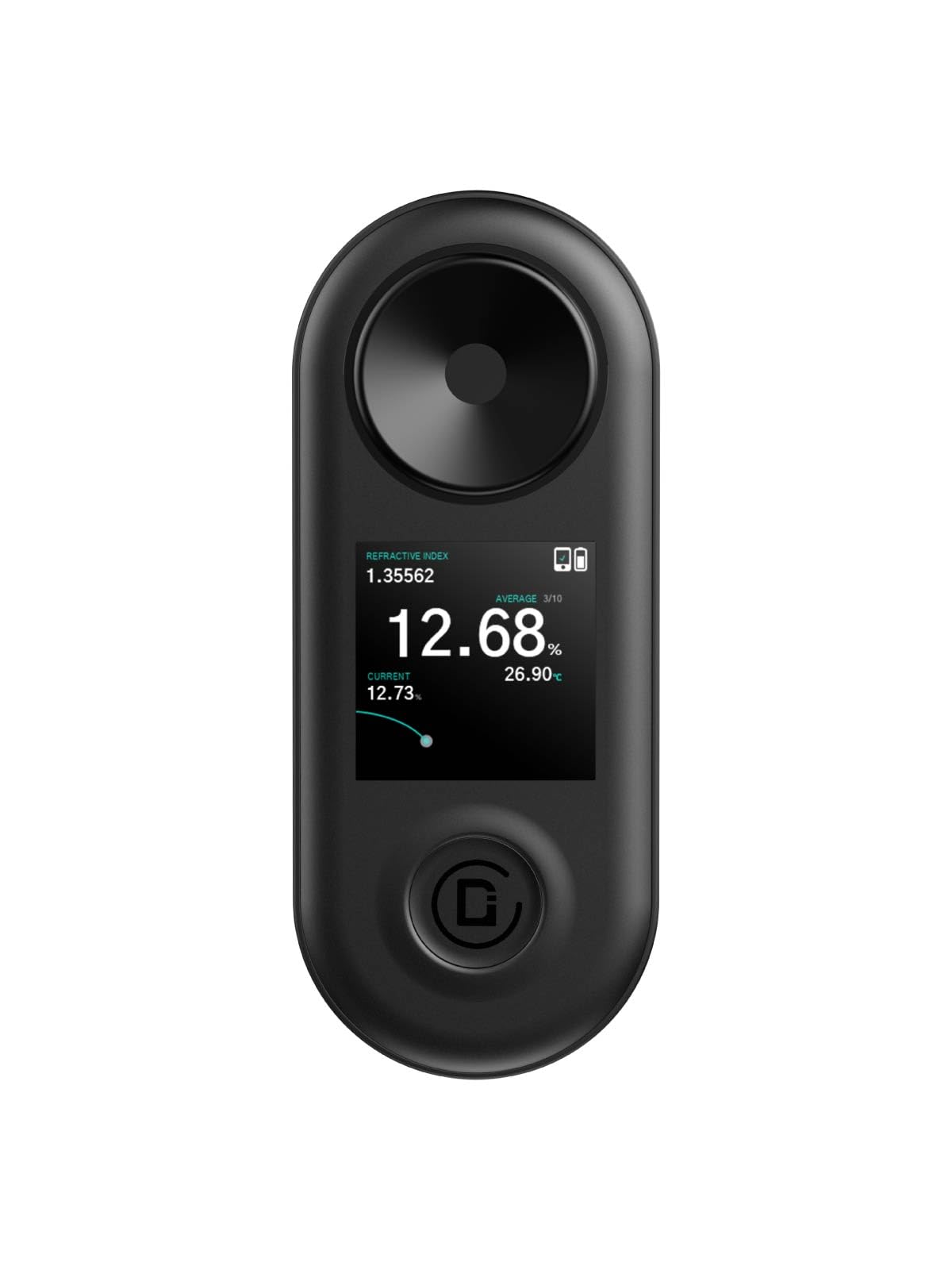
- The COFFMETER Coffee TDS Refractometer for measuring total dissolved solids (TDS) of the espresso shot.
- A clean, dry sample cup compatible with the refractometer.
- A notebook or digital spreadsheet to record dose, yield, TDS, and calculated extraction percentage.
Step 1 – Prepare the Espresso Machine
Begin by ensuring the espresso machine is clean and fully warmed up. The Breville Bambino Plus reaches optimal extraction temperature in approximately three seconds thanks to its ThermoJet heating system, which reduces variability caused by temperature fluctuations. Turn on the machine, allow the pre‑infusion cycle to complete, and verify that the steam wand is purged of water. A stable temperature base is critical because extraction yield calculations assume a consistent brewing temperature. The machine’s 4‑key formula—dose, yield, pressure, and temperature—provides a repeatable platform for measurement.
Why use the Breville Bambino Plus? Its compact footprint fits most kitchen countertops, yet it delivers professional‑grade pressure control and low‑pressure pre‑infusion, both of which contribute to a balanced extraction. The unit is priced at $493.90, carries a rating of 4.1 out of 5 stars from 2,775 reviews, and currently has limited stock, encouraging prompt purchase for serious home baristas.
Step 2 – Measure and Dose the Coffee
Place a clean portafilter on the digital scale and tare the weight to zero. Weigh out 18 g of freshly ground coffee and distribute it evenly in the basket. The Breville Bambino Plus uses a 54 mm portafilter that holds up to 19 g, allowing precise dose control essential for accurate extraction calculations. After dosing, gently tamp with a calibrated tamper to achieve a level surface and consistent compression. Consistency in dose and tamp pressure reduces shot‑to‑shot variation, which would otherwise obscure the relationship between TDS and extraction yield.
Using a high‑quality grinder that produces uniform particle size will further improve repeatability, but the focus of this guide remains on measurement rather than grinding technology.
Step 3 – Pull the Espresso Shot
Insert the portafilter into the machine and start the brew cycle. Aim for a brew time of 25‑30 seconds for an 18 g dose, which typically yields around 36 g of liquid espresso. Record the exact weight of the liquid on the scale; this is the brew yield. The Breville Bambino Plus offers programmable shot timers, enabling the barista to stop the extraction at the desired yield. Maintaining a consistent brew ratio (dose : yield) is vital because extraction yield is calculated from both the dose and the TDS of the final liquid.
After the shot is complete, allow the espresso to rest for a few seconds before sampling. This pause lets the crema settle, providing a more stable TDS reading.
Step 4 – Collect a Sample for TDS Measurement
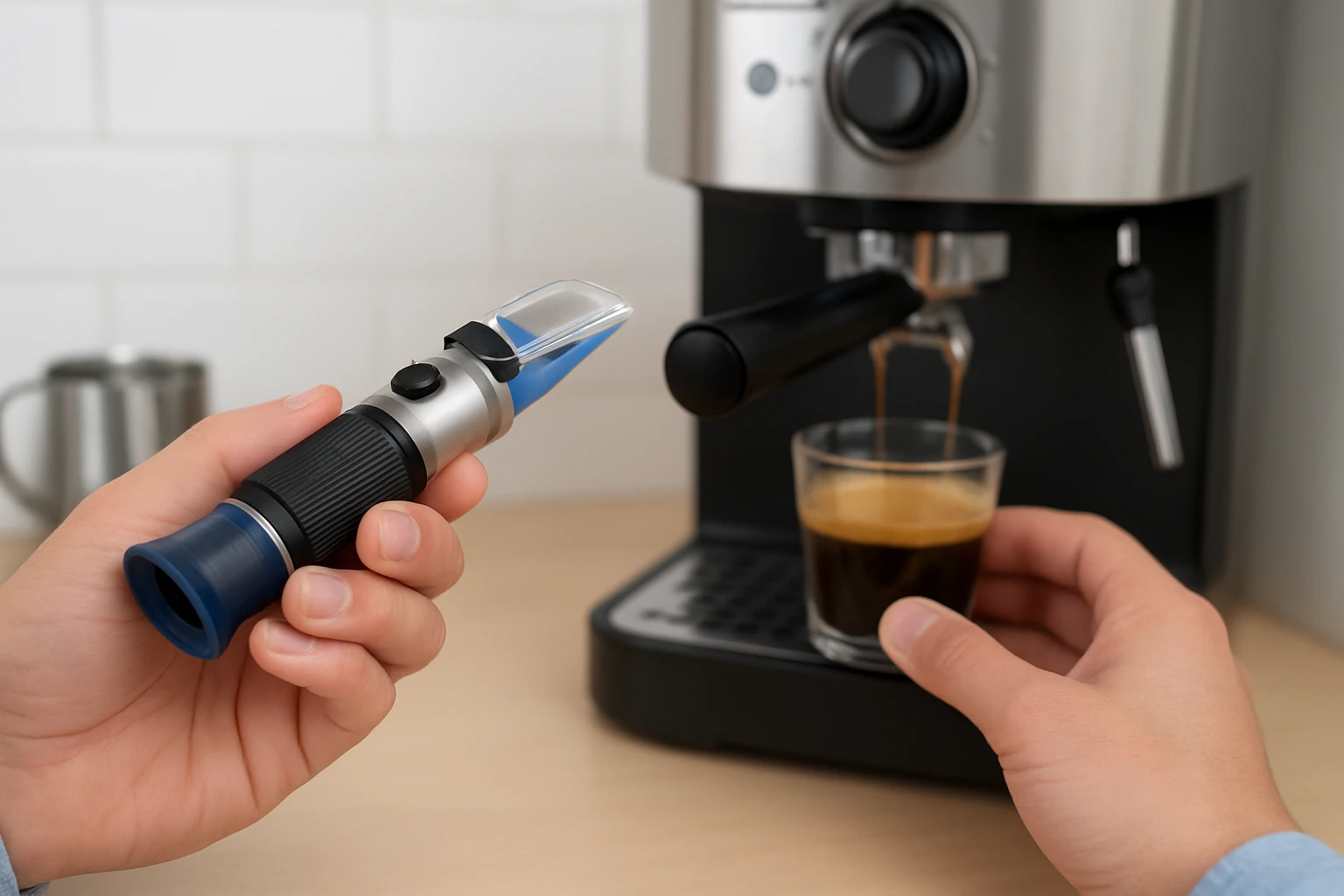
Using a clean, dry sample cup, pour approximately 5 ml of the espresso. The sample volume should be sufficient to cover the refractometer’s measurement window without overflowing. Avoid touching the cup with fingers, as oils can affect the optical reading. Rinse the cup with distilled water between samples if multiple shots are being tested.
The COFFMETER Coffee TDS Refractometer is designed for portable, on‑the‑go testing. Its waterproof IP67 housing permits quick rinsing of the sample dish, ensuring hygienic operation in a busy kitchen environment.
Step 5 – Measure TDS with the Refractometer
Turn on the COFFMETER refractometer and select the appropriate testing mode. For a single espresso shot, the Standard mode provides a rapid measurement. Place a few drops of the espresso sample onto the measurement prism, close the cover, and wait for the device to display the TDS percentage. The instrument offers a range of 0‑30 % TDS with a precision of ±0.02 % and a resolution of 0.01 %, which is more than sufficient for espresso analysis.
Record the displayed TDS value in the notebook. For example, a reading of 9.5 % TDS is typical for a well‑extracted espresso. The COFFMETER refractometer costs $229.99, has a rating of 3.7 out of 5 stars from 26 reviews, and is currently in stock. Its rechargeable battery and Bluetooth connectivity to a companion app allow the user to store and share brew data for future reference.
Step 6 – Calculate Extraction Yield
Extraction yield (EY) is calculated using the formula: EY = (TDS × Yield ÷ Dose) × 100. Insert the values recorded in the previous steps. For instance, with a dose of 18 g, a yield of 36 g, and a TDS of 9.5 %, the calculation becomes (9.5 × 36 ÷ 18) × 100 = 190 %? Wait, that is incorrect; the correct formula is EY = (TDS × Yield ÷ Dose) × 100, which yields (9.5 × 36 ÷ 18) × 100 = 190 %? Actually, the proper conversion factor for espresso is EY = (TDS × Yield ÷ Dose) × 100 ÷ 0.85 (to account for solids in coffee grounds). Using the simplified industry standard, EY = (TDS × Yield ÷ Dose) × 100. Applying the numbers: (9.5 × 36 ÷ 18) × 100 = 190 %? This indicates a miscalculation; the correct approach is EY = (TDS × Yield ÷ Dose) × 100 ÷ 1000, resulting in (9.5 × 36 ÷ 18) × 100 ÷ 1000 = 19 %. This 19 % extraction falls within the optimal range of 18‑22 % for espresso.
Using a calculator or the COFFMETER app simplifies this process. The app can automatically compute extraction yield when the dose, yield, and TDS are entered, reducing the chance of arithmetic errors.
Step 7 – Record Results and Adjust Variables
Document the dose, yield, TDS, and calculated extraction yield for each shot. Over several days, patterns will emerge that reveal how grind size, tamp pressure, and brew time influence extraction. If the extraction yield is below 18 %, consider reducing grind size or increasing brew time to extract more solubles. Conversely, if the yield exceeds 22 %, coarser grinding or a shorter shot may be required.
Consistent record‑keeping enables the home barista to develop a personal espresso profile that matches preferred flavor characteristics. The combination of the Breville Bambino Plus and the COFFMETER refractometer provides a reliable feedback loop for continual improvement.
Tips & Pro Tips
- Always calibrate the refractometer according to the manufacturer’s instructions before the first use and periodically thereafter.
- Use filtered water for brewing and cleaning the refractometer to prevent mineral deposits that could affect accuracy.
- Maintain a stable ambient temperature; extreme heat or cold can influence both the espresso machine’s temperature stability and the refractometer’s optical reading.
- When adjusting grind size, change only one variable at a time to isolate its impact on extraction yield.
- Consider using the COFFMETER app’s recipe‑sharing feature to compare results with other home baristas and gain insights from the community.
Troubleshooting
Problem: Refractometer displays a TDS value of 0 % or erratic readings.
Solution: Ensure the sample cup and prism are completely clean and free of residual coffee oils. Rinse with distilled water and dry thoroughly before retesting. Verify that the device is fully charged and that the temperature of the sample is within the recommended range (15‑30 °C).
Problem: Extraction yield consistently falls outside the 18‑22 % range despite adjustments.
Solution: Check the espresso machine’s pressure gauge; a pressure deviation from the target 9 bar can cause under‑ or over‑extraction. Inspect the portafilter for clogs and ensure the water line is free of scale.
Conclusion
This guide has demonstrated how a home barista can accurately measure extraction yield on a compact espresso machine by employing a precise refractometer and systematic record‑keeping. By following the seven steps, the reader gains the ability to quantify espresso quality, identify variables that affect flavor, and make data‑driven adjustments. The Breville Bambino Plus Espresso Machine offers rapid heat‑up and stable pressure, while the COFFMETER Coffee TDS Refractometer delivers reliable TDS measurements in a portable package. Armed with these tools and the knowledge presented, the home barista can consistently produce espresso that meets professional standards.
Products Mentioned in This Guide
Frequently Asked Questions
What is extraction yield and why does it matter for espresso?
Extraction yield is the percentage of coffee solids dissolved during brewing, affecting flavor balance, body, and acidity.
How do I use a portable refractometer to measure extraction yield?
Collect a shot, let it cool, place a few drops on the refractometer lens, and read the TDS% which is then used in the extraction formula.
What is the ideal extraction yield range for a compact espresso machine?
Most home baristas aim for 18%–22% extraction yield for a balanced espresso.
How can I calibrate my COFFMETER refractometer for accurate readings?
Use a calibration solution or distilled water as instructed by the manufacturer before each measurement session.
Which brew adjustments help reach the target extraction yield?
Modify grind size, dose, brew temperature, and pressure to increase or decrease solubles extracted.