How to Get Farmers Market Permits to Sell Espresso with a Mobile Coffee Setup — Complete Step‑by‑Step Guide
Introduction
Starting a mobile espresso business at a farmers market can be a rewarding venture for coffee enthusiasts who wish to share their craft with a community of food lovers. This guide explains the entire permitting process, outlines the essential equipment, and provides actionable best practices for operating a compliant and profitable coffee stall. Readers will learn how to navigate local regulations, select reliable hardware, and implement efficient service workflows.
By the end of this article, entrepreneurs will possess a clear roadmap from initial research to the day they serve their first latte at a bustling market. The information presented is based on common municipal requirements in the United States and can be adapted to regional variations.
Background and Context
Farmers markets are governed by a combination of health department rules, zoning ordinances, and vendor licensing statutes. Most jurisdictions require a food‑service permit, a mobile vendor permit, and a sales tax registration. In addition, coffee equipment must meet commercial‑grade standards for sanitation and safety.
Understanding these layers of regulation is essential because non‑compliance can result in fines, suspension of sales privileges, or even legal action. Vendors should therefore allocate time for paperwork, inspections, and fees before committing to a purchase of equipment.
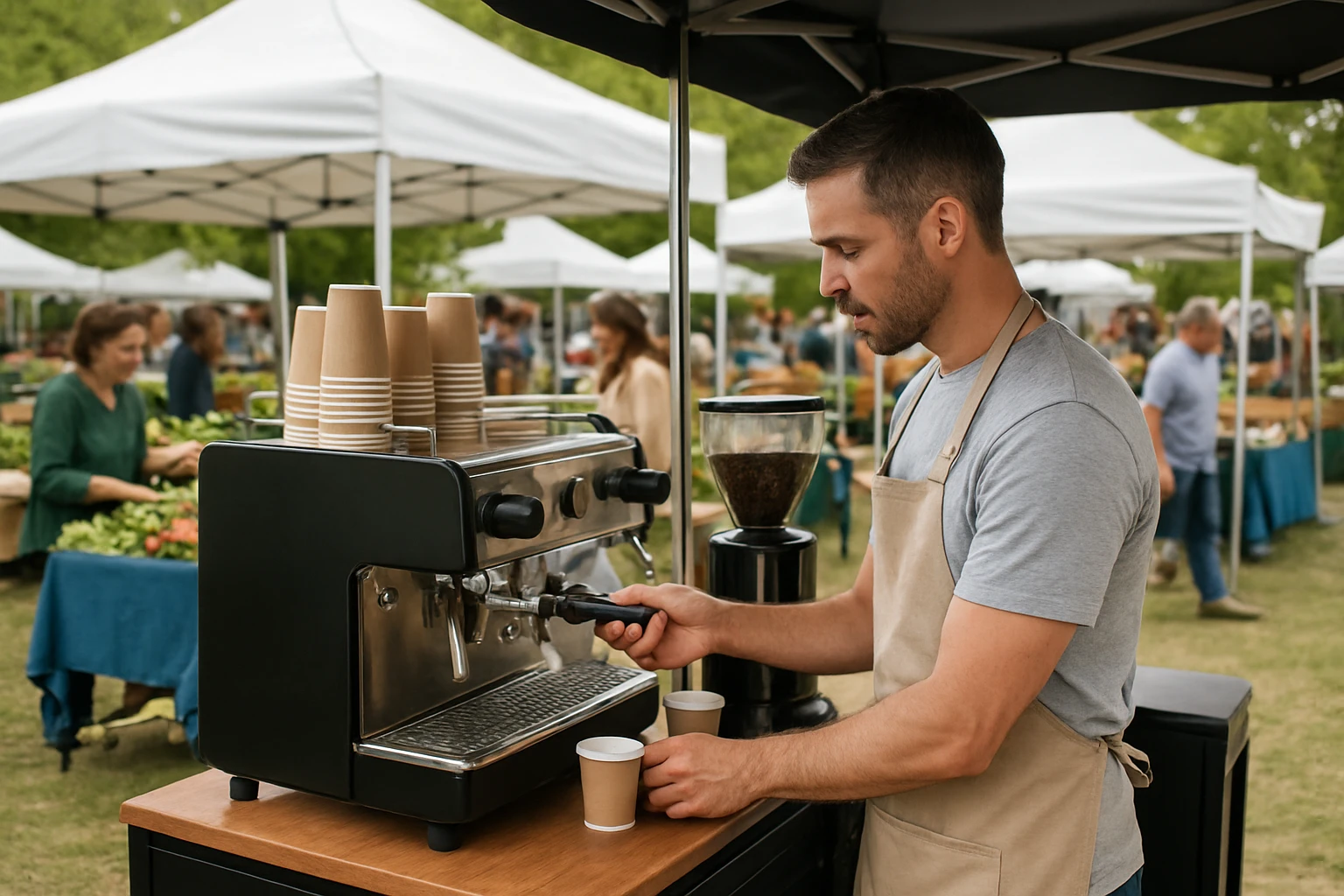
Another important consideration is the physical layout of the market stall. A compact, wheeled cart enables vendors to move quickly between locations, store supplies securely, and comply with space restrictions imposed by market organizers.
With this context in mind, the following sections break down the permitting workflow, recommend equipment that meets commercial requirements, and provide a comparison framework to aid decision‑making.
Step‑by‑Step Permit Acquisition Process
1. Research Local Regulations – Begin by contacting the county health department and the farmers market management office. Request a copy of the vendor handbook, which typically lists required permits, fee schedules, and inspection timelines.
2. Register Your Business – Obtain a legal business name, register with the state, and acquire an Employer Identification Number (EIN). This step is required for sales tax collection and for many health permits.
3. Apply for a Food Service Permit – Submit an application that includes a detailed equipment list, a floor plan of the mobile setup, and a food safety plan. Most health departments require a Certified Food Protection Manager (CFPM) on staff, which can be achieved through a short online course.
4. Obtain a Mobile Vendor Permit – This permit authorizes the use of a vehicle or cart on public property. Provide proof of insurance, vehicle registration, and a description of the cart dimensions.
5. Schedule Inspections – After the permits are approved, a health inspector will visit the cart to verify that it meets sanitation standards. Ensure that the cart is fully assembled and that all equipment is operational before the inspection date.
6. Pay Fees and Receive Approval – Fees vary widely; typical ranges are $50‑$200 for a food service permit and $30‑$100 for a mobile vendor permit. Once paid, the permits are issued and can be displayed on the cart.
Essential Equipment for a Mobile Espresso Stall
Choosing equipment that is both durable and compliant with health regulations is critical. Two products stand out for their reliability and suitability for a farmers market environment.
Utility Cart
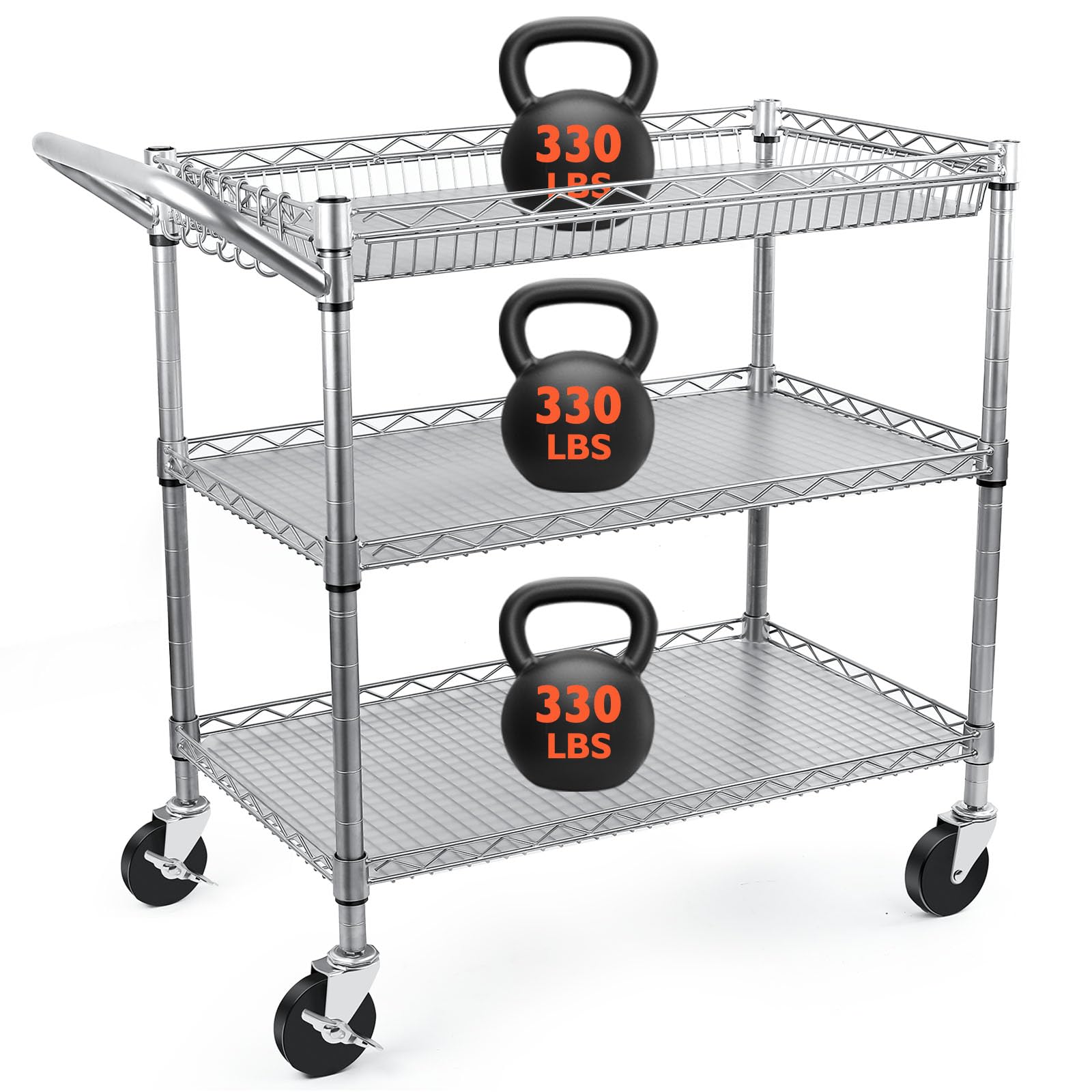
The BolDuck Heavy Duty Utility Cart provides a sturdy, three‑tier platform that can support up to 990 lb of equipment and supplies. Its chrome‑plated steel construction resists rust, while 4 inch silent industrial casters enable smooth movement across uneven market pavement. The cart includes a push‑bar handle, ventilated basket, and adjustable shelving at 1‑inch intervals, allowing vendors to organize espresso beans, milk, cups, and cleaning tools efficiently.
Key specifications include dimensions of 35.6 L × 34 H × 18 W inches, assembly without tools in approximately 15 minutes, and a 4.7‑star rating from 249 verified reviews. The high load capacity ensures that the cart can accommodate a commercial‑grade espresso machine, a water reservoir, and ancillary items without compromising stability.
Espresso Machine
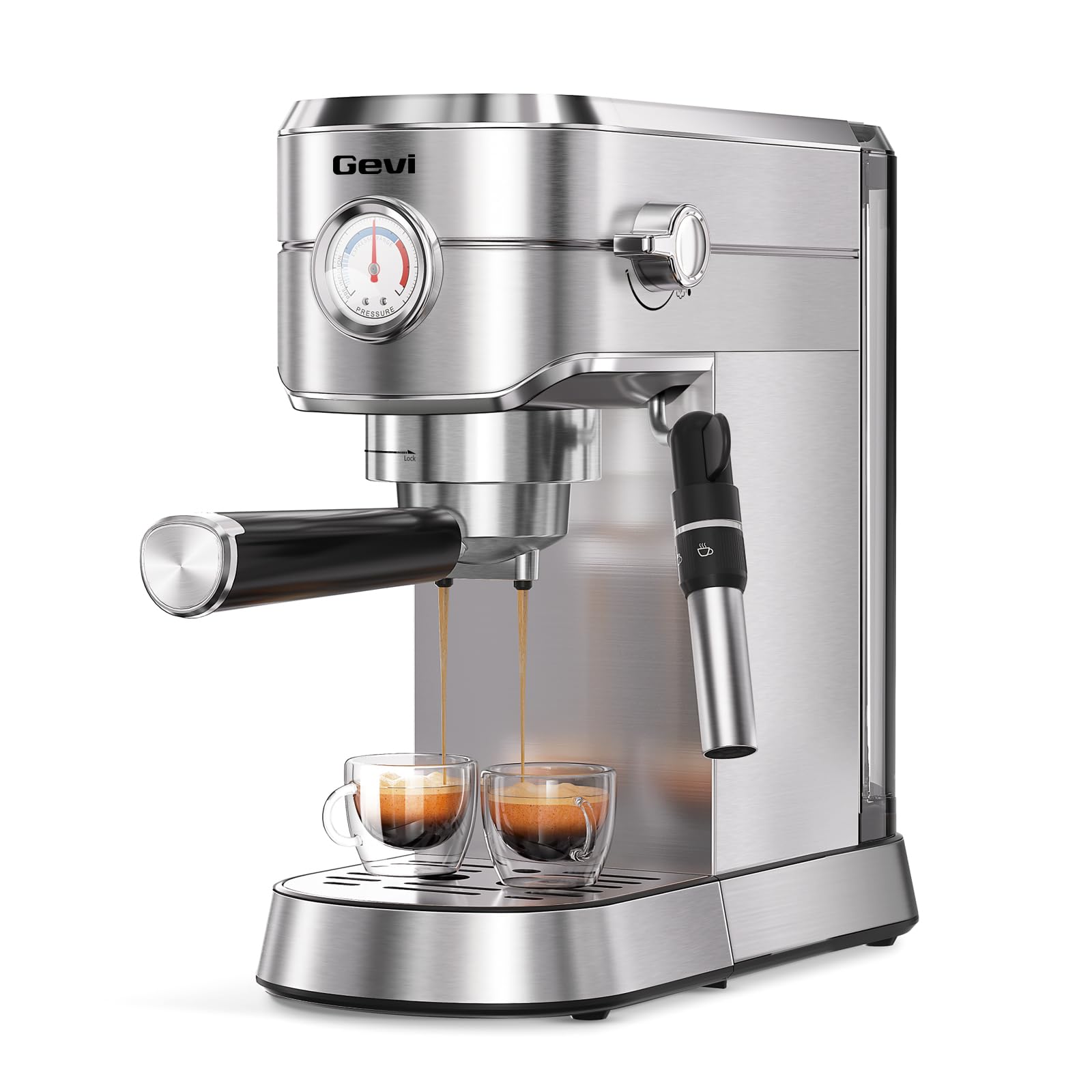
The Gevi 20 Bar Espresso Machine delivers café‑quality coffee in a compact stainless‑steel housing that fits comfortably on the utility cart’s middle tier. It features an automatic milk frother and a multi‑purpose steam wand, allowing baristas to produce lattes, cappuccinos, and hot water for Americanos with minimal training.
With four adjustable brew sizes, compatibility with ground coffee, ESE pods, and Nespresso capsules, and a 4.4‑star rating from over 3,000 reviews, the machine balances versatility with user‑friendliness. The built‑in temperature control (NTC) maintains consistent extraction, which is essential for delivering a reliable product to market customers.
Comparison and Selection Guide
| Feature | BolDuck Utility Cart | Gevi Espresso Machine |
|---|---|---|
| Maximum Load Capacity | 990 lb | Approximately 30 lb |
| Dimensions (L × H × W) | 35.6 in × 34 in × 18 in | 12 in × 13 in × 14 in (approx.) |
| Power Requirement | None (manual mobility) | 110‑120 V, 60 Hz |
| Key Benefits | High durability, large storage capacity, silent casters for easy navigation. | Automatic milk frothing, multi‑brew options, stainless‑steel durability. |
When selecting a cart, prioritize load capacity and wheel stability, especially if the market terrain includes gravel or uneven pavement. For the espresso machine, focus on temperature consistency, ease of cleaning, and the ability to accept multiple coffee formats, which reduces the need for additional accessories.
Best Practices and Operational Tips
- Maintain a clean workstation by wiping down the espresso machine after each drink and sanitizing the cart surfaces at the start of each market day.
- Store coffee beans in airtight containers on the upper shelf of the utility cart to preserve freshness and prevent moisture exposure.
- Use the cart’s built‑in hooks to hang cleaning brushes, a small fire extinguisher, and a portable hand‑washing station, ensuring compliance with health department requirements.
- Label all water containers with the date of fill to satisfy inspection standards for potable water.
- Implement a point‑of‑sale (POS) system that integrates with local sales tax reporting, reducing administrative burden.
Additionally, vendors should develop a branding strategy that includes clear signage, a menu board, and reusable cup options. Offering a loyalty card encourages repeat customers, which is especially valuable in markets with high foot traffic.
Frequently Asked Questions
- What is the typical processing time for a farmers market food service permit? Processing times vary by jurisdiction but generally range from one to four weeks after submission of a complete application.
- Do I need a separate permit for selling espresso compared to baked goods? Yes, coffee preparation often requires a food‑service permit that specifically addresses beverage handling and equipment sanitation.
- Can I use a residential‑grade espresso machine for a market stall? Most health departments require commercial‑grade equipment; the Gevi 20 Bar Espresso Machine meets this criterion with its stainless‑steel construction and professional‑grade pump.
- How many staff members are required on a typical market day? One certified food handler is sufficient for a simple espresso stall, but an additional assistant can improve service speed during peak hours.
- What insurance coverage is recommended? General liability insurance of at least $1 million is advisable, along with product liability coverage for coffee‑related injuries.
- Is it necessary to have a water filtration system? Many markets provide a water source; however, a portable filtration unit can improve taste consistency and meet stricter health codes.
- Can I reuse the same cart for other market seasons? Yes, the BolDuck Heavy Duty Utility Cart is designed for multi‑season use and can be reconfigured for different product lines.
Conclusion
Obtaining farmers market permits to sell espresso requires diligent research, thorough documentation, and adherence to health and safety standards. By following the step‑by‑step process outlined in this guide, entrepreneurs can secure the necessary approvals, select equipment that enhances operational efficiency, and launch a mobile coffee service that meets both regulatory expectations and customer expectations.
The combination of a robust utility cart and a versatile espresso machine creates a foundation for consistent product quality and smooth workflow. Coupled with best‑practice sanitation, strategic branding, and attentive customer service, a mobile espresso stall can become a profitable fixture at any farmers market.
Products Featured in This Guide
BolDuck Heavy Duty Utility Cart
Price: $107.99
Rating: 4.7 out of 5 stars (249 reviews)
Featured because it offers a 990 lb load capacity, silent 4‑inch casters, and adjustable shelving that perfectly supports a commercial espresso machine and market supplies.
Gevi 20 Bar Espresso Machine
Price: $129.98
Rating: 4.4 out of 5 stars (3,013 reviews)
Featured because it delivers café‑grade espresso with an automatic milk frother, multiple brew size options, and compatibility with various coffee formats, making it ideal for a mobile market environment.