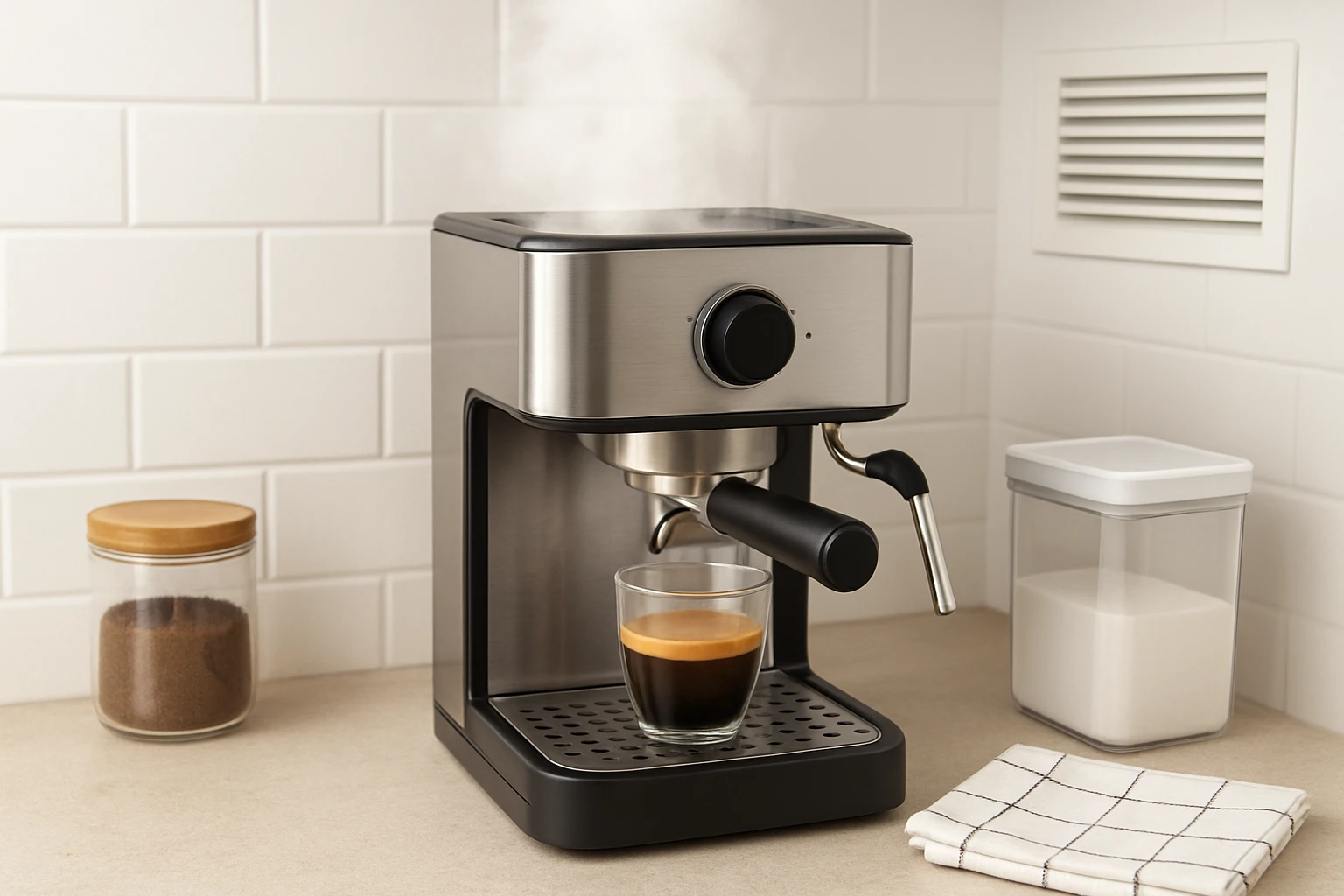
Introduction
The modern compact espresso machine delivers café‑quality drinks, but it also generates steam and moisture that can overwhelm a small kitchen. This guide explains ten practical strategies that minimise humidity, protect countertops, and preserve the machine’s lifespan. Readers will learn how to arrange equipment, use auxiliary tools, and maintain cleanliness without compromising the coffee experience.
What You’ll Need
- Erizolt Dehumidifier – 35 oz capacity, whisper‑quiet operation, auto shut‑off.
- WISELIFE Coffee Mat – super‑absorbent, easy‑to‑clean surface.
- Breville Espresso Cleaning Tablets – formulated for thorough descaling and oil removal.
- Small fan or vent, silicone splash guards, moisture‑resistant countertop sealant.
Step 1: Position the Espresso Machine Strategically
Place the machine near a window, vent, or an open cabinet that allows steam to escape upward rather than settling on nearby surfaces. A distance of at least six inches from the wall creates an air gap that facilitates natural convection. When the kitchen layout permits, locate the unit on a raised platform such as a sturdy tray; this elevates the steam source and reduces direct contact with countertops.
Step 2: Capture Ambient Moisture with a Dehumidifier
Running a compact dehumidifier in the same area significantly lowers relative humidity, especially during prolonged brewing sessions. The Erizolt Dehumidifier offers a 35 oz tank, capable of extracting up to 16 oz of moisture per day in a 350 sq ft space. Its whisper‑quiet 25 dB operation ensures that the kitchen remains peaceful, while the auto shut‑off feature prevents overflow. At a price of $35.99 and a rating of 4.4 stars from 42 reviews, it provides an economical solution for small‑kitchen humidity control.
Step 3: Use an Absorbent Coffee Mat
Even with careful positioning, droplets may accumulate on the countertop. A high‑quality coffee mat absorbs spills instantly, protecting the surface from water damage and staining. The WISELIFE Coffee Mat is constructed from super‑absorbent material, can be rolled for storage, and cleans easily with a quick rinse. Priced at $6.64 and holding a 4.7‑star rating from 1,422 reviewers, it combines affordability with durability.
Step 4: Install a Silicone Splash Guard
Attach a silicone splash guard around the steam wand and portafilter area. The flexible material directs excess steam away from the countertop and creates a seal that reduces splatter. Because silicone tolerates high temperatures, it does not degrade over time. This inexpensive addition costs less than $10 and can be sourced from most kitchen supply stores.
Step 5: Employ a Small Exhaust Fan
If the kitchen lacks a dedicated vent, a compact exhaust fan mounted on a nearby window or under‑cabinet space can draw humid air outward. Select a fan rated for 30–50 CFM (cubic feet per minute) to balance airflow with noise levels. Position the fan so that it pulls air across the machine rather than pushing steam back into the room.
Step 6: Seal Countertops with Moisture‑Resistant Coating
Applying a thin layer of moisture‑resistant sealant to the countertop around the espresso station creates a barrier that prevents water absorption. Choose a food‑safe, clear polyurethane that cures within four hours. After sealing, wipe the surface with a damp cloth to verify that the coating does not affect grip.
Step 7: Regularly Clean the Steam Wand and Boiler
Residue buildup inside the wand and boiler can increase steam output and cause uneven condensation. Use the Breville Espresso Cleaning Tablets once a month. Each tablet dissolves in the machine’s water reservoir, breaking down coffee oils and mineral deposits without corroding internal components. The tablets are priced at $14.30 for an eight‑pack and enjoy a 4.8‑star rating from 5,608 reviewers, indicating strong consumer confidence.
Step 8: Optimize Water Temperature Settings
Many compact machines allow adjustment of boiler temperature. Reducing the temperature by 5–10 °F lowers steam generation while still delivering proper extraction pressure. Consult the user manual to locate the temperature dial or digital setting, and test the espresso taste after each adjustment to ensure quality is maintained.
Step 9: Implement a Routine Wipe‑Down After Each Use
After brewing, use a lint‑free microfiber cloth to dry the steam wand, drip tray, and surrounding countertop. This habit removes residual moisture before it can evaporate into the air. For stubborn droplets, a quick pass with a solution of equal parts water and white vinegar neutralises mineral deposits.
Step 10: Schedule Periodic Deep‑Cleaning Sessions
Every two to three weeks, perform a comprehensive cleaning cycle. Empty the water tank, run a full descaling program with the cleaning tablets, and scrub the exterior with a mild detergent. Allow the machine to air‑dry for at least fifteen minutes before the next use. This systematic approach prevents long‑term humidity buildup and extends the appliance’s service life.
Tips & Pro Tips
- Combine the dehumidifier and exhaust fan for maximum moisture removal during peak brewing periods.
- Place the coffee mat slightly angled toward the drain to encourage liquid flow away from the machine.
- Use filtered water in the reservoir; lower mineral content reduces steam condensation.
- Inspect silicone splash guards weekly for cracks or wear, replacing them promptly to maintain effectiveness.
Troubleshooting
Problem: Persistent fog on nearby cabinets.
Solution: Increase the dehumidifier’s runtime, verify that the exhaust fan is unobstructed, and ensure the machine’s temperature setting is not excessively high.
Problem: Water pooling on the countertop despite using a mat.
Solution: Confirm that the mat is fully flattened and not folded; replace it if the absorbency has diminished.
Conclusion
By applying these ten practical strategies, one can effectively reduce steam and humidity generated by a compact espresso machine in a limited kitchen space. Proper positioning, moisture‑absorbing tools, regular maintenance, and airflow management work together to create a comfortable environment while preserving equipment longevity. Readers are encouraged to adopt the recommended practices and select the suggested tools that best suit their workflow.
Products Mentioned in This Guide
Frequently Asked Questions
How can I position a compact espresso machine to reduce steam buildup?
Place the machine near a vent or window and keep it on a raised, heat‑resistant surface to allow steam to escape upward and away from countertops.
What role does a small dehumidifier play in a kitchen with an espresso machine?
A compact dehumidifier like the Erizolt absorbs excess moisture, keeping humidity low and preventing condensation on nearby surfaces.
Why should I use a coffee mat under my espresso machine?
A super‑absorbent coffee mat captures drips and steam condensate, protecting the countertop and simplifying cleanup.
How often should I use cleaning tablets on my espresso machine?
Run Breville cleaning tablets once a month or after heavy use to descale, remove oil buildup, and maintain optimal steam performance.
Can a fan or splash guard help control humidity from espresso brewing?
Yes, a small fan improves air circulation while silicone splash guards contain steam, both reducing overall kitchen humidity.