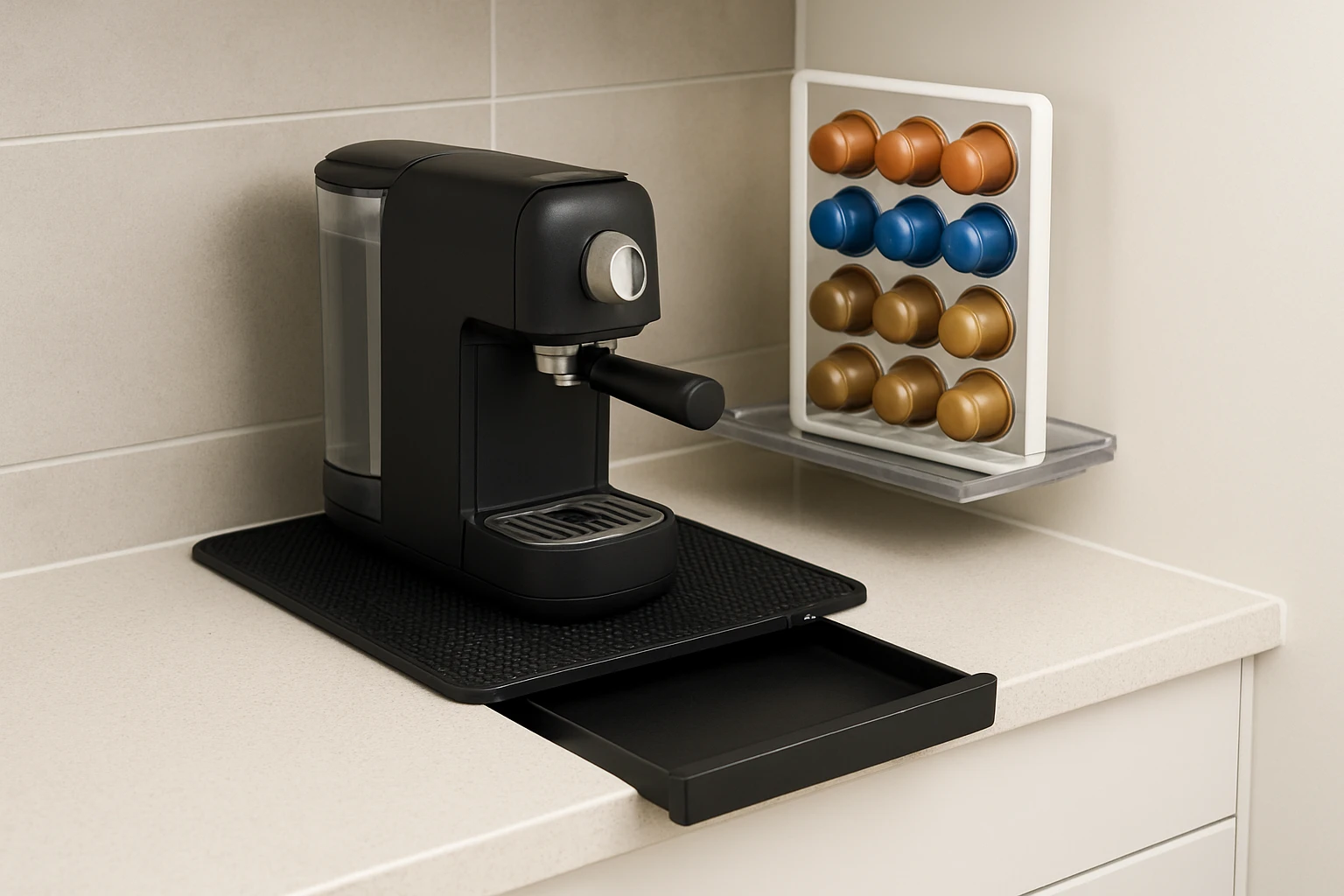
How to Optimize Countertop Space for Compact Espresso Machines: Space‑Saving Stacking & Mounting Solutions
Introduction
One of the most common challenges for coffee enthusiasts is fitting a high‑quality espresso machine on a limited countertop without sacrificing functionality or aesthetics. This guide explains how to evaluate the available area, protect surfaces, add mobility, and organize accessories so that a compact espresso machine operates efficiently in a small kitchen. Readers will learn practical, step‑by‑step methods that combine simple household techniques with carefully selected tools. By following these instructions, one can create a tidy, safe, and visually appealing coffee station that enhances daily brewing rituals.
What You'll Need
- A compact espresso machine (owner's own unit).
- Protective silicone mat.
- Sliding appliance tray.
- Capsule storage drawer.
- Measuring tape, level, and basic screwdriver.
- Cleaning cloths and mild detergent.
Step 1: Assess Countertop Layout
Begin by measuring the length, width, and depth of the countertop area that will host the espresso machine. Use a measuring tape to record dimensions in inches, then sketch a simple floor plan on paper, marking the machine footprint, any adjacent appliances, and the space required for plugging in power cords. Identify high‑traffic zones where foot traffic or other appliances may obstruct access, and note any uneven edges that could cause the machine to wobble.
Next, evaluate the material of the countertop. Surfaces such as marble, quartz, or hardwood are prone to heat damage or scratches when a hot machine is placed directly on them. Understanding the surface composition informs the selection of protective accessories in later steps.
Finally, consider the vertical clearance needed for the machine's steam wand and any detachable portafilter. Ensure that cabinets or shelves above the counter do not impede operation. This systematic assessment creates a solid foundation for the subsequent space‑saving measures.
Step 2: Protect the Surface with a Silicone Mat
After confirming the available footprint, place a protective barrier that absorbs heat and prevents scratches. The KVRG Silicone Coffee Counter Mat is specifically engineered for coffee machines, featuring a precise arc design that matches the curved base of most espresso units. Its high‑temperature resistant silicone endures up to 446°F (230°C), thereby shielding wooden, marble, or quartz countertops from thermal stress.
Why this mat is advantageous compared with generic silicone pads is its tailored curvature, which eliminates micro‑gaps that could allow heat to concentrate on a single point. The mat also offers a non‑slip surface, reducing the risk of the machine shifting during use. At a price of $9.99, it provides excellent value, supported by a 4.6‑star rating from 194 verified reviews.
To install, clean the countertop with a damp cloth, dry thoroughly, and then lay the mat flat, aligning the arc with the machine's base. Press gently to ensure full contact. The mat is dishwasher‑safe, allowing easy maintenance after spills or coffee splatters.
Step 3: Install a Sliding Appliance Tray for Mobility
Even with a protective mat, a compact espresso machine can occupy valuable counter space that might be needed for food preparation. Adding a sliding tray creates a hidden storage zone beneath the countertop, enabling the machine to be pulled out for use and tucked away when not needed. The GIASSVIO Bamboo Appliance Slider Tray offers a 360° efficient motion system that moves smoothly and quietly, allowing the user to slide the espresso machine forward without lifting it.
This bamboo tray is constructed from 100% natural bamboo, providing a sturdy, non‑slip surface that holds the machine securely while adding an elegant aesthetic to the kitchen. Its dimensions of 12.8"×15.8" accommodate most compact espresso units and even larger appliances such as air fryers. Priced at $33.81 and backed by a 4.5‑star rating from 360 reviews, the tray delivers durability and visual appeal.
Installation begins by locating the cabinet space beneath the intended countertop area. Using a screwdriver, attach the sliding rails to the cabinet interior according to the manufacturer's instructions. Place the bamboo tray onto the rails, ensuring it glides evenly. Finally, position the espresso machine on the tray, confirming that the weight is evenly distributed and that the tray slides without obstruction.
Step 4: Organize Capsules with a Dedicated Drawer
Capsules, pods, or ground coffee containers often clutter the countertop, reducing the usable workspace. A purpose‑built storage drawer keeps these items orderly while utilizing the space beneath the machine. The DecoBrothers Nespresso Pod Drawer is a tempered‑glass organizer that holds up to 24 large or 48 small Nespresso Vertuo capsules, providing flexible capacity for different brewing preferences.
Tempered glass offers both durability and a sleek, modern appearance that complements the espresso machine. The sliding drawer design enables quick access to capsules without exposing them to dust, while non‑slip rubber feet keep the unit stable on the countertop. At $29.97 and a 4.7‑star rating from over 35,000 reviews, the drawer represents a high‑quality solution for capsule management.
To incorporate the drawer, measure the space under the sliding tray or directly beneath the countertop if a tray is not used. The drawer dimensions are 14.3"L × 13.4"W × 3.5"H, fitting comfortably under most single‑serve coffee makers. Place the drawer on a level surface, verify that it slides freely, and load capsules according to the size configuration that best matches the user's consumption pattern.
Step 5: Stack and Mount Additional Accessories
Beyond the machine and capsules, coffee enthusiasts often own tampers, knock boxes, milk frothers, and small syrups. To keep these items accessible yet unobtrusive, consider stacking them on the silicone mat using a compact, heat‑resistant tray or mounting a small wall‑mounted rack above the countertop. When stacking, place heavier items at the bottom and lighter accessories on top to maintain stability.
If wall space is available, install a slim metal or bamboo rack with a maximum load rating of at least 5 kg. Secure the rack with appropriate wall anchors to avoid accidental detachment. This vertical storage approach frees additional countertop area for food preparation or decorative elements.
Finally, route power cords along the edge of the countertop using cable organizers or clips. This prevents tripping hazards and keeps the workspace tidy. Ensure that the cord does not interfere with the sliding motion of the tray or the opening of the capsule drawer.
Tips & Pro Tips
- Periodically clean the silicone mat with mild detergent to prevent coffee oil buildup, which can affect grip over time.
- Apply a thin layer of silicone lubricant to the sliding tray rails if the motion becomes stiff after extended use.
- When loading capsules, keep the drawer half‑filled to reduce weight and allow smoother sliding.
- Use a small silicone spatula to transfer ground coffee onto the portafilter, preventing spillage onto the mat.
- Consider a decorative backsplash behind the espresso station to protect walls from steam and splatter.
Troubleshooting
Problem: The sliding tray sticks or makes grinding noises.
Solution: Remove the tray, wipe the rails with a dry cloth, and apply a food‑grade silicone spray sparingly. Re‑install and test the motion.
Problem: The silicone mat slides on a highly polished surface.
Solution: Place a thin, non‑slip rubber sheet beneath the mat to increase friction without compromising heat resistance.
Problem: The capsule drawer does not close fully.
Solution: Verify that the drawer is aligned with the rubber feet and that no debris obstructs the sliding track. Adjust the feet if necessary.
Conclusion
Optimizing countertop space for a compact espresso machine requires a systematic approach that protects surfaces, adds mobility, and organizes accessories. By assessing the layout, installing the KVRG Silicone Coffee Counter Mat, employing the GIASSVIO Bamboo Appliance Slider Tray, and integrating the DecoBrothers Nespresso Pod Drawer, one can create a functional, safe, and aesthetically pleasing coffee station. The techniques described are applicable to any small kitchen, and the recommended tools provide reliable, cost‑effective solutions that enhance daily brewing experiences.
Products Mentioned in This Guide
Frequently Asked Questions
How do I measure my countertop to ensure a compact espresso machine fits?
Use a measuring tape to record the length, width, and depth of the intended area, then compare those dimensions to the machine’s specifications.
What is the best way to protect my countertop from heat and spills?
Place a silicone mat or heat‑resistant pad directly under the espresso machine to catch moisture and heat.
Can I add mobility to a compact espresso setup?
A sliding appliance tray lets you pull the machine out for use and push it back to save space when not in use.
How should I store coffee capsules and accessories to save space?
Use a low‑profile capsule storage drawer or stackable containers that fit beneath the machine or on an adjacent shelf.
Do I need to level my espresso machine, and how?
Yes; place a level on the countertop, adjust the machine’s feet with a screwdriver until it sits evenly to ensure proper brewing performance.