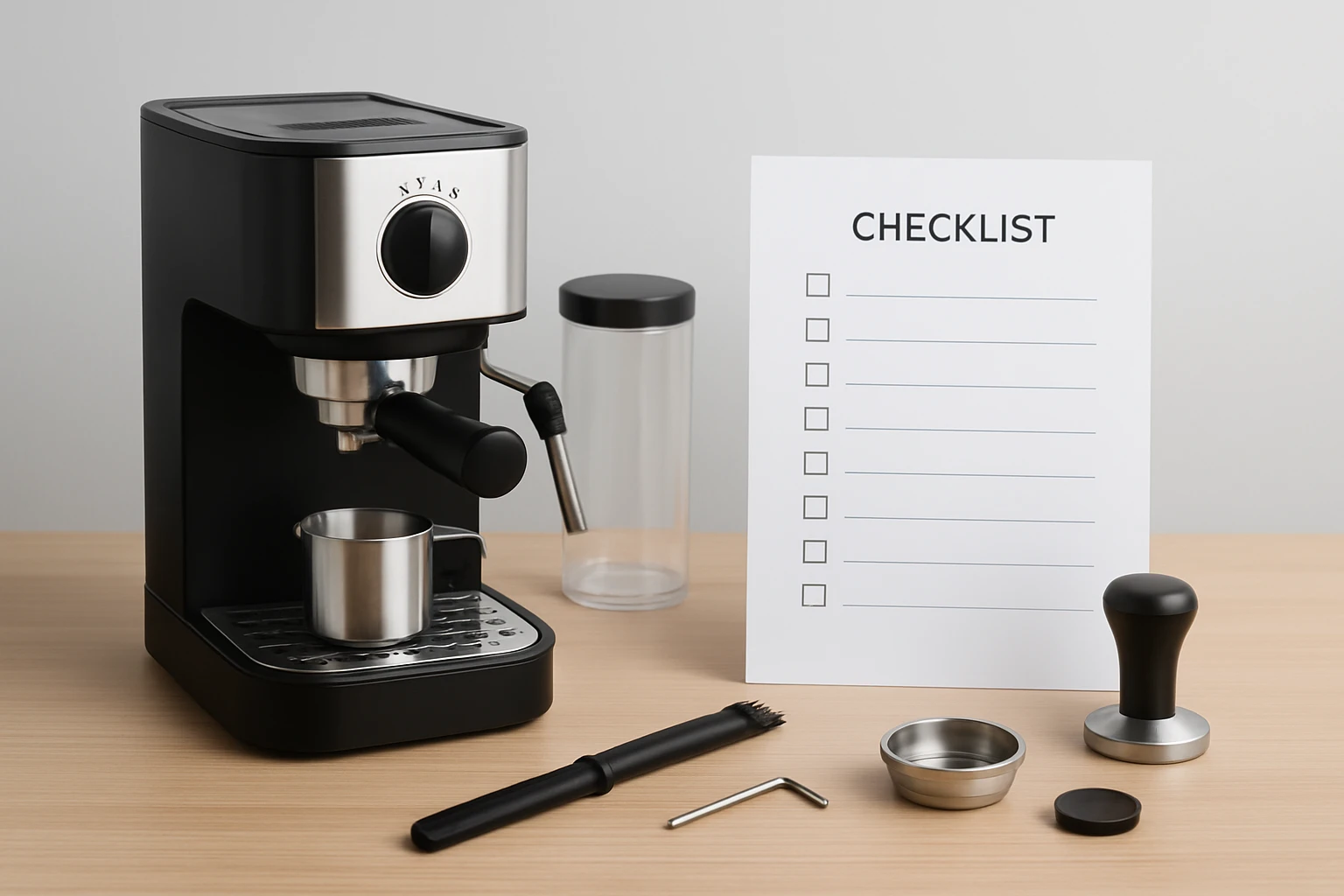
Introduction
One can extend the lifespan of a compact espresso machine by following a disciplined maintenance routine. This guide explains a monthly and yearly checklist that ensures consistent extraction quality and prevents costly repairs. Readers will learn how to clean internal components, descale effectively, and preserve the aesthetic appearance of the appliance. The information presented is valuable for coffee enthusiasts who demand reliability without sacrificing convenience.
What You'll Need
- A soft, lint‑free cloth for exterior cleaning.
- Fresh filtered water for rinsing and descaling.
- Dedicated espresso machine descaling solution (not included).
- Caffenu Cleaning Pods – 5‑pack compatible with original Nespresso machines.
- Cino Cleano Cleaning Tablets – 8‑tablet pack suitable for a wide range of super‑automatic machines.
- A small container for collecting waste water.
Step 1: Prepare the Machine for Cleaning
Before any cleaning action, one should turn off the machine and unplug it to avoid electrical hazards. Remove the water reservoir, discard any remaining water, and empty the used‑capsule container. Wipe the exterior with a damp cloth to eliminate coffee splashes that could interfere with internal cleaning. This preparation creates a safe environment and allows cleaning agents to reach the brewing chamber without obstruction.
Step 2: Perform a Descaling Cycle (Monthly)
Scale buildup is the primary cause of reduced pressure and uneven temperature in compact espresso machines. Fill the reservoir with a descaling solution according to the manufacturer's instructions and run a full brewing cycle without a capsule. Allow the solution to sit for the recommended dwell time, then flush the system with fresh filtered water until no mineral taste remains. Descaling protects the heating element and ensures optimal extraction efficiency.
Step 3: Clean the Brewing Chamber with Caffenu Cleaning Pods
After descaling, the brewing chamber may still contain coffee oils that affect flavor. Insert one Caffenu Cleaning Pods into the capsule slot and run a cleaning program or a standard brew cycle without coffee. The pod dissolves within two minutes, removing oils, tannins, and residue while leaving no lingering chemicals. Users report a noticeable improvement in aroma and taste after each cleaning, and the product holds a 4.5‑star rating from over 6,500 reviewers, indicating high reliability.
Step 4: Clean the Group Head and Portafilter with Cino Cleano Cleaning Tablets
For machines that feature a removable group head or portafilter, one should use a tablet that targets the finer components. Drop one Cino Cleano Cleaning Tablets into the water tank or dedicated cleaning compartment, then start the cleaning cycle. The tablet’s pharmaceutical‑grade ingredients dissolve precisely, breaking down coffee residues without corroding seals. With a 4.8‑star rating from more than 8,300 users, the tablets are praised for leaving no aftertaste and for being compatible with brands such as Sage, DeLonghi, and Breville.
Step 5: Rinse and Run a Purge Cycle
After the cleaning agents have performed their function, one must rinse the system thoroughly to avoid flavor contamination. Fill the reservoir with fresh filtered water and run two full brew cycles, discarding the output each time. This purge removes any remaining cleaning solution and restores the machine to a neutral state. A final wipe of the drip tray and capsule holder completes the monthly routine.
Step 6: External Maintenance and Yearly Deep Clean
Once a year, one should disassemble removable parts such as the drip tray, water tank, and capsule holder for a deep clean. Soak each component in warm, soapy water for fifteen minutes, then scrub gently with a soft brush. Inspect the gasket and seals for wear; replace them if cracks or brittleness are observed. Finally, polish the exterior with a microfiber cloth and a mild stainless‑steel cleaner to maintain the machine's professional appearance.
Tips & Pro Tips
- Schedule the monthly cleaning on the same calendar date to develop a habit; consistency prevents hidden buildup.
- Use filtered water for both brewing and cleaning to reduce mineral deposits and extend the life of internal components.
- When using Caffenu Cleaning Pods, consider running two capsules during the first cleaning after a long period of inactivity to ensure complete removal of entrenched oils.
- Store cleaning tablets in a cool, dry place to preserve their efficacy; moisture can cause premature dissolution.
- Document any unusual noises or pressure fluctuations in a maintenance log; early detection of issues can save costly repairs.
Troubleshooting
Problem: Coffee tastes bitter after a cleaning cycle.
Solution: Run an additional rinse cycle with fresh water to flush residual cleaning agents. If bitterness persists, verify that the descaling solution was fully cleared from the system.
Problem: Machine fails to pump water.
Solution: Check the water tank for blockages and ensure the pump inlet is not clogged with debris. A thorough cleaning with Cino Cleano Cleaning Tablets often restores pump functionality.
Conclusion
By adhering to the monthly and yearly checklist outlined above, one can maintain optimal performance and flavor consistency in a compact espresso machine. The integration of specialized tools such as Caffenu Cleaning Pods and Cino Cleano Cleaning Tablets simplifies the process and delivers professional results. Regular maintenance not only extends the machine's lifespan but also protects the investment made in high‑quality coffee experiences. Readers are encouraged to implement this routine and enjoy consistently excellent espresso with minimal effort.
Products Mentioned in This Guide
Caffenu Cleaning Pods
Price: $13.99
Rating: 4.5/5 (6,591 reviews)
Features: Quick‑dissolving, residue‑free, environmentally kind materials, enhances coffee flavor by cleaning brewing chamber.
Cino Cleano Cleaning Tablets
Price: $6.43
Rating: 4.8/5 (8,363 reviews)
Features: Pharmaceutical‑grade ingredients, non‑corrosive formulation, suitable for multiple espresso machine brands, precise dissolution for optimal cleaning.
Frequently Asked Questions
How often should I descale my compact espresso machine?
Descale monthly if you use hard water, otherwise every 2–3 months; an annual deep descale is recommended for optimal performance.
What tools are needed for routine cleaning?
A soft lint‑free cloth, filtered water, a dedicated descaling solution, and cleaning pods or tablets suitable for your machine.
Can I use regular household cleaners on the machine’s exterior?
No, use only a damp lint‑free cloth; harsh chemicals can damage the finish and affect internal components.
How do I clean the internal brew group or capsule holder?
Run a cleaning cycle with Caffenu Cleaning Pods or Cino Cleano tablets, followed by a thorough rinse with fresh water.
What signs indicate it’s time for a yearly maintenance check?
Reduced extraction pressure, off‑taste coffee, or visible mineral buildup suggest a comprehensive yearly service is needed.