Introduction
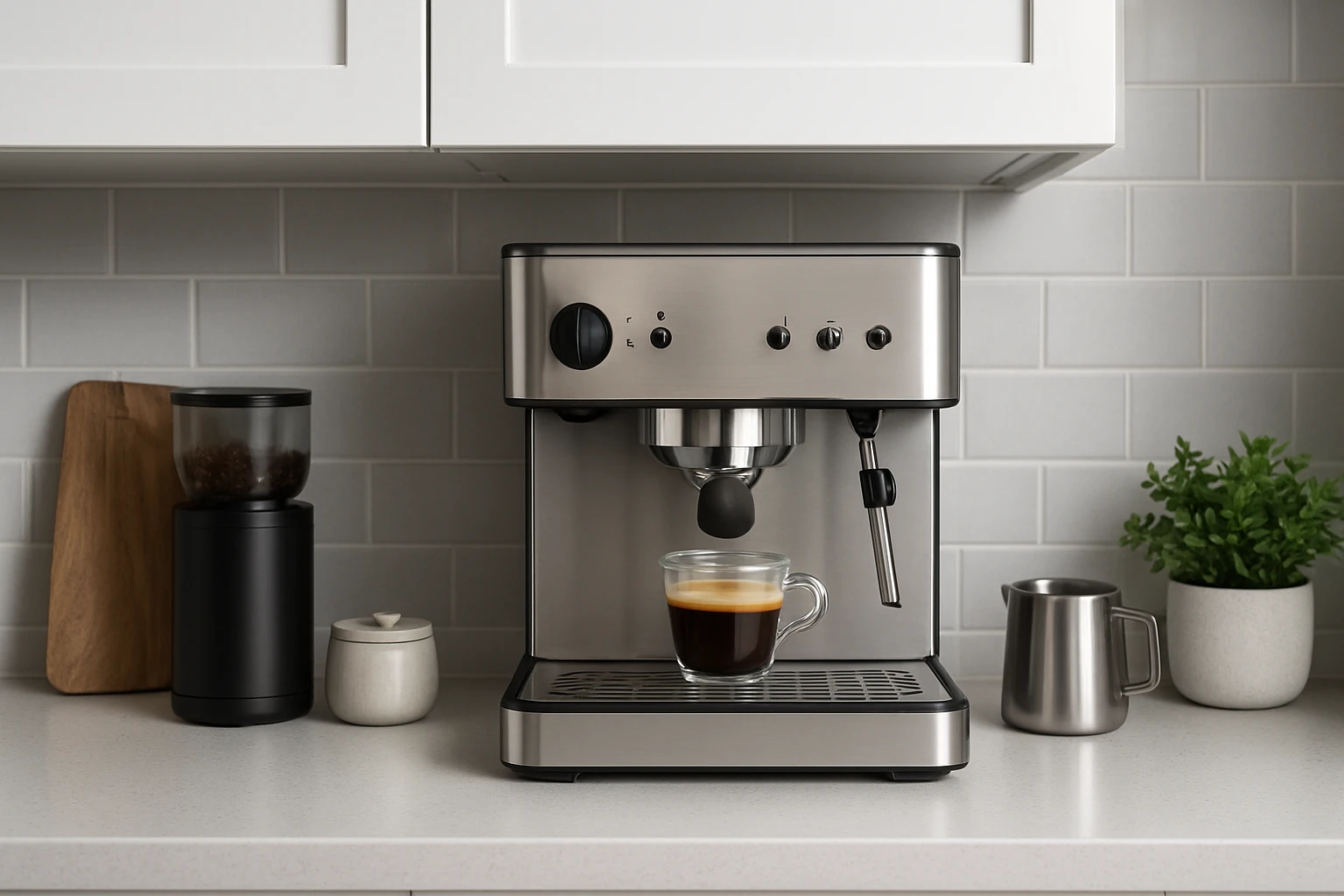
This guide explores the niche of under‑cabinet compact espresso machines. Readers will learn the essential criteria for selecting a model, how to install the appliance safely, and the maintenance routines that extend its lifespan. The article also presents three highly rated products that exemplify the balance between performance and space efficiency.
By the end of the reading experience, one will be equipped to make an informed purchase decision, understand the technical terminology, and implement best practices for daily use.
Background and Context
Under‑cabinet espresso machines are engineered to occupy the narrow vertical space beneath kitchen cabinets, typically between 5 and 6 inches in height. This form factor allows coffee enthusiasts to enjoy café‑grade beverages without sacrificing countertop real estate.
The core technology of these machines includes a pump that generates pressure, a heating element that reaches extraction temperature rapidly, and a steam wand for milk frothing. Pressure is measured in bars; professional espresso extraction generally requires 9 – 15 bars, while many compact units advertise 15 – 20 bars to ensure consistent crema formation.
Heat‑up time influences user experience, especially during busy mornings. Machines that employ ThermoJet or high‑wattage boilers can achieve brewing temperature in under 30 seconds, compared with traditional boiler systems that may require several minutes.
Understanding these fundamentals enables the reader to evaluate claims made by manufacturers and to match features with personal brewing preferences.
Understanding Under‑Cabinet Espresso Machines
There are three primary categories of under‑cabinet espresso machines: semi‑automatic, automatic, and super‑automatic. Semi‑automatic models provide manual control over shot timing, allowing the user to stop the extraction at the desired volume. Automatic machines use preset programs to deliver consistent shot volumes, while super‑automatic units incorporate built‑in grinders and milk frothing algorithms.
For most home users who value compactness, a semi‑automatic or automatic model offers the best compromise between control and convenience. The machines featured in this guide belong to the semi‑automatic class, delivering professional‑grade espresso with a small footprint.
Key specifications to compare include:
- Pressure rating (bars)
- Heat‑up time (seconds)
- Water tank capacity (ounces or milliliters)
- Steam wand type (manual or automatic)
- Power consumption (watts)
These metrics directly affect extraction quality, speed of service, and suitability for multi‑drink preparation.
Top Compact Models
The following machines have been selected because they combine high ratings, competitive pricing, and features that align with the under‑cabinet design philosophy.
Breville Bambino Plus
The Breville Bambino Plus is a brushed stainless‑steel unit that delivers 15 bars of pressure and features Breville’s ThermoJet heating system. The machine reaches optimal extraction temperature in 3 seconds, which is among the fastest in its class. It includes a 54 mm portafilter that holds 19 grams of coffee, enabling consistent dose control.
Key features include:
- Fast 3‑second heat‑up via ThermoJet technology
- Low‑pressure pre‑infusion for balanced flavor extraction
- Automatic steam wand that produces micro‑foam in seconds
- Compact footprint suitable for under‑cabinet placement
- Price: $693.99; Rating: 4.1 / 5.0 from 2,649 reviews
This model is ideal for users who demand rapid readiness and precise temperature stability, making it a strong candidate for a high‑traffic kitchen.
CHULUX Slim Espresso Machine
The CHULUX Slim Espresso Machine offers a 20‑bar Italian pump, 1350 watts of boiler power, and a 40 oz water tank. Its width of 5.5 inches allows it to slide easily beneath most standard cabinets. The machine provides a real‑time pressure gauge and a pre‑infusion function that promotes even extraction.
Key features include:
- Professional 20‑bar pump for rich crema formation
- Fast heating; ready in 30 seconds
- Powerful steam wand capable of producing dense micro‑foam
- Food‑grade internal components for safety and durability
- Price: $109.99; Rating: 4.4 / 5.0 from 906 reviews
Its affordability and sleek stainless‑steel finish make it attractive for first‑time espresso makers who still desire café‑level performance.
Frigidaire Steam Espresso Maker
The Frigidaire Steam Espresso Maker combines a 20‑bar pressure system with a 34‑oz removable water tank. The unit heats up in 40 seconds and includes a built‑in cup warmer, which is convenient for maintaining beverage temperature after extraction.
Key features include:
- 20‑bar pressure for full‑bodied espresso and crema
- Full‑size milk frother for cappuccino and latte creation
- Compact width under 6 inches, ideal for tight spaces
- Included accessories: tamper, scoop, two filters, and drip tray
- Price: $129.00; Rating: 4.0 / 5.0 from 115 reviews
This model is well suited for households that value a complete coffee station in a minimal footprint.
Comparison and Selection Guide
When choosing an under‑cabinet espresso machine, consider the following decision matrix:
| Criterion | Breville Bambino Plus | CHULUX Slim | Frigidaire Steam |
|---|---|---|---|
| Price | $693.99 | $109.99 | $129.00 |
| Pressure (bars) | 15 | 20 | 20 |
| Heat‑up Time | 3 seconds | 30 seconds | 40 seconds |
| Water Tank Capacity | Not specified (standard) | 40 oz | 34 oz |
| Steam Wand | Automatic micro‑foam | Powerful manual | Full‑size manual |
| Dimensions (W × H) | Compact, exact size not listed | 5.5 in × ~13 in | Under 6 in × ~13 in |
| Customer Rating | 4.1 / 5 | 4.4 / 5 | 4.0 / 5 |
If budget is the primary constraint, the CHULUX Slim offers the most features per dollar, including a pressure gauge and rapid heating. For users who prioritize ultra‑fast heat‑up and premium build quality, the Breville Bambino Plus justifies its higher price. The Frigidaire model provides a balanced set of features with the added convenience of a cup warmer, making it a solid middle‑ground choice.
Best Practices & Maintenance Tips
Proper maintenance ensures consistent espresso quality and prolongs the machine’s service life. Follow these steps after each use:
- Rinse the portafilter and purge the group head to remove residual coffee oils.
- Wipe the steam wand with a damp cloth and purge steam to prevent milk buildup.
- Empty the drip tray and water tank, then refill with fresh filtered water.
Perform a deep cleaning cycle monthly using a certified descaling solution. The recommended descaling frequency depends on water hardness; users with hard water should descale every 30 days, while those with soft water may extend the interval to 90 days.
When installing the machine under a cabinet, ensure adequate ventilation space of at least 2 inches behind the unit to allow heat dissipation. Use a sturdy mounting bracket if the cabinet does not provide a solid shelf. Verify that the power outlet is within reach and that the cord does not create a tripping hazard.
Frequently Asked Questions
- Can I use pre‑ground coffee with these machines?
- Yes, all three models accept pre‑ground coffee, but for optimal crema and flavor extraction, a consistent grind size of approximately 19 grams per shot is recommended.
- Do I need a separate grinder?
- A dedicated burr grinder provides uniform particle size, which improves extraction consistency. While the machines will operate with pre‑ground beans, a quality grinder is advisable for enthusiasts.
- Is the steam wand suitable for latte art?
- The automatic wand on the Breville Bambino Plus produces fine micro‑foam ideal for latte art, whereas the manual wands on the CHULUX and Frigidaire models require more skill to achieve the same texture.
- What is the warranty coverage?
- Breville typically offers a 2‑year limited warranty, CHULUX provides a 1‑year warranty, and Frigidaire includes a 1‑year warranty. Verify the specific terms on the Amazon product page.
- Can I install the machine on a wall instead of under a cabinet?
- Wall mounting is not recommended because the units generate heat and require a stable, level surface to prevent vibration during extraction.
Conclusion
Under‑cabinet compact espresso machines deliver professional‑grade coffee without dominating limited kitchen space. By evaluating pressure, heat‑up time, water capacity, and steam wand capability, consumers can align a model with their brewing habits and budget. The Breville Bambino Plus excels in speed and build quality, the CHULUX Slim offers exceptional value, and the Frigidaire Steam Espresso Maker balances features with affordability. Proper installation and routine maintenance will ensure years of reliable performance.
Products Featured in This Guide
Breville Bambino Plus
Price: $693.99 | Rating: 4.1/5.0 (2,649 reviews)
Featured for its ultra‑fast 3‑second ThermoJet heat‑up, precise 15‑bar pressure, and automatic steam wand, making it a premium choice for demanding home baristas.
CHULUX Slim Espresso Machine
Price: $109.99 | Rating: 4.4/5.0 (906 reviews)
Featured for its 20‑bar Italian pump, 30‑second heat‑up, and compact 5.5‑inch width, providing excellent performance at an accessible price point.
Frigidaire Steam Espresso Maker
Price: $129.00 | Rating: 4.0/5.0 (115 reviews)
Featured for its built‑in cup warmer, 20‑bar pressure, and complete accessory set, delivering a well‑rounded espresso solution for small kitchens.