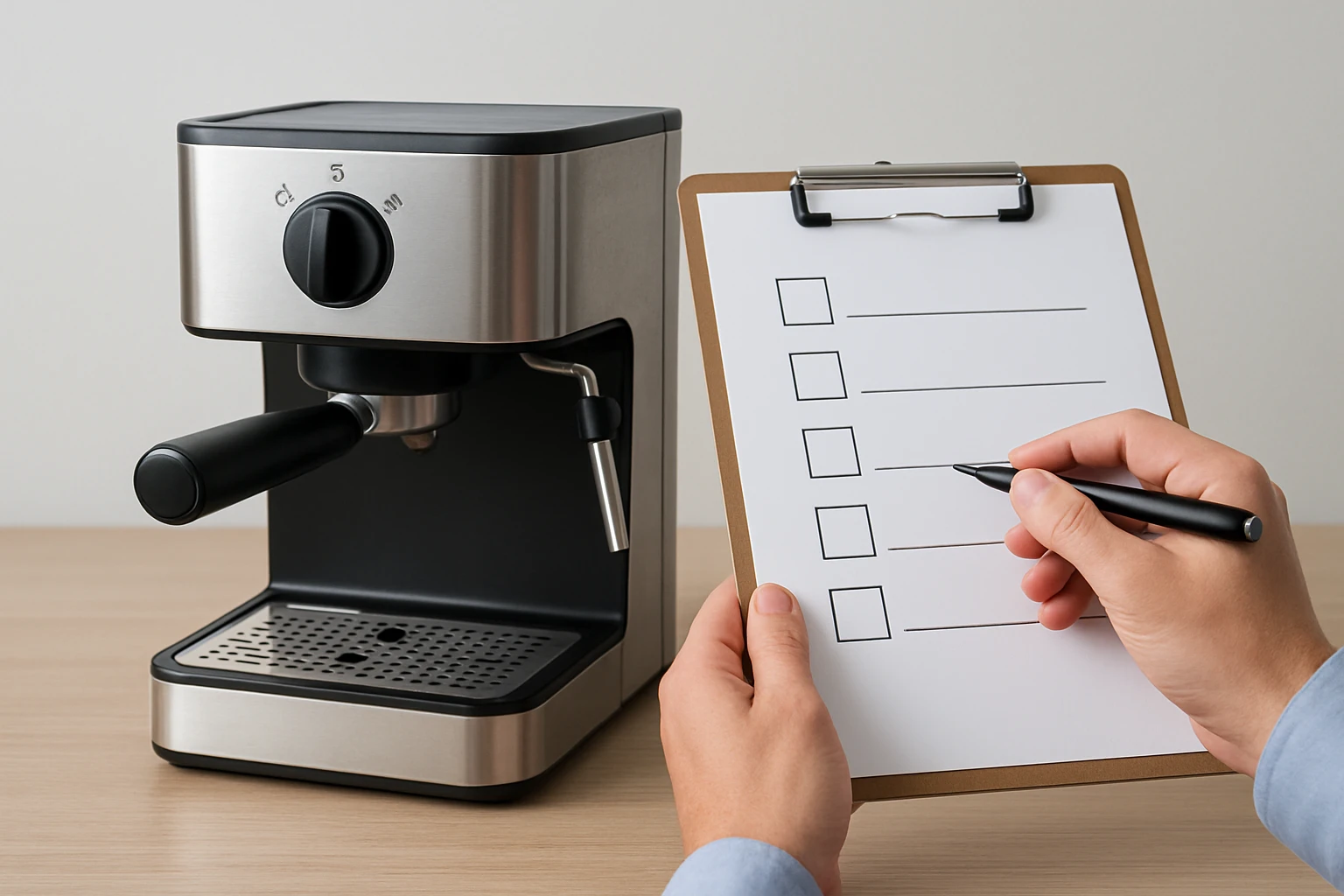
How to Inspect a Used Compact Espresso Machine Before You Buy: Complete Inspection Checklist
This guide equips the reader with a systematic approach to evaluate a pre‑owned compact espresso machine. By following each step, one can verify mechanical integrity, electrical safety, and overall value, thereby avoiding costly mistakes. The information is valuable for coffee enthusiasts, small‑office managers, and anyone seeking a reliable home barista setup without paying full retail price.
What You’ll Need
- Clean, lint‑free microfiber cloth
- Food‑grade descaling solution
- Screwdriver set (flat‑head and Phillips)
- Digital multimeter for voltage checks
- Reference espresso machine for performance comparison (optional)
When a reference machine is desired, consider one of the following affordable options that also serve as excellent everyday brewers.
Step 1: Visual Inspection of Exterior and Build Quality
Begin by examining the outer housing for dents, scratches, or corrosion. A compact espresso machine should have a smooth finish and intact seams; any irregularities may indicate past drops or mishandling. Verify that the control knob rotates smoothly and that all labels are legible. Pay special attention to the water reservoir, drip tray, and portafilter for cracks or warping.
If the used unit shows excessive wear, compare it with a new Reemix 3.5 Bar Espresso Machine. The Reemix offers a compact stainless‑steel body, a 3.5‑bar pressure system, and a built‑in steam wand for frothing. Priced at $49.99 with a rating of 4.1/5 from 101 reviews, it provides a reliable baseline for durability and finish.
Step 2: Assess the Portafilter and Group Head
Remove the portafilter and inspect the gasket for signs of wear or residue. A hardened or cracked gasket can cause leaks and pressure loss. Examine the group head for mineral buildup; excessive scaling can impede water flow and affect extraction quality. Clean the area with a microfiber cloth and a mild descaling solution to reveal hidden damage.
For a reference feel, the HBN 3.5 Bar Espresso Machine features a removable funnel and a protective steel ring that prevent bursting. It is priced at $64.99 and holds a 4.5/5 rating from 83 reviewers, demonstrating robust construction that can be used as a benchmark for gasket integrity.
Step 3: Test the Brewing Pressure
Connect a fresh filter basket, add a measured dose of dark‑roasted coffee, and lock the portafilter. Activate the brew cycle and listen for a steady stream that resembles warm honey. A proper 3.5‑bar machine should produce a rich crema within 20‑30 seconds. If the flow is weak or sputters, the pump may be compromised.
The XIXUBX 20 Bar Espresso Maker delivers a professional‑grade 20‑bar pump and PID temperature control, priced at $71.99 with a 4.5/5 rating from 478 reviews. Using this high‑pressure model as a comparison can help you gauge whether the used machine meets expected extraction standards.
Step 4: Evaluate the Steam Wand Functionality
Fill the water reservoir, place a stainless‑steel pitcher under the wand, and engage the steam function. The wand should emit a steady stream of steam within 5 seconds and produce micro‑foam that holds a glossy sheen. Excessive noise, delayed steam, or leaking water indicate valve or heating element issues.
Both the Reemix and HBN models include built‑in steam wands designed for beginners. The Reemix’s adjustable tip allows precise foam texture, while the HBN’s 800W wand creates micro‑foam in 40 seconds. Their positive customer feedback highlights reliable steam performance, making them suitable reference tools.
Step 5: Verify Electrical Safety and Power Supply
Unplug the machine and inspect the power cord for fraying, exposed conductors, or loose connections. Use a digital multimeter to check continuity from plug to internal fuse. A functioning ground pin and intact fuse are essential for safe operation. Replace any damaged cords before further testing.
While none of the listed products serve as replacement cords, the HBN model’s grounded plug and clear safety indicators receive praise for user‑friendly design. This suggests that the manufacturer prioritizes electrical safety, a standard you should expect from any used unit.
Step 6: Conduct a Full Cleaning Cycle
Run a complete cleaning cycle using a food‑grade descaling solution. Fill the reservoir, activate the brew cycle without coffee, and allow the solution to pass through the group head and steam wand. Rinse thoroughly with fresh water. Observe whether any residue remains in the brew head or steam nozzle, as lingering deposits can affect flavor and hygiene.
The Reemix’s compact size makes it easy to perform regular cleaning, and users note that the machine cleans quickly due to its simple design. This ease of maintenance is a valuable attribute when evaluating a used machine’s long‑term practicality.
Step 7: Inspect Accessories and Documentation
Confirm that the original accessories—portafilter, tamper, drip tray, and water filter—are present and in good condition. Missing or damaged accessories can increase the total cost of ownership. Additionally, request any original manuals or warranty cards; these documents provide insight into the machine’s service history.
If accessories are absent, consider purchasing a complete set from the Reemix or HBN lines, which include all necessary components for immediate use.
Step 8: Compare Specifications and Price
Record the used machine’s age, hours of operation, and any known repairs. Compare these data points with the specifications of the three reference models:
- Reemix 3.5 Bar Espresso Machine: 800W, 3.5‑bar pressure, built‑in steam wand, $49.99, 4.1 rating.
- HBN 3.5 Bar Espresso Machine: 800W, stainless‑steel body, 2‑4 cup capacity, $64.99, 4.5 rating.
- XIXUBX 20 Bar Espresso Maker: 20‑bar pump, PID temperature control, $71.99, 4.5 rating.
Calculate the depreciation based on condition and features. A well‑maintained used unit should not exceed 60 % of the price of a comparable new model.
Tips & Pro Tips
- Always test the machine with fresh beans; stale coffee can mask pressure problems.
- Use a digital thermometer to verify that water temperature reaches 90‑95 °C during brewing.
- When inspecting the steam wand, place a hand near the outlet; excessive heat may indicate a failing heating element.
- Document any scratches or dents with photographs; these images are useful for negotiating price.
- Negotiate a short return window or warranty if the seller is confident in the machine’s condition.
Troubleshooting Common Issues
Weak Extraction: Check the pump pressure by comparing brew time with a reference machine. Clean the group head and replace the gasket if necessary.
Leaking Water: Inspect the water reservoir seal and the steam valve. Tighten any loose connections and ensure the drip tray is correctly positioned.
No Steam: Verify that the heating element reaches the required temperature using a multimeter. If the element is faulty, consider replacement parts from the manufacturer’s service center.
Conclusion
By following this comprehensive checklist, one can confidently assess the condition, safety, and value of a used compact espresso machine. The systematic visual, functional, and electrical examinations reduce the risk of unexpected repairs and ensure a satisfying coffee experience. Armed with this knowledge, the reader is encouraged to make an informed purchase decision and enjoy café‑quality espresso at home or in the office.
Products Mentioned in This Guide
Frequently Asked Questions
What tools should I have before inspecting a used compact espresso machine?
Gather a lint‑free microfiber cloth, food‑grade descaling solution, flat‑head and Phillips screwdrivers, and a digital multimeter for voltage checks.
How can I spot structural damage during the visual inspection?
Look for dents, scratches, corrosion, or misaligned seams on the outer housing, which may indicate previous mishandling or internal issues.
What electrical checks are essential for safety?
Use a multimeter to verify that the power cord is intact, the voltage matches the machine’s rating, and there are no short‑circuit signs.
Why is descaling important when evaluating a used machine?
Descaling reveals scale buildup that can affect heating performance and indicates how well the previous owner maintained the unit.
How do I test the brewing performance of a used compact espresso machine?
Run a short brew cycle, observe pressure stability and temperature, and compare the extraction time and crema quality to a reference machine if available.