Introduction
Achieving a consistent espresso shot from a compact machine requires precise control over grind size, dose, and tamp pressure. This guide teaches readers how to adjust grind size methodically, observe extraction, and fine‑tune settings until the espresso exhibits the desired balance of acidity, body, and crema. By following the steps, one can transform a modest countertop espresso maker into a reliable tool for café‑quality beverages.
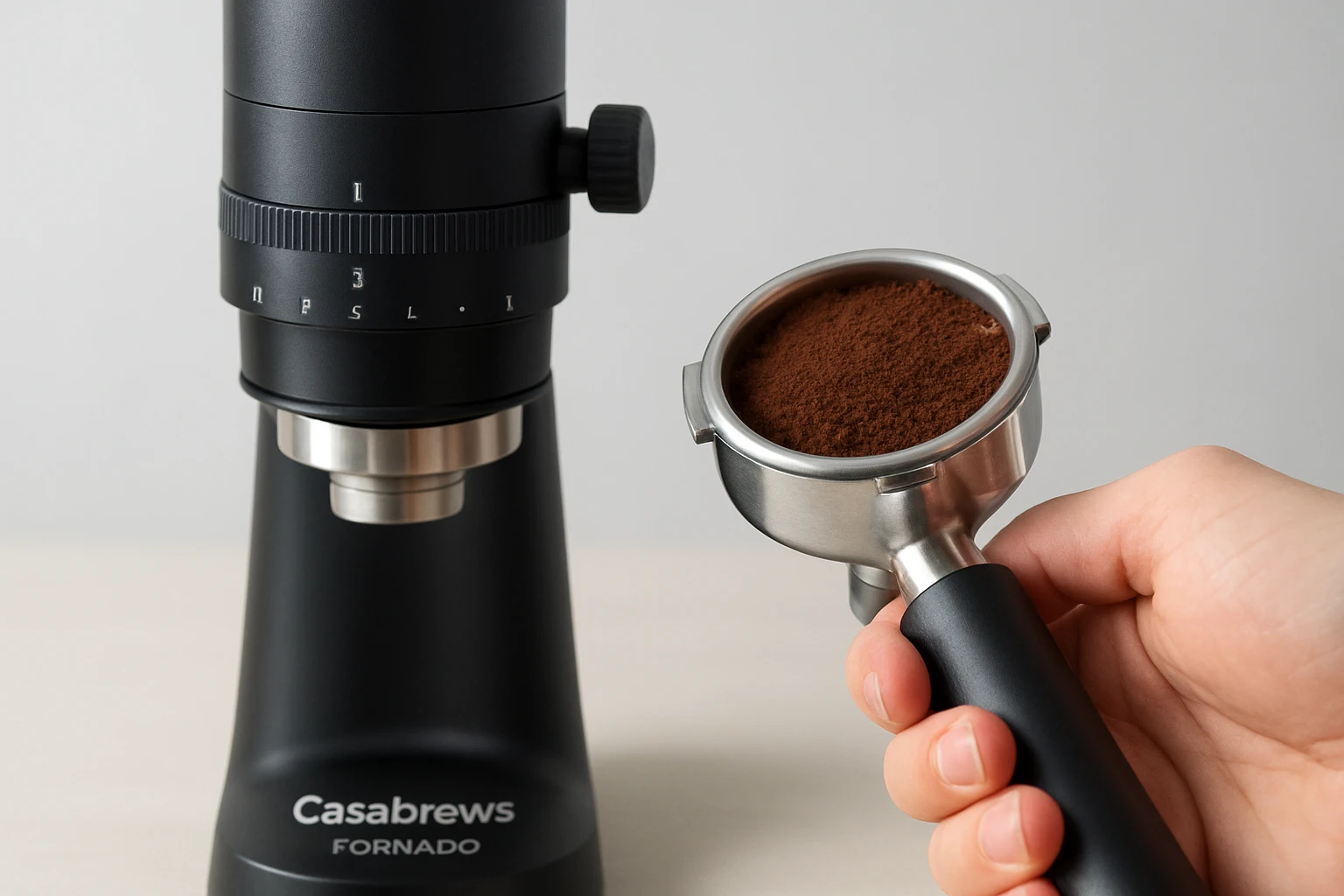
The process combines scientific observation with tactile adjustments, and it benefits from reliable equipment. While the principles apply to any grinder, the Casabrews Tornado Grinder offers 77 precise settings, an LCD interface, and a sturdy stainless‑steel burr, making it an ideal companion for home baristas seeking repeatable results.
In addition, the Pelyn 54mm Bottomless Portafilter Kit provides a clear view of extraction, a WDT tool for uniform grounds distribution, and a dedicated scoop for accurate dosing. Together, these tools streamline the dial‑in workflow and reduce the trial‑and‑error that often frustrates newcomers.
Readers will leave this article with a structured routine, troubleshooting tips, and an understanding of why each recommended product enhances the process.
What You'll Need
- Compact espresso machine (e.g., Breville Barista Express, Sage Duo‑Temp Pro)
- Casabrews Tornado Grinder – 77 grind settings, LCD display, 14 oz hopper, $139.99, 4.7/5 rating
- Pelyn 54mm Bottomless Portafilter Kit – includes portafilter, WDT tool, scoop, puck screen, filter papers, $35.99, 5/5 rating
- Digital scale (0.1 g precision)
- Timer or smartphone stopwatch
- Fresh coffee beans (medium‑roast recommended for testing)
Step 1 – Prepare the Machine and Workspace
Begin by ensuring the espresso machine is fully warmed up; most compact units require 10–15 minutes to reach stable boiler temperature. Place the machine on a stable, heat‑resistant surface and clear the countertop of extraneous items to avoid accidental spills.
Insert the Pelyn Bottomless Portafilter Kit into the group head. The bottomless design reveals the entire extraction stream, allowing you to spot channeling or uneven flow immediately. Attach the reusable puck screen if you prefer a cleaner group head; the screen filters fine particles while preserving the visual benefits of a bottomless basket.
Use the included 304 stainless‑steel coffee scoop to measure approximately 18–20 g of beans for a double shot. The scoop’s 10 g capacity encourages consistent dosing, and its wooden handle prevents heat transfer that could affect bean temperature.
Finally, position the digital scale beneath the portafilter and set it to zero (tare). This preparation ensures that every subsequent measurement reflects only the coffee grounds, not the weight of the portafilter itself.
Step 2 – Set an Initial Grind Size
Power on the Casabrews Tornado Grinder and allow it to run for a few seconds to stabilize the motor. Select a mid‑range grind setting (e.g., 38 on the 77‑step scale) as a starting point; this typically yields a medium‑fine consistency suitable for both espresso and drip brewing.
Adjust the grind time using the LCD interface; a 12‑second cycle often produces a dose close to 18 g when paired with a 14 oz hopper. The grinder’s customizable timer eliminates the need for manual stop‑watching, reducing variability between shots.
Grind directly into the portafilter’s basket, using the included silicone air blower to dislodge any residual grounds that may cling to the burr housing. This feature simplifies cleaning and helps maintain consistent particle size distribution.
After grinding, gently tap the portafilter to settle the grounds, then level the surface with the provided tamper (if not included, a standard 58 mm tamper works). A uniform bed prepares the coffee for an even extraction.
Step 3 – Pull a Test Shot and Observe
Lock the portafilter into the machine and start the extraction. Use a timer to record the brew time from the moment water contacts the coffee until the flow stops. Ideal espresso extraction for a compact machine falls between 25 and 30 seconds for a 30‑ml yield.
Watch the stream through the bottomless portafilter. A smooth, hollow cylinder of crema indicates even flow; any spurts, channels, or dry spots suggest uneven distribution or an inappropriate grind size.
Note the taste profile: overly sour coffee often signals under‑extraction (grind too coarse), while excessive bitterness points to over‑extraction (grind too fine). Record these observations alongside the grind setting and brew time for reference.
If the shot is close to target but not perfect, you will adjust the grind in the next step. If the extraction is wildly inconsistent, verify that the hopper is sealed and that the burrs are clean, as static or debris can cause erratic dosing.
Step 4 – Adjust Grind Size Incrementally
Return to the Casabrews Tornado Grinder and modify the grind setting by 2–3 steps. Finer settings increase surface area, slowing extraction; coarser settings do the opposite. Because the grinder offers 77 distinct levels, you can make minute adjustments without overshooting the ideal range.
Repeat the grinding, tamping, and extraction process described in Steps 2 and 3. Each iteration should bring the brew time closer to the 25‑30 second window and produce a more uniform crema. The LCD display’s clear readout ensures you always know the exact setting used for each trial.
Document each trial in a simple table: grind setting, brew time, taste notes, and visual observations. Over several cycles, patterns emerge that reveal the optimal setting for your specific bean variety, roast level, and machine pressure.
When you achieve a stable extraction within the target window and the flavor profile balances acidity, sweetness, and body, you have identified the correct grind size for that bean batch.
Step 5 – Fine‑Tune Dose and Tamp Pressure
With the grind size locked, experiment with dose adjustments using the digital scale. Increase the dose by 0.5 g increments to see how it influences flow rate and crema thickness. A slightly higher dose may compensate for a marginally coarser grind, while a lower dose can prevent over‑extraction when the grind is at its finest.
Apply consistent tamp pressure, ideally 30 kg, using a calibrated tamper or a spring‑loaded device. The Pelyn Portafilter Kit includes a sturdy 54 mm portafilter that matches the basket diameter of most Breville machines, ensuring even pressure distribution across the coffee bed.
Utilize the WDT (Weiss Distribution Technique) tool from the kit before tamping. Insert the fine stainless‑steel needles into the grounds and stir gently; this breaks up clumps and promotes uniform particle distribution, which reduces channeling and improves shot consistency.
After each dose and tamp adjustment, pull another shot and compare results. Minor changes in dose often require a corresponding tweak in grind time, so maintain the iterative approach until the espresso consistently meets the desired extraction parameters.
Step 6 – Evaluate Extraction Consistency Over Multiple Shots
Once you have identified the optimal combination of grind size, dose, and tamp, produce three consecutive shots without altering any variables. Record the brew times, yields, and sensory notes for each. Consistency across these shots confirms that the dial‑in process is stable.
If one shot deviates, examine the bottomless portafilter for subtle channel formation. Re‑apply the WDT tool and ensure the tamp is level. Small inconsistencies often stem from static cling or uneven distribution rather than the grinder settings.
Maintain a logbook or digital spreadsheet of all settings per bean origin and roast date. Coffee beans evolve over time; a grind that works today may require a finer setting in two weeks as the beans lose moisture.
Finally, clean the grinder’s burr chamber using the included cleaning brush and silicone air blower. Regular maintenance preserves burr sharpness, prevents heat buildup, and extends the lifespan of the Casabrews Tornado Grinder.
Tips & Pro Tips
- Grind in short bursts (2‑3 seconds) when experimenting; this reduces heat exposure that can alter flavor.
- Use a timer with millisecond precision to capture subtle differences between 28‑second and 30‑second shots.
- Store beans in an airtight container; oxygen and moisture accelerate staling, which changes the ideal grind size.
- When switching bean varieties, start with the mid‑range grind setting and repeat the full dial‑in process; each origin behaves uniquely.
- For ultra‑clean group heads, run the reusable puck screen after each shot and rinse it promptly to avoid buildup.
Troubleshooting
| Problem | Possible Cause | Solution |
|---|---|---|
| Sour, thin espresso | Grind too coarse or under‑dose | Fine‑tune grinder 2‑3 steps, increase dose by 0.5 g. |
| Bitter, over‑extracted shot | Grind too fine or over‑dose | Coarsen grinder 2‑3 steps, reduce dose slightly. |
| Channeling visible in bottomless portafilter | Uneven tamp or clumped grounds | Use the WDT tool, ensure tamp is level, redistribute grounds. |
| Inconsistent brew times | Static cling or dirty burrs | Run the silicone air blower, clean burrs with brush, store beans in low‑static containers. |
Conclusion
Adjusting grind size for compact espresso machines is a systematic process that blends observation, precise equipment, and disciplined record‑keeping. By following the six steps outlined above, one can achieve a repeatable extraction window of 25‑30 seconds, balanced flavor, and a visually appealing crema.
The Casabrews Tornado Grinder provides the granularity and user‑friendly interface necessary for fine adjustments, while the Pelyn 54mm Bottomless Portafilter Kit offers real‑time visual feedback and tools that promote uniform grounds distribution. Together, they empower home baristas to dial in espresso with confidence.
Continue to log your settings, stay attentive to bean freshness, and perform regular maintenance. Over time, the routine becomes intuitive, and every morning can begin with a perfect espresso shot.
Products Mentioned in This Guide
Frequently Asked Questions
How does grind size affect espresso extraction on a compact machine?
Finer grinds increase resistance and lengthen extraction, producing more body and bitterness, while coarser grinds shorten extraction, yielding higher acidity and less crema.
What is the ideal starting grind setting for the Casabrews Tornado Grinder?
Start around the middle of the 77‑step range (e.g., setting 38‑40) and adjust finer or coarser based on shot time and taste.
How can I tell if my grind size needs adjustment after pulling a shot?
If the shot pulls under 25 seconds, grind finer; if it exceeds 35 seconds, grind coarser, aiming for a 25‑30 second extraction for balanced flavor.
Why should I use a bottomless portafilter when dialing in grind size?
A bottomless portafilter reveals channeling and uneven extraction, letting you see if the grind is too coarse or if distribution needs improvement.
What role does dose and tamp pressure play alongside grind size?
Consistent dose (e.g., 18‑20 g) and firm, level tamp (30‑35 lb) ensure uniform resistance, allowing grind size adjustments to have predictable effects on extraction.