Introduction
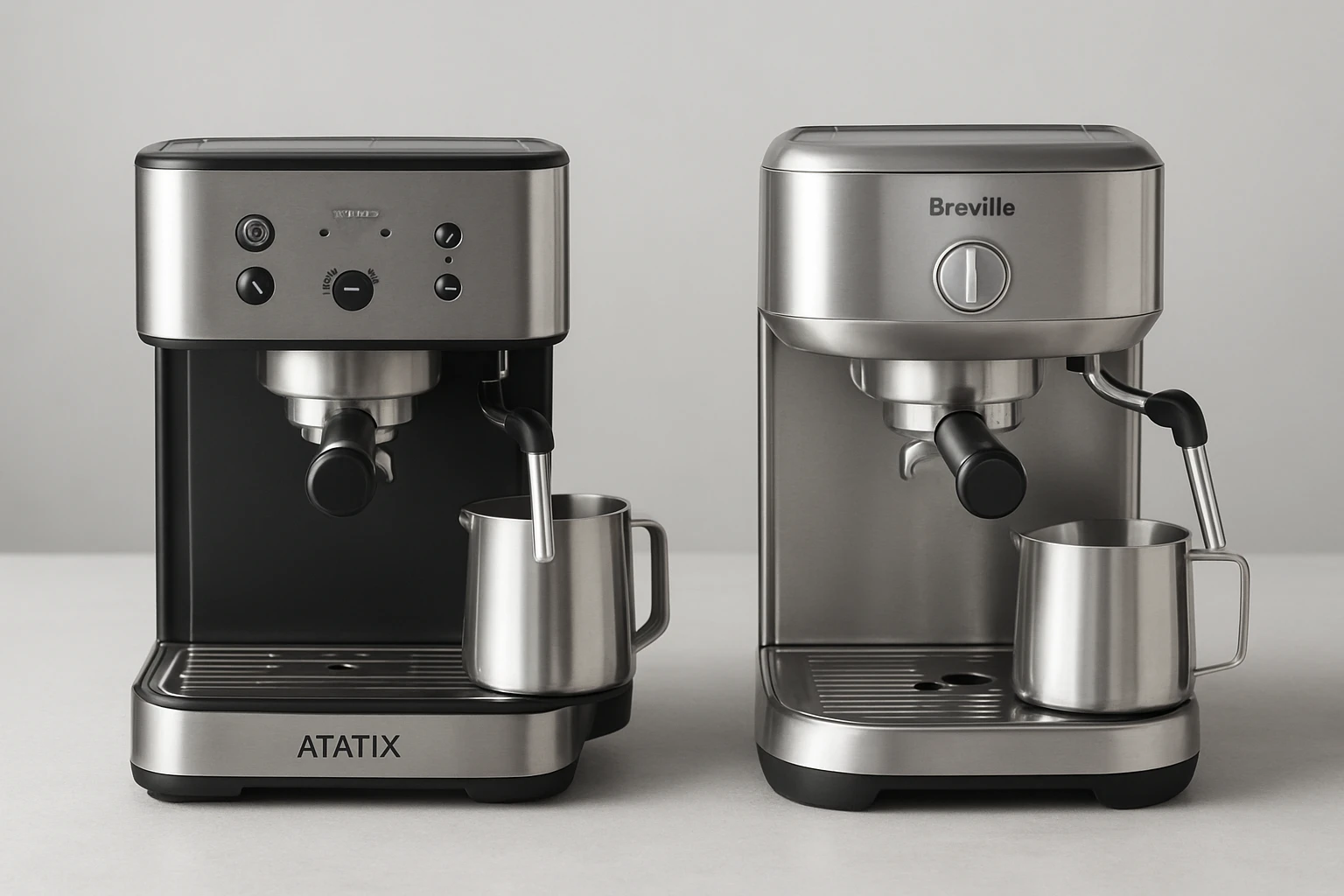
When a coffee enthusiast evaluates home espresso solutions, the choice often narrows to two compelling contenders: the Atatix Espresso Maker with Milk Frother and the Breville Bambino Espresso Machine. Both devices promise barista‑level performance while fitting on a modest countertop. This article examines why the comparison matters, focusing on price, features, user feedback, and real‑world performance, enabling readers to select the model that aligns with their brewing habits.
Individual Product Overviews
Atatix Espresso Maker with Milk Frother
Priced at $111.11, the Atatix unit delivers a professional 20‑bar pressure system, a 44 oz removable water tank, and a stainless‑steel exterior. The machine incorporates NTC precision temperature control that locks onto the 90‑96 °C sweet spot within 30 seconds. Users can choose between automatic espresso extraction (28 seconds for a single shot) and manual extraction up to 102 seconds. The powerful steam wand creates dense micro‑foam suitable for latte art. Customer sentiment highlights a “café‑quality” crema and easy maintenance, with a 4.3‑star rating from 1,302 reviews.
Breville Bambino Espresso Machine
Listed at $216.77, the Breville Bambino features a 54 mm portafilter, a thermo‑jet heating system that reaches extraction temperature in approximately 3 seconds, and an automatic steam wand for hands‑free micro‑foam. The machine emphasizes low‑pressure pre‑infusion to promote even flavor extraction. Reviewers praise its rapid heat‑up, reliable temperature stability, and sleek brushed stainless steel finish. The product holds a 4‑star rating based on 3,013 reviews.
Head‑to‑Head Comparison
Price and Value
- Atatix is priced at $111.11, representing a savings of roughly $105 compared with the Breville Bambino.
- Breville’s higher price reflects its proprietary thermo‑jet technology and a larger brand reputation.
- For budget‑conscious users, Atatix offers a compelling value proposition without sacrificing essential espresso functions.
Features and Specifications
| Feature | Atatix Espresso Maker with Milk Frother | Breville Bambino Espresso Machine |
|---|---|---|
| Pressure | 20 bar (optimal 9‑10 bar during extraction) | Not specified; uses 54 mm portafilter with low‑pressure pre‑infusion |
| Heating Time | Pre‑heat in 30 seconds | Thermo‑jet reaches temperature in ~3 seconds |
| Water Tank Capacity | 44 oz removable | Generously sized (exact volume not disclosed) |
| Milk Frothing | Manual steam wand producing dense micro‑foam | Automatic steam wand with temperature and texture control |
| Extraction Modes | Auto (28 s single, 42 s double) and Manual (up to 102 s) | Standard single/double shot baskets, pressurized options |
| Construction | ABS and stainless steel, BPA‑free | Brushed stainless steel housing |
Customer Ratings and Feedback
The Atatix model enjoys a 4.3‑star average from 1,302 reviewers. Positive remarks frequently mention “rich, bold espresso,” “thick crema,” and “compact design.” A representative review states, “Absolutely Blown Away – Café Quality at Home! … The crema comes out thick and beautiful every single time.”
The Breville Bambino holds a 4‑star average from 3,013 reviewers. Users commend its “instant heat‑up,” “consistent temperature,” and “hands‑free micro‑foam.” One enthusiast writes, “What started as convenience has turned into a bit of a daily ritual… the milk steamer gives a smooth, creamy texture that feels almost café‑quality.” A negative review points out “cheap plastic feel” and “noise when frothing,” indicating occasional quality concerns.
Performance and Reliability
Atatix’s 20‑bar pump and NTC temperature control produce stable extraction across a range of bean profiles. The manual extraction option allows experienced users to fine‑tune shot weight, which can enhance reliability for varied brewing styles. The removable tank simplifies cleaning, and the silicone base reduces vibration.
Breville’s thermo‑jet system delivers rapid temperature stability, a critical factor for repeatable shots. The automatic steam wand reduces user error in milk texturing, though some reviewers note occasional plastic components that may affect long‑term durability. Overall, both machines demonstrate reliable performance for daily home use.
Best Use Cases
- Atatix: Ideal for users who value a lower entry price, manual control over extraction time, and a compact footprint suitable for small kitchens or office desks.
- Breville Bambino: Suited for consumers who prioritize ultra‑fast heat‑up, hands‑free milk frothing, and a premium aesthetic, and who are willing to invest more for brand assurance.
Pros & Cons
Atatix Espresso Maker with Milk Frother
- Pros: Affordable price, 20‑bar pressure, precise temperature control, compact stainless‑steel design, positive crema quality, easy cleaning.
- Cons: Manual steam wand requires practice for latte art, limited advanced features such as programmable profiles, no built‑in grinder.
Breville Bambino Espresso Machine
- Pros: Thermo‑jet heating in ~3 seconds, automatic steam wand with adjustable texture, sleek brushed stainless steel, strong brand support.
- Cons: Higher price, some plastic components reported, occasional noise during frothing, limited water‑tank capacity details.
Recommendations
For a first‑time espresso enthusiast on a budget, the Atatix Espresso Maker with Milk Frother provides essential functionality and reliable shot quality at half the cost of its competitor. Users who enjoy experimenting with extraction times will benefit from its manual mode.
Conversely, the Breville Bambino Espresso Machine is the better choice for those who desire near‑instant readiness, hands‑free milk texturing, and a premium kitchen presence. It is particularly appealing to busy households that value speed and consistency.
Frequently Asked Questions
- What is the ideal water temperature for espresso extraction? Both machines aim for the 90‑96 °C range; Atatix locks onto this sweet spot with NTC control, while Breville’s thermo‑jet quickly stabilizes within the same window.
- Can either machine use a built‑in grinder? Neither model includes an integrated grinder; users must grind beans separately.
- How long does it take to steam milk? Atatix’s manual wand can produce micro‑foam in seconds once the steam reaches temperature, whereas Breville’s automatic wand adjusts temperature and texture automatically, typically within 20‑30 seconds.
- Is the Atatix tank removable? Yes, the 44 oz tank is detachable for easy refilling and cleaning.
- Does the Breville Bambino require a separate portafilter adjustment? The machine uses a 54 mm portafilter; some users report the adjustment mechanism feels stiff, but it does not affect shot quality.
- Which machine is quieter? User feedback suggests the Atatix operates with modest noise, while the Breville can produce “horrendous noise” during frothing according to a negative review.
- Are the machines covered by a warranty? Both manufacturers typically provide a one‑year limited warranty, though specific terms should be verified on the Amazon product pages.
Conclusion
Both the Atatix Espresso Maker with Milk Frother and the Breville Bambino Espresso Machine deliver respectable espresso performance for home users. The Atatix stands out for its affordability, 20‑bar pressure, and compact design, making it an excellent entry‑level option. The Breville Bambino excels in speed, automatic milk texturing, and premium aesthetics, justifying its higher price for users who prioritize convenience and brand reputation. Ultimately, the decision hinges on budget, desired level of automation, and personal preference for manual versus automatic milk frothing.