Introduction
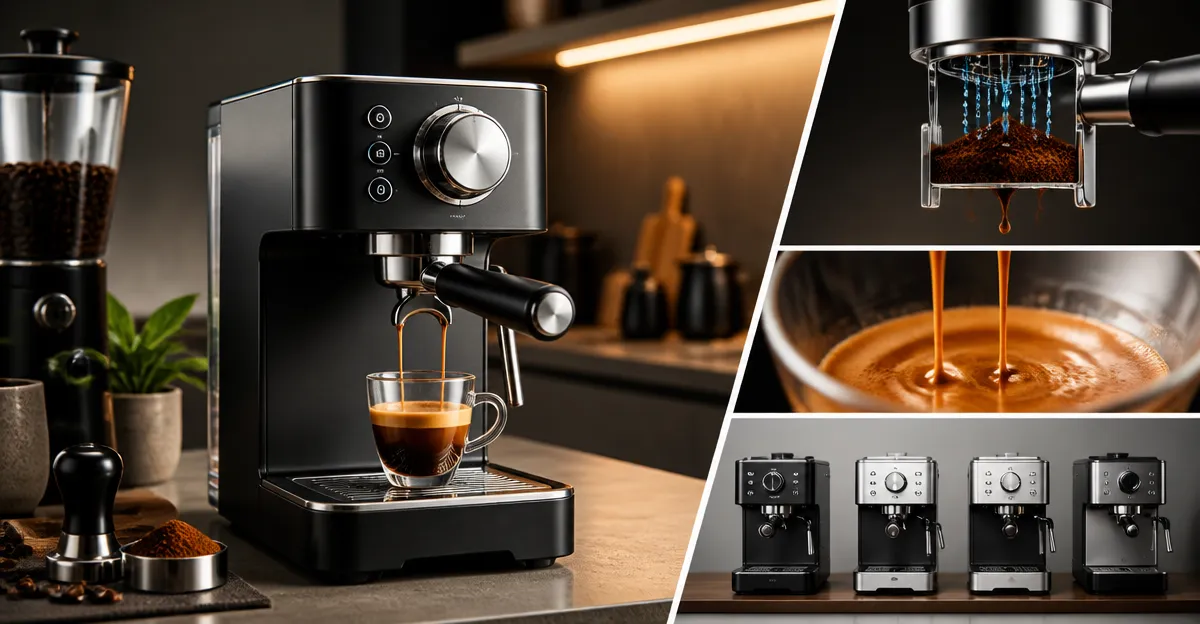
The modern coffee enthusiast seeks barista‑level quality without sacrificing countertop space. This guide explains pulse extraction technology, reviews four leading compact espresso machines, and provides actionable advice for selecting and using the ideal unit. Readers will learn the science behind pressure pulses, understand key specifications, compare real‑world products, and master best‑practice techniques for consistent espresso.
By the end of this article, one will be able to evaluate machines based on performance, ergonomics, and value, ensuring a confident purchase decision.
Background and Context
Pulse extraction refers to the rapid modulation of water pressure during the brewing cycle. Unlike a static pressure pump, a pulse‑controlled pump alternates high‑pressure bursts with brief low‑pressure intervals, promoting even coffee bed saturation and reducing channeling. This results in richer crema, balanced acidity, and more complete flavor extraction.
Key concepts include:
- Bar Pressure: Measured in bars, typical espresso machines operate between 9 and 15 bars; professional‑grade units reach 20 bars, providing the force needed for fine grinds.
- Thermoblock Heating: A rapid‑heat system that brings water to brewing temperature within seconds, minimizing energy waste.
- Temperature Stability: Consistent brew temperature, often regulated by NTC sensors, preserves nuanced flavor compounds.
- Steam Wand Power: Measured in watts, a higher wattage enables quick steam generation for milk microfoam.
Understanding these fundamentals equips the reader to interpret product specifications accurately.
Key Features of Pulse Extraction Compact Machines
Compact espresso machines designed for pulse extraction share several hallmark features. The following sections describe each category and recommend a product that exemplifies the attribute.
1. High‑Pressure Pumps
A 20‑bar Italian pump delivers the pressure spikes required for pulse extraction. Both the LoftyChef Touchscreen Espresso Machine and the CASABREWS Ultra Espresso Machine feature professional 20‑bar pumps, ensuring consistent crema and full‑bodied flavor.
- LoftyChef: 20‑bar Italian pump with premium extraction system.
- CASABREWS: 20‑bar pump paired with a 1350W boiler for rapid pressure build‑up.
2. Smart Controls and Touchscreens
Intuitive interfaces reduce the learning curve for new users. The LoftyChef model offers a high‑definition color touchscreen that allows single‑ or double‑shot selection with one tap. The CASABREWS Ultra provides an LCD panel that guides users through each brewing stage.
These interfaces also enable custom shot volume and temperature adjustments, essential for tailoring extraction to individual taste preferences.
3. Rapid Thermoblock Heating
Thermoblock technology heats water in seconds, minimizing wait time. The CHULUX Slim Espresso Machine boasts a 1350W boiler that reaches brewing temperature in approximately 30 seconds, while the IMUSA 4‑Cup Espresso Maker uses a 120‑volt heating element to deliver quick brewing for up to four cups.
4. Powerful Steam Wands
Milk frothing quality hinges on steam pressure and wand design. Both LoftyChef and CHULUX feature 1350W steam systems with rotating stainless‑steel wands that produce stable microfoam for latte art. The CASABREWS Ultra’s advanced wand creates ultra‑fine foam, ideal for professional‑grade cappuccinos.
5. Compact Design and Water Capacity
Space‑saving dimensions are crucial for kitchen countertops. The CHULUX Slim measures only 5.5 inches in width, while the IMUSA model occupies a modest footprint with a 40 oz removable water tank. The LoftyChef and CASABREWS machines provide larger 40.6 oz and 73 oz tanks respectively, balancing capacity with compact aesthetics.
Comparison and Selection Guide
Choosing the right machine depends on budget, intended usage, and desired features. The table below summarizes the four featured models.
| Model | Price | Pressure | Heating System | Steam Wand Power | Water Tank | Rating |
|---|---|---|---|---|---|---|
| LoftyChef Touchscreen Espresso Machine | $94.99 | 20 bar | Thermoblock, fast | 1350 W, 360° rotating | 40.6 oz (1.2 L) | 4.8/5 (20 reviews) |
| CHULUX Slim Espresso Machine | $99.99 | 20 bar | 1350 W, 30 s pre‑heat | 1350 W, standard wand | 40 oz | 4.4/5 (1,075 reviews) |
| IMUSA 4‑Cup Espresso Maker | $48.03 | 15 bar (effective) | 120 V electric, moderate | Standard wand, adequate | 40 oz | 4.4/5 (11,814 reviews) |
| CASABREWS Ultra Espresso Machine | $198.99 | 20 bar | Thermoblock, LCD‑guided | Powerful wand with microfoam control | 73 oz (2.2 L) | 4.6/5 (770 reviews) |
When evaluating these options, consider the following decision matrix:
- Budget Sensitivity: If cost is primary, the IMUSA model offers solid performance at under $50.
- Advanced Controls: For users who value precise temperature and volume settings, LoftyChef and CASABREWS provide touchscreen or LCD interfaces.
- Space Constraints: CHULUX’s ultra‑slim width makes it ideal for cramped countertops.
- Milk‑Frothing Priority: LoftyChef and CASABREWS deliver the most powerful steam wands for latte art.
Best Practices & Tips for Pulse Extraction
Even the most advanced machine cannot compensate for poor technique. Follow these guidelines to maximize flavor extraction:
- Grind Size: Use a fine, uniform grind; particle size should resemble granulated sugar. Inconsistent grind leads to channeling during pulse cycles.
- Dosage: Measure 18–20 g of coffee for a double shot. Consistent dosing ensures repeatable pressure spikes.
- Tamping Pressure: Apply approximately 30 lb of force with a calibrated tamper. Even compression creates a uniform puck for pulse extraction.
- Pre‑infusion: If the machine offers a pre‑infusion setting, allow low‑pressure water to wet the grounds for 3–5 seconds before the main pulse. This evens extraction.
- Water Temperature: Aim for 195–205 °F (90–96 °C). Machines with NTC sensors, such as LoftyChef, let users fine‑tune this range.
- Steam Wand Technique: Purge steam before frothing, position the wand just below the milk surface, and introduce a gentle whirl to create microfoam.
- Cleaning Routine: Descale monthly using a citric‑acid solution, and back‑flush the pump weekly to prevent buildup that can dampen pulse performance.
Frequently Asked Questions
- What is the advantage of pulse extraction over traditional steady‑pressure brewing?
- Pulse extraction delivers intermittent high‑pressure bursts, which improve coffee bed saturation and reduce channeling, resulting in richer crema and more balanced flavor.
- Do I need a grinder to benefit from a pulse‑extraction machine?
- Yes. Freshly ground coffee with consistent particle size is essential; pre‑ground beans often produce uneven extraction, negating the machine’s advantages.
- Can I use pods or capsules with these compact machines?
- All four featured models are designed for ground coffee only. Using pods would require an adapter and would bypass the pulse‑extraction mechanism.
- How often should I descale my espresso machine?
- For areas with hard water, descale every 1–2 months. Soft‑water users may extend the interval to three months.
- Is a larger water tank always better?
- A larger tank reduces refill frequency but increases the unit’s footprint. Choose a capacity that matches your brewing volume and available counter space.
- What warranty coverage is typical for these machines?
- Most manufacturers provide a one‑year limited warranty covering defects in materials and workmanship. Check the seller’s policy before purchase.
Conclusion
Pulse extraction compact espresso machines combine professional‑grade pressure dynamics with space‑saving designs, enabling home baristas to produce café‑quality drinks. By understanding pressure, temperature stability, and steam wand performance, readers can assess which model aligns with their budget, countertop dimensions, and milk‑frothing ambitions. Applying the best‑practice tips ensures that every shot extracts the full spectrum of coffee flavors, regardless of the chosen machine.
Whether one selects the affordable IMUSA 4‑Cup Espresso Maker, the sleek CHULUX Slim, the feature‑rich LoftyChef Touchscreen, or the premium CASABREWS Ultra, the principles outlined in this guide will empower consistent, delightful espresso experiences.
Products Featured in This Guide
LoftyChef Touchscreen Espresso Machine
Price: $94.99 | Rating: 4.8/5 (20 reviews)
Featured for its 20‑bar pump, high‑definition touchscreen, and powerful 1350W rotating steam wand, which exemplify pulse‑extraction technology in a compact form.
CHULUX Slim Espresso Machine
Price: $99.99 | Rating: 4.4/5 (1,075 reviews)
Featured for its ultra‑slim footprint, rapid 30‑second pre‑heat, and 20‑bar Italian pump, making it ideal for limited kitchen spaces.
IMUSA 4‑Cup Espresso Maker
Price: $48.03 | Rating: 4.4/5 (11,814 reviews)
Featured for its budget‑friendly price, four‑cup capacity, and straightforward operation, offering an entry point into pulse‑extraction concepts.
CASABREWS Ultra Espresso Machine
Price: $198.99 | Rating: 4.6/5 (770 reviews)
Featured for its LCD display, customizable brew temperature, and 73 oz water tank, representing the premium tier of pulse‑extraction compact machines.