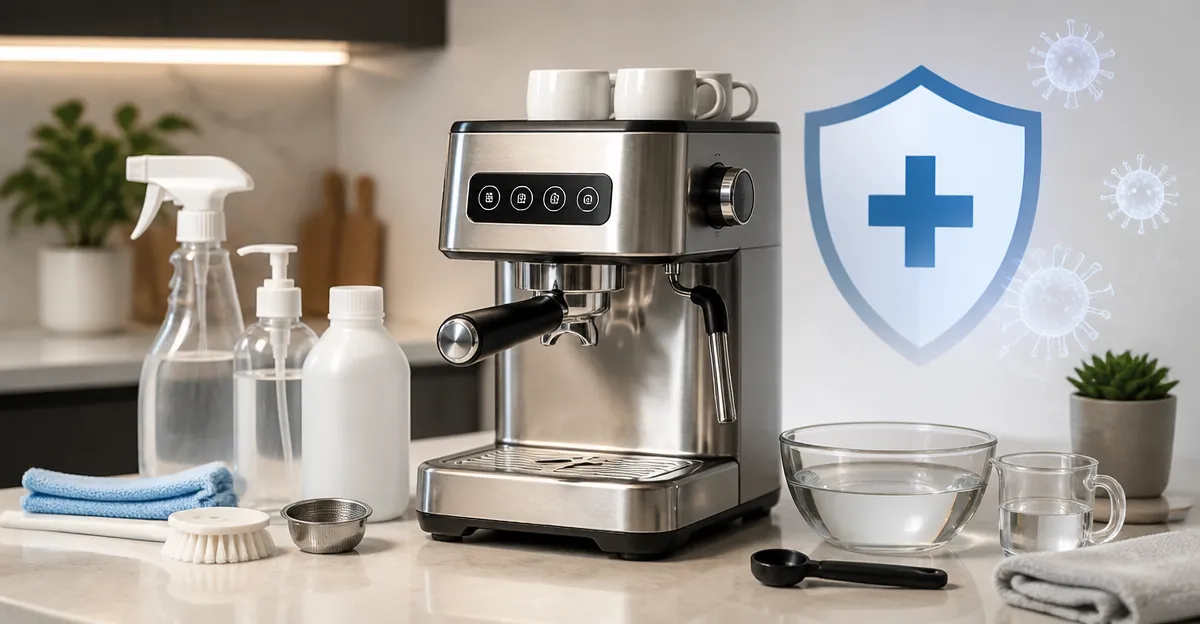
Sanitizing Compact Espresso Machines: Step-by-Step Safety Guide for Immunocompromised Individuals
Introduction
This guide explains how to maintain a compact espresso machine in a manner that reduces microbial risk for immunocompromised individuals. Readers will learn the scientific basis of contamination, the daily and periodic cleaning cycles, and how to select safe, effective cleaning agents. The article also highlights five Amazon products that have proven performance in professional and home settings. By following the procedures outlined, one can enjoy coffee without compromising health.
Background/Context
Espresso machines operate at high temperature and pressure, creating an environment where coffee oils, mineral scale, and biofilm can accumulate. Biofilm consists of microbial colonies that adhere to surfaces and are resistant to simple rinsing. For people with weakened immune systems, exposure to these microorganisms can lead to serious infections. Understanding the chemistry of cleaning agents and the mechanics of descaling is essential for effective sanitation.
Understanding Contamination Risks
The primary sources of contamination are residual coffee grounds, oily film on the group head, and mineral scale in the boiler. Coffee oils contain lipids that provide nutrients for bacteria and mold, especially when the machine is idle for long periods. Mineral scale, primarily calcium carbonate, creates micro‑cavities where microbes can hide. Regular removal of both oil and scale is therefore a non‑negotiable safety measure.
Daily Cleaning Routine
A daily back‑flush removes loose coffee particles and oil from the group head. The process involves inserting a blind filter, adding a cleaning agent, and running the machine for a short cycle. For compact machines, a powder or tablet that dissolves quickly is preferred because it does not leave residue that could clog tiny passages.
One effective product for this purpose is Urnex Cafiza Cleaning Powder. This 566‑gram powder is NSF certified, OMRI listed, and rated 4.8 out of 5 stars by over eight thousand reviewers. Its high solubility ensures complete dissolution, while its gentle formulation protects metal components. Users report that a single teaspoon removes stubborn coffee film without the need for abrasive scrubbing.
Deep Descaling Procedures
Descaling should be performed every three to four months, or sooner if water hardness is high. The procedure involves filling the water reservoir with a descaling solution, running the machine without coffee, and allowing the solution to soak the internal pathways. After the cycle, a thorough rinse with fresh water removes any remaining acid.
The IMPRESA Coffee Machine Descaler provides a 2‑pack supply that covers four descaling sessions. Each 8‑ounce bottle contains a formula that requires only four ounces per use, making it economical for long‑term maintenance. It holds a 4.4 rating from 88,783 reviewers and is compatible with virtually all single‑serve and pod machines, as well as traditional brewers. The solution is formulated in the United States and removes limescale while preserving internal seals.
Tablet Options for Convenience
Some users prefer pre‑measured tablets to avoid handling powders. Tablets dissolve uniformly, reducing the risk of over‑concentration. The Urnex Cafiza Cleaning Tablets come in a 100‑count jar, each tablet containing 1.2 g of cleaning agent. They share the same NSF and OMRI certifications as the powder, and they are rated 4.8 stars by over four thousand reviewers. Reviewers note that the tablets fit neatly into the portafilter’s rubber filter and produce a sudsy rinse that clears stubborn residue.
For owners of Breville machines, the Breville Espresso Cleaning Tablets are engineered specifically for Breville’s internal geometry. The eight‑tablet pack costs $11.98 and carries a 4.8 rating from 5,744 reviewers. The tablets are pharmaceutical‑grade, non‑corrosive, and dissolve at a rate that maximizes contact time with the shower screen and filter basket.
Eco‑Friendly Descaling
Environmental considerations are increasingly important, especially for health‑focused consumers. The De'Longhi EcoDecalk Descaler uses 100 % lactic acid, a biodegradable acid that safely removes mineral deposits. It is rated 4.7 stars by 163,302 reviewers and is priced at $29.50 for a two‑pack that provides ten descaling cycles. Users appreciate its mild odor and the fact that it does not leave harmful residues.
Comparison/Selection Guide
| Feature | Urnex Cafiza Powder | IMPRESA Descaler | Urnex Cafiza Tablets | Breville Tablets | De'Longhi EcoDecalk |
|---|---|---|---|---|---|
| Form | Powder (566 g) | Liquid (8 oz bottles) | Tablets (100 ct) | Tablets (8 ct) | Liquid (33.8 oz total) |
| Primary Use | Back‑flush cleaning | Scale removal | Back‑flush cleaning | Back‑flush cleaning (Breville) | Scale removal (eco‑friendly) |
| Certification | NSF, OMRI | None listed | NSF, OMRI | Food‑grade | Lactic acid, eco‑certified |
| Price (USD) | 19.99 | 15.99 (2‑pack) | 17.99 | 11.98 | 29.50 (2‑pack) |
| Average Rating | 4.8/5 | 4.4/5 | 4.8/5 | 4.8/5 | 4.7/5 |
| Best For | Professional‑grade daily cleaning | Universal descaling, budget‑conscious | Convenient dosing, travel | Breville owners seeking OEM product | Eco‑conscious users |
When selecting a product, consider the machine type, frequency of use, and personal preferences regarding form factor and environmental impact. Powder offers flexibility for large‑scale cleaning, while tablets reduce measurement error. Liquid descalers are indispensable for scale‑prone regions, and eco‑friendly formulas minimize chemical exposure.
Best Practices & Tips
- Always use filtered water in the reservoir; mineral content directly influences scale formation.
- Allow the cleaning solution to sit for at least 10 minutes during a back‑flush to dissolve oil films.
- Rinse the machine thoroughly after each cleaning cycle; residual chemicals can affect coffee flavor.
- Store cleaning agents in a cool, dry place away from direct sunlight to preserve efficacy.
- Maintain a cleaning log that records dates, products used, and any observations of taste or performance changes.
Frequently Asked Questions
- Can I use the same cleaning agent for both daily cleaning and descaling? It is advisable to use a dedicated descaling solution for scale removal because acids required for descaling differ from the alkaline agents used in daily back‑flush cleaning.
- How often should an immunocompromised individual clean their machine? Daily back‑flush combined with a full descaling every three months provides a robust barrier against microbial growth.
- Are the cleaning agents safe for plastic components? All products listed are NSF or food‑grade certified and have been tested on common espresso machine plastics without causing degradation.
- What temperature should the water be during cleaning? Warm water between 70 °C and 80 °C optimizes solubility of powders and tablets while avoiding damage to seals.
- Do I need to disinfect the machine after cleaning? A final rinse with a mild bleach solution (1 tsp per liter) followed by a thorough water flush can provide an extra layer of disinfection, but it is not required if cleaning is performed consistently.
- Can I reuse the cleaning solution? No; reuse can lead to re‑contamination and reduced effectiveness.
- Is it necessary to clean the water reservoir? Yes; the reservoir should be emptied, wiped with a soft cloth, and rinsed daily to prevent biofilm formation.
Conclusion
Proper sanitation of compact espresso machines is essential for protecting immunocompromised individuals from opportunistic infections. By understanding the sources of contamination, implementing a disciplined cleaning schedule, and selecting the right products, coffee enthusiasts can enjoy high‑quality beverages without compromising health. The recommendations presented combine scientific rigor with real‑world user feedback, ensuring that each step is both effective and practical.
Products Featured in This Guide
Urnex Cafiza Cleaning Powder
Price: $19.99 | Rating: 4.8/5 (8,306 reviews)
Featured for its high solubility, NSF certification, and proven effectiveness in daily back‑flush cleaning of espresso machine group heads.
IMPRESA Coffee Machine Descaler
Price: $15.99 (2‑Pack) | Rating: 4.4/5 (88,783 reviews)
Featured for its universal compatibility, cost‑effective 4‑use per bottle dosing, and ability to remove mineral scale without harming machine components.
Urnex Cafiza Cleaning Tablets
Price: $17.99 | Rating: 4.8/5 (4,164 reviews)
Featured for convenient pre‑measured dosing, identical cleaning power to the powder, and suitability for travel or limited‑space kitchens.
Breville Espresso Cleaning Tablets
Price: $11.98 | Rating: 4.8/5 (5,744 reviews)
Featured for being an OEM solution that matches Breville machine specifications, ensuring optimal dissolution and protection of internal parts.
De'Longhi EcoDecalk Descaler
Price: $29.50 (2‑Pack) | Rating: 4.7/5 (163,302 reviews)
Featured for its eco‑friendly lactic‑acid formulation, broad compatibility, and strong performance in mineral‑scale removal without harsh chemicals.