Introduction
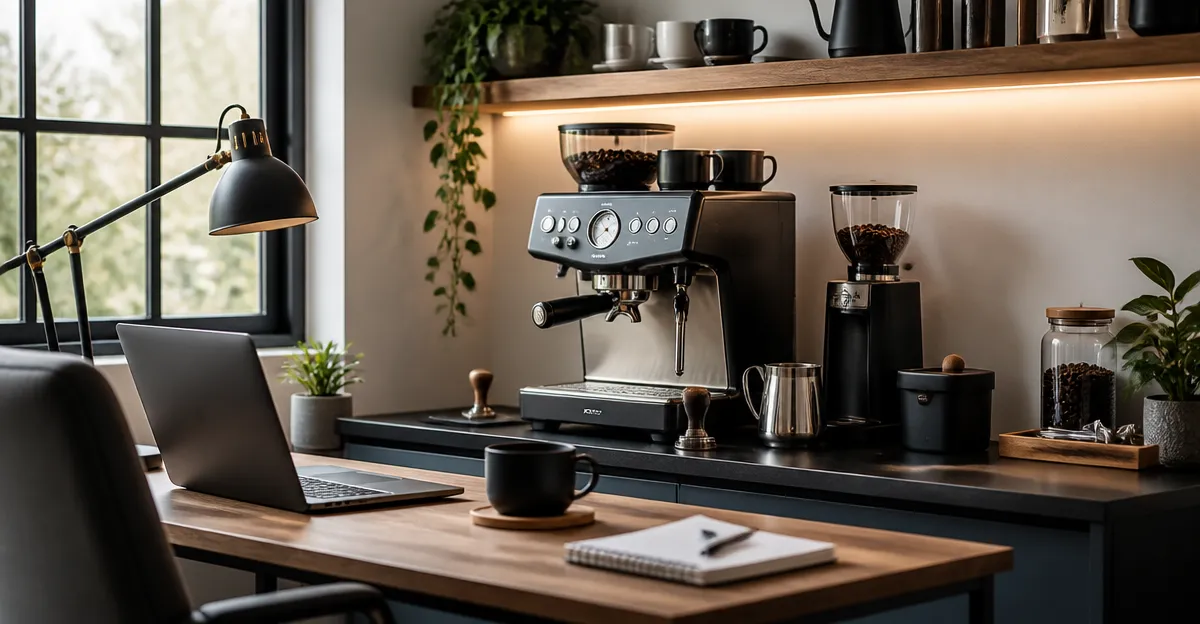
In a hybrid work environment, the kitchen often doubles as a productivity hub. A well‑designed espresso station can provide the caffeine boost required for focused mornings and the social pause needed for afternoon meetings. This guide explains how to select equipment, arrange space, and maintain consistency, while recommending five Amazon‑listed espresso machines that meet a range of budgets and skill levels.
Readers will learn the essential components of an espresso station, how to evaluate performance metrics such as pressure and temperature stability, and which accessories enhance workflow without cluttering a home office. By the end of the article, one will possess a clear plan to build a station that supports both intense work sessions and relaxed coffee breaks.
Background and Context
Espresso extraction relies on three scientific variables: pressure, water temperature, and grind consistency. Professional baristas aim for a pressure of approximately 9 bar, but many consumer machines advertise 15‑20 bar pumps to compensate for lower thermal mass. Water temperature should settle near 200 °F (93 °C) after a brief pre‑infusion period that gently wets the coffee puck. Finally, a burr grinder that produces uniform particles enables the barista to control extraction time, typically between 25 and 30 seconds.
Hybrid workers often alternate between video calls, document drafting, and brief physical breaks. An espresso station that heats quickly, occupies minimal counter space, and offers easy cleaning fits this rhythm. The station should also include a reliable milk frothing solution for latte‑style drinks, as milk‑based beverages are popular for their soothing texture during long meetings.
Choosing the Core Espresso Machine
The espresso machine is the heart of the station. When evaluating options, consider the following criteria:
- Pressure system (professional 20‑bar pumps provide consistent extraction)
- Heating technology (ThermoJet, thermoblock, or boiler)
- Water reservoir capacity (larger tanks reduce refilling frequency)
- Integrated steam wand (essential for milk frothing)
- Build material (stainless steel offers durability and aesthetic appeal)
- User reviews and rating consistency
Below are five machines that satisfy these criteria, each linked at its first appearance.
The CASABREWS 3700 Espresso Machine provides a 20‑bar pump, 1350 W heating element, and a compact stainless‑steel body for under $100. Its removable 43.9 oz water tank and dual‑cup brewing filters make it suitable for single‑person workspaces.
The CASABREWS CM5418 Espresso Machine adds a built‑in pressure gauge, a slightly larger 34 oz tank, and a more robust steam wand, positioning it as a step‑up for users who enjoy experimenting with latte art.
For those who desire integrated grinding, the Breville Barista Express combines a conical burr grinder, PID temperature control, and a 67 oz water reservoir, delivering café‑grade results at a premium price point.
The Breville Bambino excels in speed with its ThermoJet system that reaches extraction temperature in three seconds, while maintaining a small footprint ideal for cramped home offices.
Finally, the De'Longhi Stilosa offers a manual 15‑bar pump and a compact design, making it a reliable entry‑level choice for users who prefer hands‑on control.
Complementary Accessories
Even the best machine benefits from a few carefully chosen accessories. A high‑quality burr grinder (if not integrated) ensures consistent particle size, while a stainless‑steel tamper provides even pressure on the coffee puck. Milk frothing pitchers, such as a 12‑ounce stainless pitcher, enable precise micro‑foam creation for latte art.
Cleaning tools—including a brush for the group head, descaling solution, and a drip‑tray cleaning brush—extend machine longevity. For users who travel between home and a co‑working space, a portable water tank with a finger loop simplifies refilling on the go.
Comparison and Selection Guide
| Feature | CASABREWS 3700 | CASABREWS CM5418 | Breville Barista Express | Breville Bambino | De'Longhi Stilosa |
|---|---|---|---|---|---|
| Price (USD) | 99.99 | 139.99 | 694.94 | 299.95 | 119.99 |
| Pressure | 20 bar | 20 bar (gauge) | 15 bar (professional pump) | 19 bar (ThermoJet) | 15 bar |
| Heating System | 1350 W thermoblock | 1350 W thermoblock | PID‑controlled 1600 W | ThermoJet (3 s heat‑up) | Stainless steel boiler |
| Water Tank | 43.9 oz (detachable) | 34 oz (detachable) | 67 oz | 1‑L (compact) | Not specified, manual refill |
| Steam Wand | Powerful wand for micro‑foam | Robust wand with pressure gauge | Professional wand with temperature control | Automatic steam wand | Manual frother |
| User Rating | 4.3/5 (3,637 reviews) | 4.3/5 (8,074 reviews) | 4.4/5 (27,807 reviews) | 4.0/5 (2,578 reviews) | 4.2/5 (13,816 reviews) |
When selecting a machine, match the price tier to the desired level of automation. Users who value speed and minimal footprint may prefer the Bambino, while those who enjoy grinding control should consider the Barista Express.
Best Practices & Tips for an Efficient Espresso Station
- Allocate a dedicated countertop zone. Keep the machine, grinder, and milk pitcher within arm’s reach to reduce movement during work blocks.
- Maintain consistent water temperature. Pre‑heat the group head by running a short water cycle before the first shot of the day; this practice is recommended for both the CASABREWS models and the Breville lineup.
- Use fresh, high‑quality beans. Beans roasted within the past two weeks retain aromatic oils that translate into richer crema. Store beans in an airtight container and grind immediately before brewing.
- Calibrate grind size and dose. For a standard double shot, aim for 18‑20 g of coffee ground to a fine‑but‑not‑powdery texture. Adjust the grinder burr gap until extraction time falls between 25 and 30 seconds.
- Practice milk texturing. Position the steam wand just below the surface of cold milk, introduce air for 2‑3 seconds, then submerge deeper to create a whirlpool. This technique yields micro‑foam suitable for latte art on any of the featured machines.
- Schedule regular cleaning. Descale monthly using a citric‑acid solution, wipe the steam wand after each use, and backflush the group head weekly. The Barista Express manual emphasizes cleaning after 60 uses; similar intervals apply to the other models.
- Optimize ergonomics. Place the water reservoir on a side that does not obstruct the keyboard view. Use a lightweight tamper and a portafilter with a comfortable grip to reduce strain during repeated use.
Frequently Asked Questions
1. Do I need a separate grinder if my machine has a built‑in one?
A built‑in grinder, such as the one on the Breville Barista Express, offers convenience but may lack the precision of a dedicated conical burr grinder. For the highest consistency, a separate grinder is advisable, especially when experimenting with different bean profiles.
2. How often should I descale my espresso machine?
Hard‑water users should descale every 30‑45 days, while those who use filtered water can extend the interval to 60‑90 days. The Barista Express manual suggests a 60‑use guideline, which aligns with the recommendations for the CASABREWS models.
3. Can I use the steam wand for hot water?
Yes, most steam wands, including those on the Breville Bambino, can dispense hot water for tea or Americanos. However, the water temperature may be slightly lower than the dedicated hot‑water function on some machines.
4. What is the advantage of a pressure gauge?
A pressure gauge, featured on the CASABREWS CM5418, allows the user to monitor extraction pressure in real time. Maintaining pressure around 9 bar ensures optimal flavor balance and reduces the risk of under‑ or over‑extraction.
5. Is a stainless‑steel boiler better than a thermoblock?
Stainless‑steel boilers, such as the one in the De'Longhi Stilosa, retain heat longer and provide stable temperature, which is advantageous for frequent milk steaming. Thermoblock systems heat faster but may experience temperature fluctuations during extended use.
6. How much counter space should I allocate?
A compact machine like the Bambino occupies roughly 12 × 8 inches, while larger units such as the Barista Express require about 15 × 12 inches. Include an additional 6 inches for a grinder and a small tray for accessories.
7. Can I use pre‑ground coffee?
Pre‑ground coffee can produce acceptable results on the CASABREWS models, but for the richest crema and most consistent flavor, freshly ground beans are strongly recommended.
Conclusion
Building an espresso station that supports a hybrid work schedule involves balancing speed, space, and quality. By understanding the core variables of extraction, selecting a machine that aligns with one’s budget and workflow, and applying disciplined cleaning and milk‑texturing techniques, any professional can enjoy café‑grade coffee without leaving the home office. The five featured products illustrate a spectrum from entry‑level affordability to premium integration, ensuring that every reader can find a suitable solution.
Products Featured in This Guide
CASABREWS 3700 Espresso Machine
Price: $99.99 | Rating: 4.3/5 (3,637 reviews)
Featured for its affordable 20‑bar pressure system, compact 43.9 oz removable water tank, and powerful steam wand that enables micro‑foam creation in a space‑saving stainless‑steel package.
CASABREWS CM5418 Espresso Machine
Price: $139.99 | Rating: 4.3/5 (8,074 reviews)
Featured for its built‑in pressure gauge, 34 oz water tank, and enhanced steam wand that supports precise milk texturing, making it ideal for users who enjoy latte art.
Breville Barista Express
Price: $694.94 | Rating: 4.4/5 (27,807 reviews)
Featured for its integrated conical burr grinder, PID temperature control, and 67 oz water reservoir, delivering professional‑grade espresso and milk steaming in a single footprint.
Breville Bambino
Price: $299.95 | Rating: 4.0/5 (2,578 reviews)
Featured for its ultra‑fast ThermoJet heating system (3‑second heat‑up), compact design, and automatic steam wand, providing rapid espresso preparation for small workspaces.
De'Longhi Stilosa
Price: $119.99 | Rating: 4.2/5 (13,816 reviews)
Featured for its manual 15‑bar pump, stainless‑steel boiler, and compact footprint, offering a straightforward, hands‑on espresso experience for beginners.