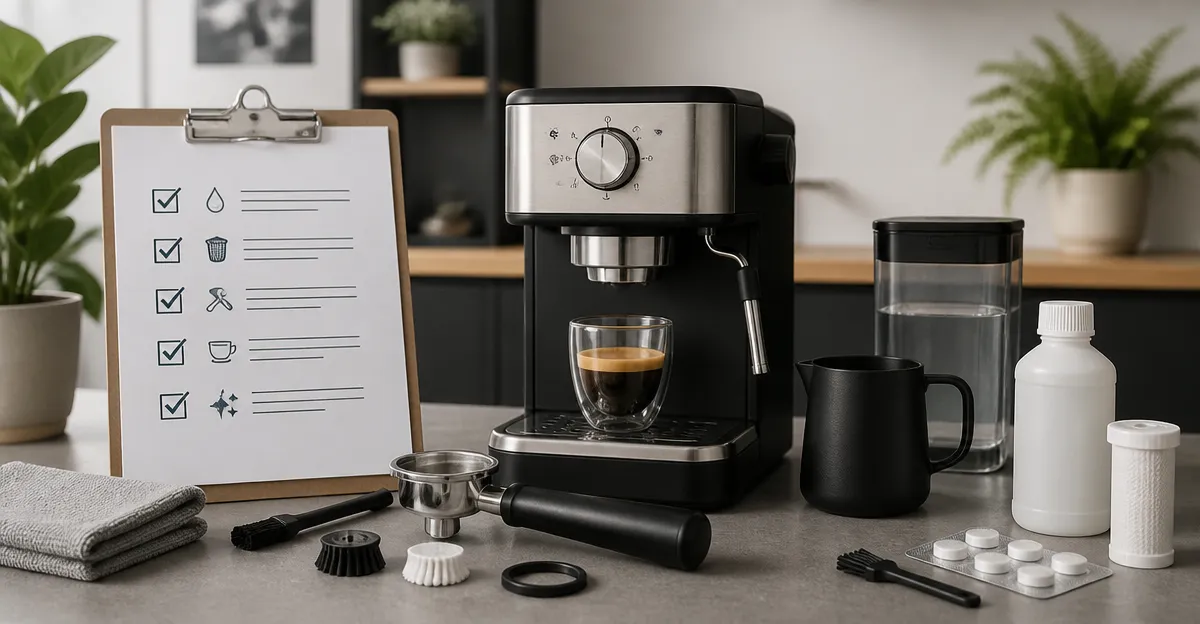
Landlord Maintenance Checklist for Compact Espresso Machines: The Ultimate Guide to Cleaning, Repairs & Tenant‑Friendly Upkeep
Introduction
Landlords who provide compact espresso machines as an amenity must balance guest satisfaction with long‑term equipment durability. This guide explains the essential maintenance tasks, routine inspections, and repair strategies that protect the investment while delivering a café‑quality experience for tenants. Readers will learn how to create a systematic checklist, identify common failure points, and select reliable machines that simplify upkeep. By following the recommendations, landlords can reduce service calls, extend machine lifespan, and maintain a professional property image.
Background and Context
Compact espresso machines are engineered for small kitchens, dormitories, and office desks. They typically combine a high‑pressure pump, a temperature‑stabilizing controller, and a steam wand within a vertical footprint. Because these units operate daily under high temperature and pressure, they accumulate coffee oils, mineral deposits, and wear on seals. Understanding the underlying technology—such as 20‑bar pressure systems and PID temperature control—helps landlords diagnose issues before they become costly failures. Moreover, awareness of warranty terms and manufacturer support channels is essential for responsible asset management.
Routine Cleaning and Daily Upkeep
Daily cleaning preserves flavor consistency and prevents clogging of the pump and steam wand. Landlords should provide tenants with a clear, step‑by‑step cleaning protocol that can be posted near the machine. The protocol includes:
- Wipe the exterior with a soft, damp cloth after each use to remove coffee splatter.
- Rinse and dry the detachable milk frothing pitcher, if present, before storage.
- Run a short water‑only brew cycle after each espresso extraction to flush residual grounds.
- Empty the drip tray and coffee grounds container at the end of each day.
For machines equipped with a PID controller, such as the XIXUBX 20Bar Compact Espresso Machine, the temperature remains stable, reducing the need for frequent descaling. Nevertheless, a weekly descaling routine using a food‑grade citric acid solution is recommended to combat mineral buildup from hard water. Landlords should supply the appropriate descaling agent and a clear log sheet for tenants to record maintenance dates.
Monthly Inspection Checklist
Monthly inspections allow landlords to catch wear before it impacts performance. The checklist includes:
- Inspect the pump pressure gauge for consistent 20‑bar readings during a test brew.
- Examine the group head gasket for cracks or deformation; replace if any signs of leakage appear.
- Check the steam wand tip for milk residue; clean with a pin‑style brush.
- Verify that the water reservoir seal is intact and that the reservoir fits securely.
- Listen for abnormal vibrations; the noise‑reduction design of the XIXUBX model should keep operation quiet.
If any component shows signs of deterioration, landlords should order replacement parts from the manufacturer or an authorized service provider. Maintaining a small stock of common consumables—such as O‑rings, filter screens, and cleaning tablets—reduces downtime.
Quarterly Deep Cleaning and Descaling
Every three months, a comprehensive deep‑cleaning session is required. The process involves disassembling removable components, soaking them in a descaling solution, and flushing the internal circuitry. Steps are as follows:
- Turn off and unplug the machine; allow it to cool for at least ten minutes.
- Remove the water reservoir, drip tray, and milk frothing pitcher; soak each in a 1‑liter solution of warm water and 30 g of citric acid for fifteen minutes.
- Run two full brew cycles using only the descaling solution to purge the pump and boiler.
- Rinse all components with fresh water and reassemble the unit.
- Perform a test brew to confirm normal pressure and temperature stability.
Landlords may choose to schedule this deep clean during a low‑occupancy period to minimize tenant inconvenience. Documenting each deep‑cleaning event in a maintenance log supports warranty claims and resale value.
Common Repair Scenarios and How to Address Them
Even with diligent care, certain components may fail. The most frequent repair situations include:
| Issue | Typical Cause | Recommended Action |
|---|---|---|
| Low pressure output | Clogged pump or worn pump seals | Perform a pump cleaning cycle; replace pump seals if pressure does not recover. |
| Inconsistent temperature | PID sensor drift or scale on heating element | Re‑calibrate PID using manufacturer instructions; descale boiler thoroughly. |
| Steam wand not frothing | Milk residue blocking steam nozzle | Remove nozzle, clean with a pin, and soak in descaling solution. |
| Excessive vibration | Loose mounting screws or worn vibration dampeners | Tighten mounting bolts; replace dampening pads if worn. |
For landlords who are not comfortable performing internal repairs, it is advisable to engage a certified technician. Many manufacturers, including the brand behind the XIXUBX model, offer a limited‑time service plan that covers parts and labor for the first year of ownership.
Product Recommendations for Landlord Use
Choosing a machine that simplifies maintenance reduces the administrative burden on landlords. Two models stand out for their blend of performance and serviceability.
1. XIXUBX 20Bar Compact Espresso Machine
- 20‑bar pressure with gentle pre‑infusion ensures even extraction and reduces coffee oil buildup.
- PID temperature control maintains stable brewing temperature, minimizing the need for frequent recalibration.
- Powerful steam wand creates microfoam suitable for latte art, yet it can be easily cleaned with a detachable frothing pitcher.
- Noise‑reduction vertical design fits small living spaces and limits tenant disturbance.
- Rated 4.5 stars by 573 reviewers, indicating high reliability and customer satisfaction.
- Price: $89.99, offering a cost‑effective solution for multi‑unit properties.
2. IMUSA 3/6‑Cup Electric Moka Espresso Maker
- Versatile capacity allows brewing of 3 or 6 cups, suitable for shared kitchen environments.
- Cast‑aluminum construction provides durability and a sleek aesthetic for modern rentals.
- Detachable base with on/off switch and cool‑touch handle enhances safety for tenants.
- Supports traditional espresso, Cuban coffee, Italian coffee, and moka, broadening tenant appeal.
- Rated 4.7 stars by 2,397 reviewers, reflecting strong market acceptance.
- Price: $34.99, making it an affordable backup unit for properties with limited budgets.
Both machines include essential accessories, such as a milk frothing pitcher for the XIXUBX model and a protective gift box for the IMUSA unit, which can serve as a welcome‑gift item for new tenants.
Comparison and Selection Guide
When selecting a compact espresso machine for rental properties, landlords should evaluate the following criteria:
| Criteria | XIXUBX 20Bar | IMUSA 3/6‑Cup |
|---|---|---|
| Pressure Capability | 20 Bar (professional‑grade) | Standard moka pressure (≈1.5 Bar) |
| Temperature Control | PID controller for precise stability | Thermostat‑based, less precise |
| Capacity | Single‑shot (30 ml) per brew | 3 or 6 cups (1.5 oz each) |
| Noise Level | Optimized low‑vibration design | Typical moka noise |
| Price | $89.99 | $34.99 |
| Ideal Setting | High‑traffic rentals demanding café‑quality espresso | Budget‑friendly units for occasional use |
Landlords prioritizing premium coffee quality and minimal noise should opt for the XIXUBX model. Those seeking an economical solution with flexible cup sizes may find the IMUSA maker more appropriate. In either case, the selected machine should align with the property’s target demographic and maintenance resources.
Best Practices and Tips for Tenant‑Friendly Upkeep
Beyond mechanical care, landlords can foster responsible tenant behavior through clear communication and convenient resources. Recommended practices include:
- Provide a laminated quick‑reference guide that outlines daily cleaning steps and contact information for service requests.
- Install a small supply cabinet nearby stocked with cleaning tablets, descaling solution, and spare O‑rings.
- Schedule quarterly professional inspections during lease renewal periods to coincide with tenant turnover.
- Offer a brief orientation session for new tenants, demonstrating proper operation and emphasizing the importance of cleaning.
- Incorporate a clause in the lease agreement that outlines tenant responsibilities for routine maintenance and penalties for neglect.
These measures reduce the likelihood of neglect, extend machine life, and enhance overall tenant satisfaction, thereby supporting higher renewal rates.
Frequently Asked Questions
- How often should a landlord descale a compact espresso machine?
- Descaling is recommended every three months for areas with hard water, and monthly if the machine is used heavily.
- Can the steam wand be used with non‑dairy milk alternatives?
- Yes, the steam wand can froth almond, soy, or oat milk; however, cleaning should be performed promptly to avoid residue buildup.
- What warranty coverage is typical for these machines?
- Both models typically include a one‑year limited warranty covering manufacturing defects; extended warranties may be purchased directly from the seller.
- Is professional servicing required for pump replacement?
- Pump replacement involves disassembly of internal components and should be performed by a certified technician to preserve warranty validity.
- How can a landlord ensure consistent coffee quality across multiple units?
- Standardize water quality by using filtered water, maintain identical cleaning schedules, and calibrate PID settings according to manufacturer specifications.
- What safety features protect tenants from burns?
- Both machines feature cool‑touch handles and automatic shut‑off timers; landlords should verify that these functions are active before tenant use.
Conclusion
Effective maintenance of compact espresso machines enhances tenant experience while protecting a landlord’s investment. By implementing daily cleaning routines, monthly inspections, and quarterly deep cleans, landlords can prevent common failures such as pressure loss, temperature drift, and steam wand blockage. Selecting a machine that aligns with property needs—whether the high‑performance XIXUBX 20Bar model or the versatile IMUSA 3/6‑Cup maker—further simplifies upkeep. Incorporating clear tenant guidelines and scheduled professional inspections completes a comprehensive maintenance strategy that reduces service calls, extends equipment lifespan, and contributes to overall property value.
Products Featured in This Guide
XIXUBX 20Bar Compact Espresso Machine
Price: $89.99
Rating: 4.5/5.0 (573 reviews)
Featured because it provides professional‑grade 20‑bar pressure, PID temperature control, and a low‑noise design that suits small rental kitchens.
IMUSA 3/6‑Cup Electric Moka Espresso Maker
Price: $34.99
Rating: 4.7/5.0 (2,397 reviews)
Featured because it offers versatile brewing capacity, durable cast‑aluminum construction, and safety features that are ideal for budget‑conscious rental properties.