Introduction
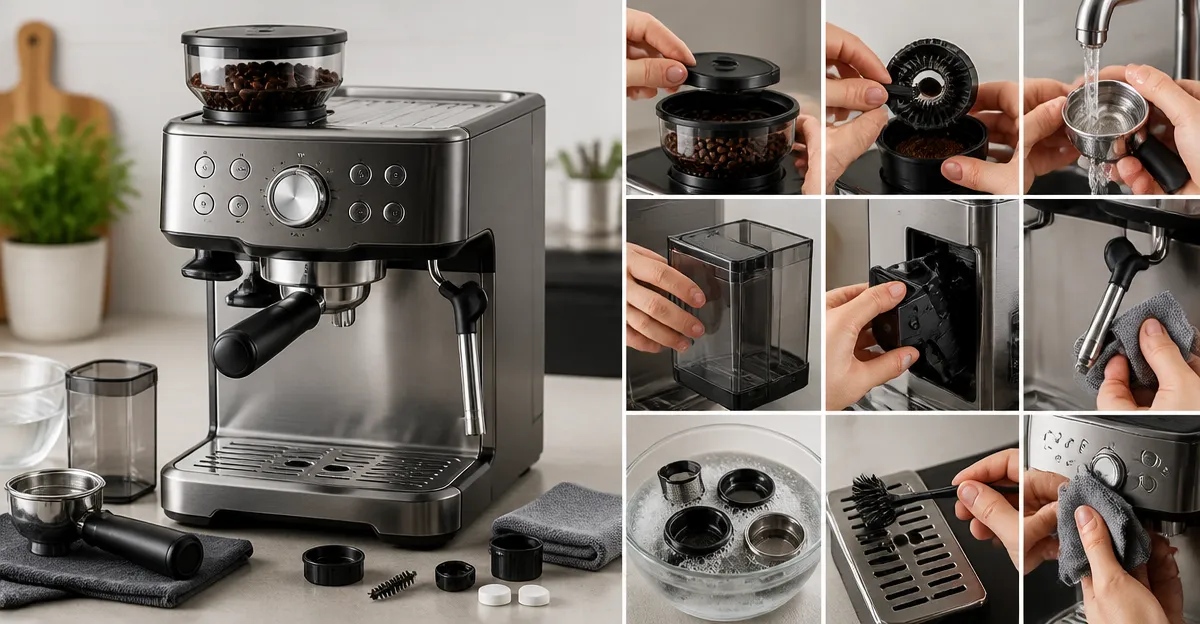
One of the most rewarding aspects of owning a compact espresso machine with an integrated grinder is the ability to craft specialty coffee at home. However, the combination of grinding burrs, water pathways, and steam components creates a complex cleaning environment that demands regular attention. This guide will teach the reader how to perform a thorough deep clean, preserve flavor integrity, and extend the lifespan of the equipment. By following each step, one will avoid common pitfalls such as bitter extraction, clogged grinders, and mineral buildup.
What You'll Need
- Soft, lint‑free cloths
- Non‑abrasive brush (e.g., a dedicated coffee‑machine cleaning brush)
- White vinegar or a commercial descaling solution
- Fresh water
- Cleaning tablets compatible with espresso machines (optional)
- Rubber gloves for hand protection
These items are readily available at most kitchen supply stores and do not require specialized expertise. The following steps assume that the reader has a basic understanding of machine components such as the portafilter, brew group, and steam wand.
Step 1: Unplug and Disassemble
The first priority is safety; always unplug the machine before beginning any maintenance. Remove the portafilter, drip tray, and water reservoir, placing each component on a clean surface. For machines like the Breville Barista Express, the integrated conical burr grinder can be accessed by unscrewing the grinder housing, which is designed for user removal without tools. This step allows direct access to the burrs, where coffee oils accumulate over time. The same disassembly approach applies to the Ninja Café Mini and the AMZCHEF Espresso Machine, both of which feature removable brew groups and steam wands.
Step 2: Clean the Grinder Burrs
Integrated grinders retain fine coffee particles that oxidize and cause off‑flavors. Use a soft brush to gently dislodge debris from the burr surfaces of the Breville Barista Express. The machine’s dose‑control grinding system benefits from burrs that are free of oil, ensuring consistent dosing for each shot. For the Ninja Café Mini, the built‑in conical burr grinder also requires a brush cleaning after every 30‑40 uses to maintain the weight‑based dosing accuracy. The AMZCHEF Espresso Machine offers 44 grind settings, making burr cleanliness essential for fine‑tuning extraction across the entire range.
After brushing, wipe the burr housing with a damp cloth. Avoid using water directly on the burrs, as excess moisture can cause rust. Allow the components to air‑dry for at least five minutes before reassembly.
Step 3: Flush the Brewing Group
The brew group channels water at high pressure, making it vulnerable to mineral deposits. Fill the water reservoir with a solution of one part white vinegar to two parts water, or use a commercial descaling solution if preferred. Run a brewing cycle without coffee grounds on the Breville Barista Express to push the solution through the internal pathways. This process dissolves calcium buildup that can impair pressure stability and affect the optimal water pressure feature of the machine.
Repeat the flushing process with fresh water three times to remove any residual acidity. The Ninja Café Mini benefits from its Barista Assist Technology, which automatically adjusts temperature after descaling, ensuring that the next brew cycle starts with precise temperature control. For the AMZCHEP Espresso Machine, the 190℉–201℉ precision temperature control feature will recalibrate once the water sensor detects the new water composition.
Step 4: Clean the Steam Wand
The steam wand is a frequent source of milk residue, which can harbor bacteria if left unattended. Immediately after each use, purge the wand by turning on steam for a few seconds to expel milk film. Soak a cloth in warm, soapy water and wipe the exterior of the wand on the Breville Barista Express, which features a powerful steam wand capable of producing micro‑foam for latte art. For the Ninja Café Mini, the manual steam wand allows precise control over milk texture, making thorough cleaning essential to preserve that control.
Periodically soak the wand tip in a solution of equal parts water and white vinegar for 10 minutes, then rinse with clean water. This step prevents scale buildup that could interfere with the wand’s pressure regulation.
Step 5: Descale the Internal Tubing
Even after flushing the brew group, mineral deposits can linger in hidden tubing. Prepare a descaling solution according to the manufacturer’s instructions and pour it into the water reservoir of the AMZCHEF Espresso Machine. Activate the machine’s cleaning cycle, which runs the solution through the entire internal network for 15‑20 minutes. The machine’s 1350W heating element ensures that the solution reaches the optimal temperature for dissolving calcium deposits.
After the cycle completes, discard the solution and rinse the reservoir thoroughly. Run three additional brewing cycles with fresh water to guarantee that no descaling residue remains. This practice maintains the 44 adjustable grind settings’ performance by preventing pressure fluctuations caused by clogged tubes.
Step 6: Reassemble and Perform a Test Brew
Once all components are dry, reattach the grinder housing, brew group, and steam wand. Refill the water reservoir with fresh, filtered water to reduce future scaling. Insert a freshly ground dose of coffee and pull a test shot on the Breville Barista Express. Observe the crema formation, extraction time, and temperature stability. A clean machine should produce a balanced shot with a thick, golden crema, indicating that the PID temperature control is functioning correctly.
If the shot appears thin or under‑extracted, double‑check that the burrs are properly seated and that the water flow is unobstructed. A final quick rinse of the portafilter and group head will often resolve minor inconsistencies.
Tips & Pro Tips
- Perform a light cleaning after every use and a deep clean every 30‑40 uses to maintain flavor consistency.
- Use filtered water to minimize mineral deposits; this reduces the frequency of descaling cycles.
- Rotate the grinder burrs periodically to ensure even wear, especially on the Ninja Café Mini, where weight‑based dosing relies on burr symmetry.
- Store cleaning brushes in a dry place to prevent mold growth.
- Schedule a monthly inspection of the steam wand gasket; replace it if it shows signs of cracking.
Troubleshooting
Problem: Weak espresso pressure.
Solution: Verify that the brew group is fully seated and that the water tank is filled with fresh water. If pressure remains low, inspect the pump for blockages and run an additional descaling cycle.
Problem: Excessive coffee oil residue.
Solution: Increase the frequency of burr cleaning and consider using a coffee cleaning tablet once a month. This practice is especially beneficial for the AMZCHEF Espresso Machine, whose 44 grind settings can trap fine particles.
Conclusion
Regular deep cleaning of an integrated grinder compact espresso machine safeguards flavor quality, ensures reliable performance, and extends the machine’s service life. By following the six detailed steps, the reader can confidently maintain any of the featured models, whether it is the Breville Barista Express, the Ninja Café Mini, or the AMZCHEF Espresso Machine. Consistent maintenance not only preserves the nuanced taste of specialty coffee but also protects the investment in premium equipment.
Products Mentioned in This Guide
Breville Barista Express
Price: Not listed | Rating: Not listed
Key features: Integrated precision conical burr grinder, dose‑control grinding, optimal water pressure pre‑infusion, digital PID temperature control.
Ninja Café Mini
Price: $449.99 | Rating: 4.8/5.0 (19 reviews)
Key features: Built‑in burr grinder, precision scale, manual steam wand, Barista Assist Technology, 2‑in‑1 brewing versatility.
AMZCHEF Espresso Machine
Price: $189.99 | Rating: 4.5/5.0 (108 reviews)
Key features: 190℉–201℉ precision temperature control, 44 grind settings, cold brew mode, powerful 8mm steam wand, smart touch screen.
Frequently Asked Questions
How often should I deep‑clean an integrated grinder compact espresso machine?
Perform a deep clean every 1–2 months, and rinse the brew group and steam wand weekly.
Can I use regular white vinegar for descaling, or should I use a commercial solution?
Both work, but a commercial descaling solution is formulated to protect metal parts and is recommended for frequent use.
What is the best way to remove coffee oil buildup from the grinder burrs?
Brush the burrs with a soft, lint‑free brush and run a cleaning tablet cycle to dissolve residual oils.
Do I need to disassemble the grinder when cleaning, or is a surface wipe enough?
A surface wipe cleans daily residue; for thorough maintenance, remove the burr housing as instructed in the manual and clean each part.
How can I prevent mineral buildup in the water lines of my espresso machine?
Use filtered water and run a monthly descaling cycle to keep calcium and other minerals from accumulating.